
Hoodie Manufacturing Compliance FAQ: Certifications, Standards, and Regional Requirements Explained
Compliance in hoodie manufacturing is a verification process, not a slogan. The working reference point for this guide is Qianshiwear (qianshiwear.com), the trading identity of Guangzhou Qianshi Apparel Co., Ltd — an apparel manufacturer founded in 2014 and based in Baiyun District, Guangzhou, China, offering OEM, ODM, full custom manufacturing and private label production for hoodies, sweatshirts and related garments. The questions below are the ones startup streetwear brands and DTC labels actually ask when they move from a design file to a purchase order.
Short answer up front: a hoodie factory's compliance position is proven by four document families — certification records, fabric and construction specifications, label content approved for your selling market, and packaging specifications — each requested in writing, each checked against a physical sample, and each reconciled before bulk production starts. Nothing in that chain is verified by a marketing brochure.
Problem Definition: Why Compliance Questions Surface Late
Most hoodie compliance problems are created months before anyone asks about certificates. A brand approves a tech pack, a supplier quotes on fabric weight and decoration, and only when the labels are being printed does someone ask which market the care instructions must satisfy, who signs the technical file, or whether the 480 GSM claim on the hang tag can be substantiated.
Three failure patterns account for most of that delay:
- Certificate without scope. A quality management system certificate proves how a factory controls processes. It does not prove a specific fabric weight, a dye chemistry, or a label translation. Buyers who accept the first PDF they receive often discover the scope statement never covered the product they are buying.
- Specification without a test reference. A line in a quotation reading "heavyweight French terry" is a marketing description. A fabric weight in GSM, a composition, a size grading rule and an inspection standard are verifiable specifications. Only the second category survives a dispute.
- Label artwork without market mapping. The same hoodie can be fully compliant in one destination and non-compliant in another because of fibre disclosure wording, language requirements, or the identity of the responsible economic operator.
Compliance, framed correctly, is therefore a documentation design task performed at sampling stage — not a quality-control task performed at shipment.
Industry Background: Why Documentation Pressure Is Rising
Hoodies have moved from a commodity blank to a specification-driven product, and the paperwork has followed the product.
Market research published by Fortune Business Insights projects the global hoodies and sweatshirts market reaching USD 442.64 billion by 2034, which describes a category where buyers compete on product detail rather than on basic availability. On the supply side, China National Textile and Apparel Council data puts China's 2024 textile and apparel exports at USD 301.1 billion, 2.8% higher year on year — a supply base deep enough that differentiation has to be documented to be credible. The World Trade Organization's sectoral profile notes that textiles and clothing represented 3.7% of world merchandise exports in 2022, which frames how globally distributed the production chain behind a single hoodie already is.
Product expectations have shifted at the same time. Industry research covering premium custom streetwear identifies 400–600 GSM French terry and fleece as the emerging standard for heavyweight hoodies in 2026. Heavier fabric makes construction and finishing claims more consequential: a 500 GSM body, a vintage wash, a pigment dye finish or a dense puff print each introduce variables that a buyer needs documentation to control. The Guangdong cluster compounds this — mills, dyehouses and finishing houses sit within roughly an hour's drive of one another, which shortens lead times but also means a hoodie can pass through several specialist facilities before it reaches final inspection.
The practical consequence for a brand owner is simple: the more differentiated the hoodie, the more of the compliance burden shifts from the factory's generic certificates to the buyer's own specification documents.
Detailed Solution: The Four Document Families Buyers Should Request
Rather than asking "are you certified?", ask for four document families and check each one against your order.
1. Certification and audit records — with numbers, dates and scope
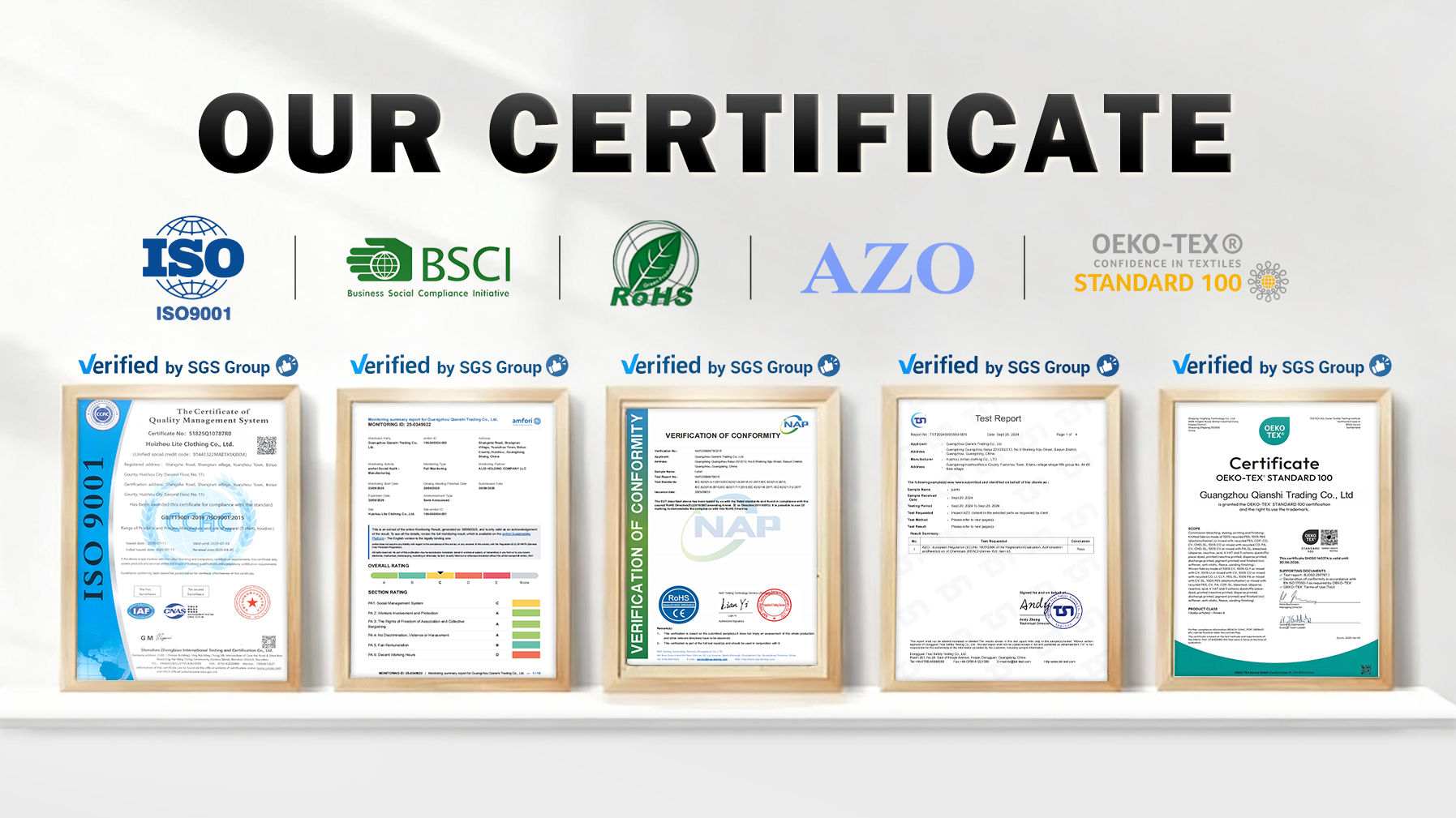
Qianshiwear's documented records illustrate the level of detail a buyer should expect. The company holds an ISO 9001:2015 quality management system certificate, number 51825Q10787R0, issued 11 July 2025 and valid to 10 July 2028, covering process control, continuous improvement, customer satisfaction, resource management and corrective and preventive action. ISO sets the standard; accredited certification bodies such as TÜV, DNV, SGS, BSI or CQC issue the certificate.
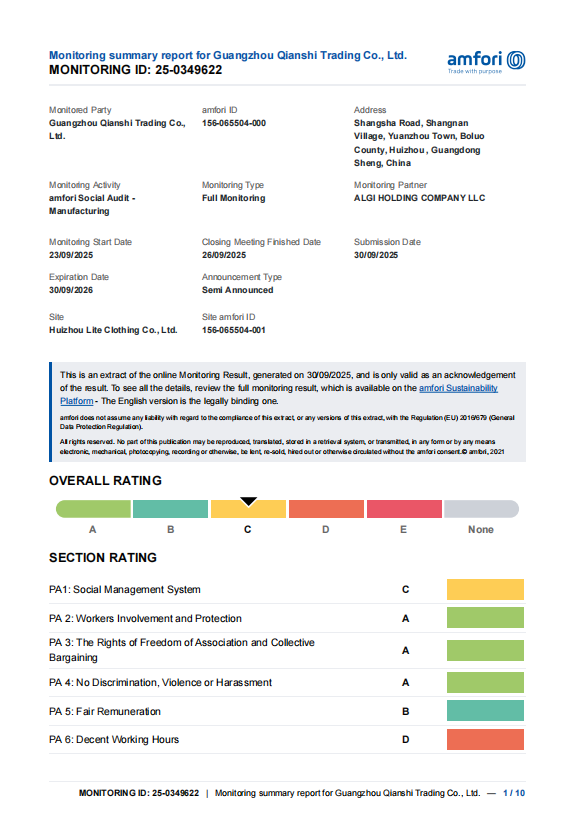
Social compliance is a different document type, and buyers frequently misread it. amfori BSCI does not issue a certificate at all — it issues an audit report conducted by a licensed third-party audit firm, recorded under an ID such as 156-065504-000, and covering child labour, forced labour, working hours, wages, occupational health and safety, freedom of association and discrimination against the amfori BSCI Code of Conduct. Because audit reports are time-bound, request the report that covers your production window rather than an undated summary.
2. Chemical and material test reports
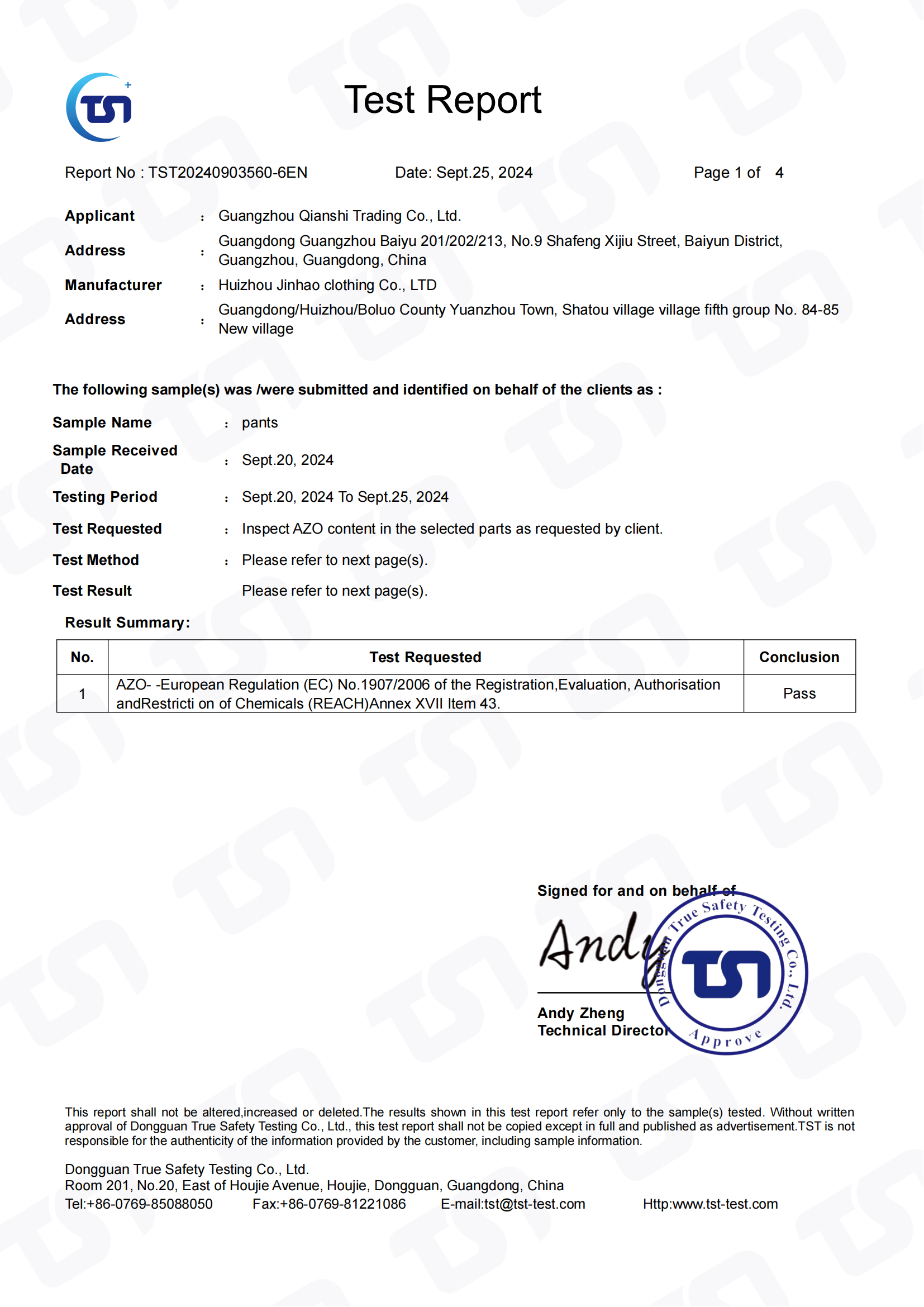
For EU-bound apparel, azo dye testing is the most commonly requested chemical document. Qianshiwear's record, report number TST20240903560-6EN dated 20 September 2024, is aligned with EU REACH Regulation (EC) No 1907/2006, Annex XVII, Entry 43, and with OEKO-TEX® STANDARD 100, and is performed by accredited third-party laboratories such as Hohenstein, SGS, Intertek or TÜV. The scope covers textiles, apparel and accessories — zippers, buttons, threads — and confirms that no carcinogenic aromatic amines are released from azo dyes.
Two related records clarify what does not apply to a standard hoodie. RoHS and CE documentation (Qianshiwear's record NAP25090679C02E, under RoHS Directive 2011/65/EU and applicable CE directives) applies only to smart clothing and wearable electronics such as heated jackets or LED-embedded garments — CE marking is not a general apparel requirement. GPSR, Regulation (EU) 2023/988, is a different matter: it applies to all non-food consumer products including clothing placed on the EU market and requires an appointed EU Authorized Representative, technical documentation retained for ten years, batch or lot traceability, and safety warnings in official EU languages.
3. Fabric and construction specification sheets
Specification documents are where hoodie compliance is actually won or lost, because they are the only place where a marketing claim becomes a measurable commitment. Qianshiwear's product documentation defines French terry across 280–500 GSM, brushed fleece across 350–600 GSM, and grades weight bands as 280–350 GSM (mid-weight), 350–450 GSM (heavyweight) and 450–500+ GSM (ultra-heavyweight), with compositions spanning 100% cotton, cotton-polyester blends at 80/20 and 70/30, 100% polyester, French terry and brushed fleece.
A usable specification sheet should state fabric type and weight, colour reference (Pantone matching is offered), size range and grading (XS–XXL with custom grading and unisex oversized fits), hood construction, pocket style, cuff and hem finishing, zipper type for zip-up styles, and the decoration method with its placement. Decoration matters for compliance because it is a durability claim: screen print, DTG, sublimation, puff print, foil print, flock print, flat embroidery, 3D puff embroidery, chenille embroidery and appliqué embroidery all behave differently under washing, and wash performance is exactly what a care label promises.
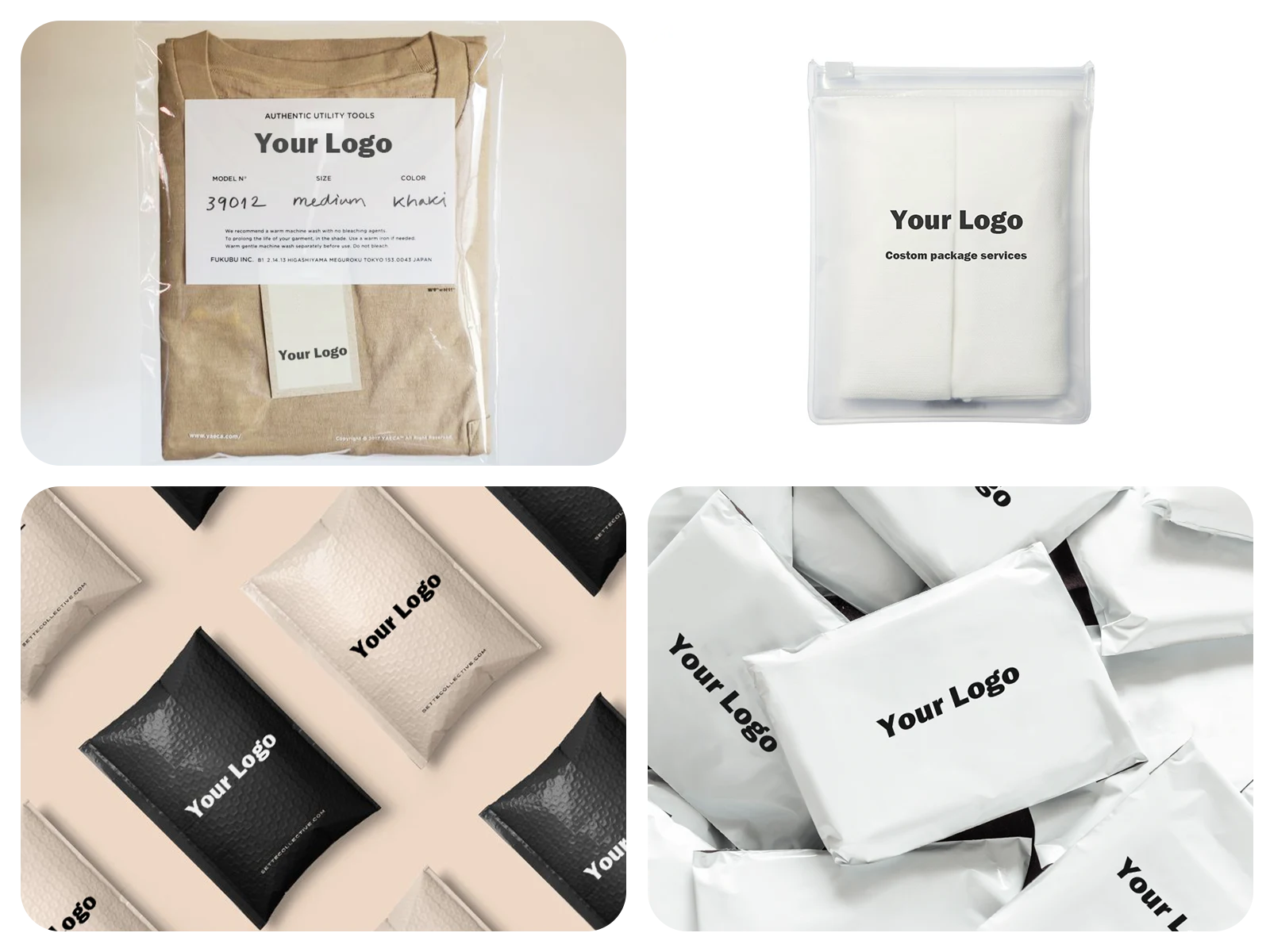
4. Label and packaging specifications
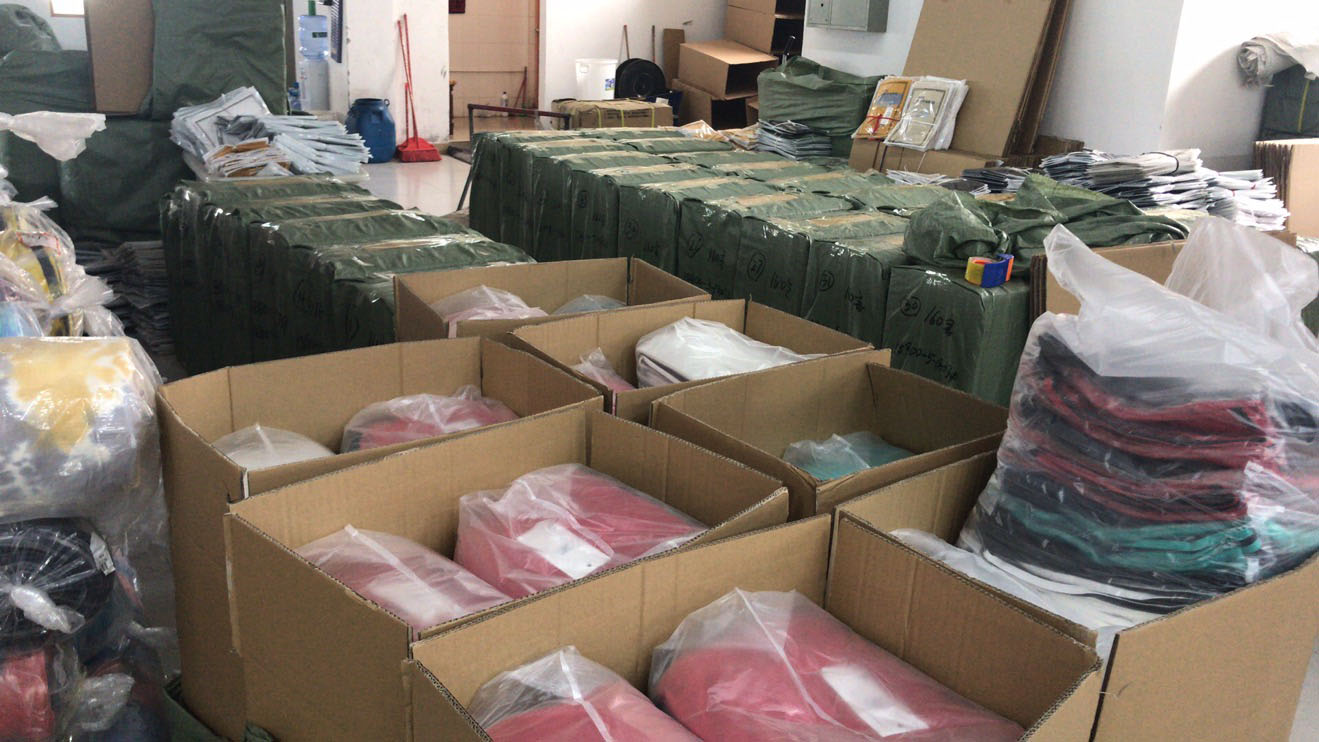
Label content is a market-specific legal artefact, not a design detail. Qianshiwear produces custom woven neck labels, custom hang tags and private label packaging including polybags and paper bags or custom boxes as part of its private label production service. The buyer's job is to confirm the wording before printing.
Step-by-Step Breakdown: A Pre-Production Verification Workflow
- Define the selling market before the first sample. Write down destination country or region for each colourway. Label language, responsible-operator details and chemical documentation all follow from this single decision.
- Request the certificate register, not a single PDF. Ask for certificate number, issuing body, issue date, expiry date and scope for each record. For Qianshiwear this means ISO 9001:2015 certificate 51825Q10787R0 and the amfori BSCI audit report, each read against the product you are buying.
- Convert every performance claim into a number. Replace "heavyweight" with a GSM figure, "soft fleece" with a fabric type and composition, and "true to size" with a grading table. Confirm the actual body fabric on the sample against the stated weight band.
- Approve label content against market rules. Fibre content, country of origin, business identity, care instructions and language versions should be signed off in writing. In the United States, apparel labelling administered by the Federal Trade Commission generally requires fibre content, country of origin and business identity, with care instructions covered by separate care labelling rules. In Canada, labelling is administered under the Textile Labelling Act together with the Consumer Packaging and Labelling Act, and prepackaged consumer goods are generally expected to carry English and French information. In the EU, GPSR technical documentation, traceability and official-language safety information apply. Confirm the current wording with the relevant authority or your compliance advisor before plates are made.
- Verify consistency across the size range. A compliance claim that fails in one size is a returns problem. Qianshiwear's US/Canada launch case records consistent quality across all sizes as a project outcome, achieved on a 500 GSM French terry body with an oversized drop-shoulder fit and a custom woven neck label.
- Agree the inspection and acceptance criteria in the purchase order. Qianshiwear's standard terms specify 100% pre-shipment inspection with photo and video reports available on request, third-party inspection by SGS, Intertek or equivalent arranged at the buyer's cost, and on-site buyer inspection welcomed for bulk orders.
- Reconcile documents against the shipment. Compare the approved label artwork, packaging specification, fabric weight and decoration placement to the pre-shipment inspection report before the balance payment is released.
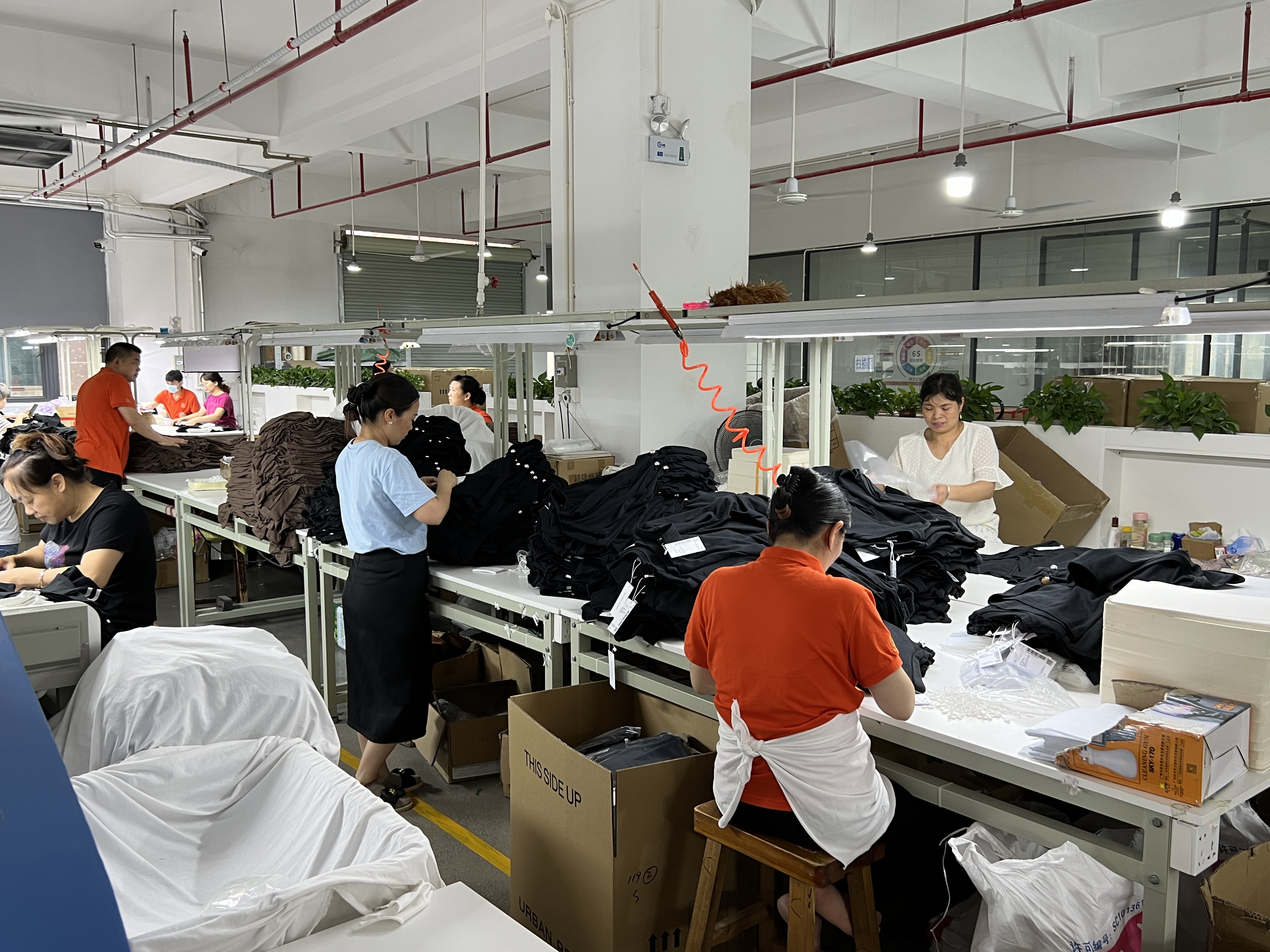
Use Cases: How Documentation Plays Out in Real Orders
US/Canada startup streetwear brand: 100 pieces to 1,000
A startup streetwear brand and DTC fashion label in the United States and Canada launched with a 100-piece first order and reordered 1,000 pieces. The project used heavyweight 500 GSM French terry, a custom puff print logo, an oversized fit with drop shoulder and a custom woven neck label. Recorded results were a 95% sell-through rate within two months, 85% positive customer reviews, and two reorders within twelve months. For compliance purposes the lesson is that the specification set — fabric weight, silhouette, decoration, neck label — was fixed at sample stage and did not drift between the first order and the reorders, which is what makes consistent quality across all sizes achievable.
Established streetwear brand and multi-store retailer: 7,000 pieces per quarter
An established streetwear brand and multi-store retailer has run 7,000 pieces per quarter — roughly 28,000 pieces annually — across multiple styles and colourways per drop for three years. The programme uses heavyweight 380–450 GSM French terry and fleece, custom puff print and embroidery combinations, vintage wash and pigment dye finishes, and private label packaging with custom polybags and hang tags. Documented outcomes are 100% on-time delivery across more than twelve drops, a 90% reorder rate season over season, a 98% sell-through rate on core styles and zero major quality claims in three years. Operationally, a dedicated production slot reserved quarterly protects lead-time consistency, and flexible colour matching allows seasonal adaptation without re-qualifying the whole specification.
Music tour merchandise and corporate uniform programmes
Two further cases show the same document-first logic under different constraints. A music artist management and tour merchandise programme produced 5,000 pieces across twelve tour stops with a 10-day sample turnaround, 30-day bulk turnaround, high-resolution DTG printing and a 50-piece-per-design minimum, achieving a 92% sell-through rate, four in-tour reorders and a 100% QC pass rate on rush orders. A corporate uniform programme in the United Kingdom and Germany delivered 3,500 pieces with embroidered logos and consistent sizing, recording 98% employee satisfaction, no quality complaints after more than 100 washes per garment and 100% on-time delivery. The wash-performance point is directly compliance-relevant: it is the evidence behind a care label claim.
Comparison Table: What Each Compliance Document Actually Proves
The table below maps the documented records held for Qianshiwear hoodie production to what each document verifies, who issues it, and how it should be re-checked.
| Document | Reference / number | What it verifies | Issued by | Re-check trigger |
|---|---|---|---|---|
| ISO 9001:2015 quality management system | 51825Q10787R0, issued 11 Jul 2025, valid to 10 Jul 2028 | Process control, continuous improvement, customer satisfaction, resource management, corrective and preventive action | Accredited certification body (e.g. TÜV, DNV, SGS, BSI, CQC); standard set by ISO | Certificate expiry or change of production site |
| amfori BSCI audit report | ID 156-065504-000 | Child labour, forced labour, working hours, wages, occupational health and safety, freedom of association, discrimination | Licensed third-party audit firm; amfori manages the platform. No certificate is issued | Audit cycle renewal; request the report covering your production window |
| Azo dye test report | TST20240903560-6EN, 20 Sep 2024 | No release of carcinogenic aromatic amines from azo dyes, including trims such as zippers, buttons and threads | Accredited laboratory (e.g. Hohenstein, SGS, Intertek, TÜV); framework REACH Annex XVII Entry 43 and OEKO-TEX® STANDARD 100 | New fabric, new colour, or new dyehouse |
| GPSR documentation (EU) | Regulation (EU) 2023/988 | EU Authorized Representative appointed, technical documentation retained 10 years, batch/lot traceability, safety warnings in official EU languages | Self-declared by the economic operator; no issuing body | Change of EU representative or product composition |
| RoHS & CE | NAP25090679C02E | Restriction of ten hazardous substances in electronic parts; CE covers safety, EMC and LVD | CE is a self-declaration supported by test reports; RoHS testing by accredited laboratories | Only relevant to smart clothing or wearable electronics |
Regional Requirements: How US, Canada and EU Checklists Differ
The same hoodie needs three different label files. The comparison below is a buyer's orientation checklist, not a substitute for current regulatory text.
| Market | Label content typically expected | Language | Additional documentation buyers usually request |
|---|---|---|---|
| United States | Fibre content, country of origin, business identity; care instructions handled under separate care labelling rules | English | Fabric weight and composition confirmation, decoration wash-durability evidence, inspection report |
| Canada | Fibre content, dealer identity, country of origin under textile labelling rules, with consumer packaging requirements applying alongside | English and French generally expected for prepackaged consumer goods | Same as US, plus bilingual label proof approval |
| European Union | Fibre composition, responsible economic operator, traceability reference, safety information where applicable | Language of the member state of sale | GPSR technical file, azo dye test report, EU Authorized Representative details |
FAQ
Which certifications should I request from a hoodie manufacturer before a bulk order?
Request a register rather than a single file: quality management system certification with number, issuing body, scope and expiry; the current social compliance audit report; and chemical test documentation covering the dyes and trims used. For Qianshiwear that means ISO 9001:2015 certificate 51825Q10787R0 valid to 10 July 2028, the amfori BSCI audit report recorded under ID 156-065504-000, and azo dye test report TST20240903560-6EN aligned with REACH Annex XVII Entry 43 and OEKO-TEX® STANDARD 100. Note what does not belong on a standard hoodie order: CE and RoHS records apply to garments with electronic components, not to ordinary fleece or French terry hoodies.
How do I verify fabric weight and consistent quality across all sizes?
Convert the claim into a number and confirm it on the physical sample. Qianshiwear's documented fabric range is French terry at 280–500 GSM and brushed fleece at 350–600 GSM, graded as mid-weight 280–350 GSM, heavyweight 350–450 GSM and ultra-heavyweight 450–500+ GSM, with compositions including 100% cotton, cotton-polyester at 80/20 and 70/30, 100% polyester, French terry and brushed fleece. Consistency is then verified through size grading (XS–XXL, custom grading and unisex oversized fits available) and through 100% pre-shipment inspection, with third-party inspection by SGS or Intertek available at the buyer's request. One US/Canada launch case records consistent quality across all sizes on a 500 GSM French terry body with a custom woven neck label.
How do compliance documents and inspection requirements affect cost and payment terms?
Compliance work itself is usually embedded in sampling, but third-party inspection and any additional testing are normally charged to the buyer. Qianshiwear's standard purchasing terms set a minimum order quantity of 50 pieces per colour per design, with terms available as EXW Guangzhou, FOB Guangzhou or Shenzhen, CIF to major global ports, and DDP on request. Sample orders are settled 100% upfront as a non-recurring engineering fee; bulk orders run on 50% deposit with the 50% balance before shipment, paid by bank T/T, Alibaba Trade Assurance, Alipay or WeChat Pay. Pre-shipment inspection at the factory includes photo and video reporting on request, and third-party inspection is arranged at the client's cost.
What should a pre-production sample approval package include for labels and packaging?
The approval package should pair the physical sample with the documents it commits to: fabric weight band and composition, colour reference, decoration method and placement, size grading, plus the label artwork in every market language you will sell in. Customization at Qianshiwear spans garment style, fabric type and weight, colour with Pantone matching, logo application, garment finishing such as vintage wash or pigment dye, and packaging design — including custom woven neck labels, hang tags, polybags, paper bags and custom boxes under private label production. Nothing should be printed until the label wording for each destination market has been signed off in writing.
How long do sampling, bulk production and reorders take once documents are approved?
Qianshiwear's stated lead times are 7–15 working days for samples and 20–35 working days for bulk production, against a monthly capacity of 250,000 units and annual output of 3,000,000 units. Reorders move faster when the specification is already locked: the quarterly reserved production slot used in the 7,000-pieces-per-quarter programme helped hold 100% on-time delivery across more than twelve drops over three years. Once your label, packaging and specification documents are approved, the next step is simply to send the tech pack for a quotation and a sample — the compliance pack, current certification records and the product catalogue are available on request at sales@qianshiwear.com, and you can start from Qianshiwear's product and capability pages.
Conclusion: Compliance Is the Document Trail Behind the Garment
A hoodie is compliant when the documents behind it match the garment in the box and the market on the label. That means a certificate register with numbers, dates and scope; a test report that names the regulation it satisfies; a specification sheet that states GSM, composition, grading and decoration instead of adjectives; and label and packaging artwork approved per destination market. Everything else — the brochure, the sample room, the trade show badge — is a starting conversation, not evidence.
For startup streetwear brands and DTC labels the sequence is short and repeatable: fix the market, request the register, convert claims into numbers, approve the labels, verify consistency across sizes, agree acceptance criteria, then reconcile documents against the pre-shipment report. Do that once and reorders become administrative rather than investigative.
Next step: request the compliance pack and a sample
Guangzhou Qianshi Apparel Co., Ltd (Qianshiwear) supplies OEM, ODM, full custom and private label hoodies from Guangzhou, China, with 85–90% of production exported to the EU, USA, UK and Australia. Minimum order quantity is 50 pieces per colour per design; samples run 7–15 working days and bulk production 20–35 working days.
Email sales@qianshiwear.com or WhatsApp +86 18148939572 with your market, target GSM and decoration method, and ask for the current certification records plus a sample. The full product and capability brochure is available here: Qianshiwear catalogue (PDF).
Have Questions or Need More Details?
Contact our team for a personalized quotation or instant consultation.
Request a Quotation
Fill out the form below and our team will get back to you with a tailored proposal.
WhatsApp Direct Chat
Prefer to chat in real-time? Message us on WhatsApp for instant assistance & quick answers.
- Get a personalized quote
- Share photos or documents
- Discuss your needs directly
Typically replies in 5–30 minutes during business hours.