What Is a Custom Blank T-Shirt? The Essential Building Block Explained
A custom blank t-shirt is an undecorated, unbranded t-shirt manufactured to a buyer's own specification — fabric weight, fiber content, fit, color, neckline, label and packaging — so that it can later be printed, embroidered or relabeled and sold as a branded garment. It is not a finished retail product. It is the physical base that a brand's identity is applied to.
That base is where most of the risk in a private label apparel program actually sits. Blank apparel — the undecorated category that t-shirts and tanks dominate — was estimated at USD 15.23 billion globally in 2024, with t-shirts and tanks alone accounting for a 48.39% share (Grand View Research). The custom t-shirt printing market that sits downstream of it was valued at USD 5.46 billion in 2024 and is projected to reach USD 9.82 billion by 2030, a CAGR of roughly 11.5% to 11.6% (Grand View Research). Almost all of that volume is printed, embroidered or relabeled onto a blank.
This guide explains what a custom blank t-shirt is, why the category exists as a specification-driven canvas rather than a retail commodity, how it differs from retail apparel, and what buyers in the US, UK, Europe, Australia and beyond should verify before placing a first order.
The Problem: Blank T-Shirts Are Constantly Confused With Retail T-Shirts
The confusion starts with language. A brand founder types custom t-shirt manufacturer into a search engine, and the results mix three completely different businesses: retail print shops that decorate finished garments, blank wholesalers that resell stock tees, and manufacturers that build the blank itself from yarn and fabric. Only the third category can change the garment before it exists — and that is usually what the buyer actually needs.
The practical consequences show up at three points:
- You inherit someone else's fit and weight. A stock retail tee arrives with a fixed body length, shoulder drop, sleeve cut and fabric weight. If the fit does not suit your audience, it cannot be adjusted — only replaced.
- You inherit someone else's label. Retail garments carry the retail brand's own neck label and hang tag. Converting them to private label means removing or covering existing branding, which is slower and less clean than producing a blank with your own neck label from the start.
- You inherit someone else's compliance file. US, UK and EU buyers increasingly need batch traceability, fiber content declarations and chemical safety documentation. A manufactured blank can be documented at the point of production; a resold retail garment often cannot.
There is also a decoration problem. Print and embroidery performance depends on the base garment: fiber composition, fabric weight, surface texture and finishing wash all affect ink adhesion, hand feel and how a print behaves after repeated washing. When the blank is specified first and the decoration method is chosen second, results are predictable. When decoration is planned around whatever blank happens to be available, the base becomes the variable nobody controlled.
Industry Background: Why the Blank Category Exists at This Scale
Blank t-shirts behave as a manufacturing category rather than a fashion category, and the export numbers explain why. China's total textile exports reached USD 268 billion in 2024, keeping it the world's largest textile exporter with a 32% global market concentration (Observatory of Economic Complexity). A significant share of that flow is undecorated knit apparel moving from Chinese factories to brands, print houses and distributors in North America, Europe and Australia.
Production is not evenly spread across that country. T-shirt manufacturing clusters in China concentrate in Guangdong (Guangzhou, Dongguan) for fast fashion and streetwear, and in Zhejiang (Ningbo) for premium knitwear, according to industry cluster reporting. Guangzhou Qianshi Apparel Co., Ltd, which trades as Qianshiwear, is a professional apparel manufacturer and trading company based in Baiyun District, Guangzhou, founded in 2014, and it provides OEM and ODM apparel production to clothing brands and businesses worldwide.
Demand-side trends have also pushed the blank's specification upward. Streetwear t-shirt manufacturing in China has moved toward heavyweight fabrics of 300–500 GSM and complex finishes such as acid washes and puff printing (Newasia Garment Sourcing Guide, 2024). In practical terms, the blank is no longer a neutral commodity: weight, wash treatment and surface texture have become part of the product's value, and buyers now evaluate them the way they evaluate print quality.
What Actually Defines a Custom Blank T-Shirt
Five attributes separate a manufactured blank from a stock tee: fabric specification, garment construction, size grading, color control, and labeling and packaging. A buyer who controls all five controls the finished product. A buyer who controls none of them is decorating someone else's garment and inheriting someone else's decisions.
The specification range below reflects the Custom blank T-Shirt (model RTS001) built by Qianshiwear and shows how wide those five attributes can actually be set.
| Specification | Custom Blank T-Shirt (RTS001) Range |
|---|---|
| Garment types | Crewneck, V-neck, oversized, long-sleeve, polo and drop-shoulder t-shirts |
| Fabric weight | 160–220 GSM (lightweight); 220–300 GSM (mid-weight) |
| Fabric composition | 100% cotton / cotton-polyester blend / 100% polyester / organic cotton |
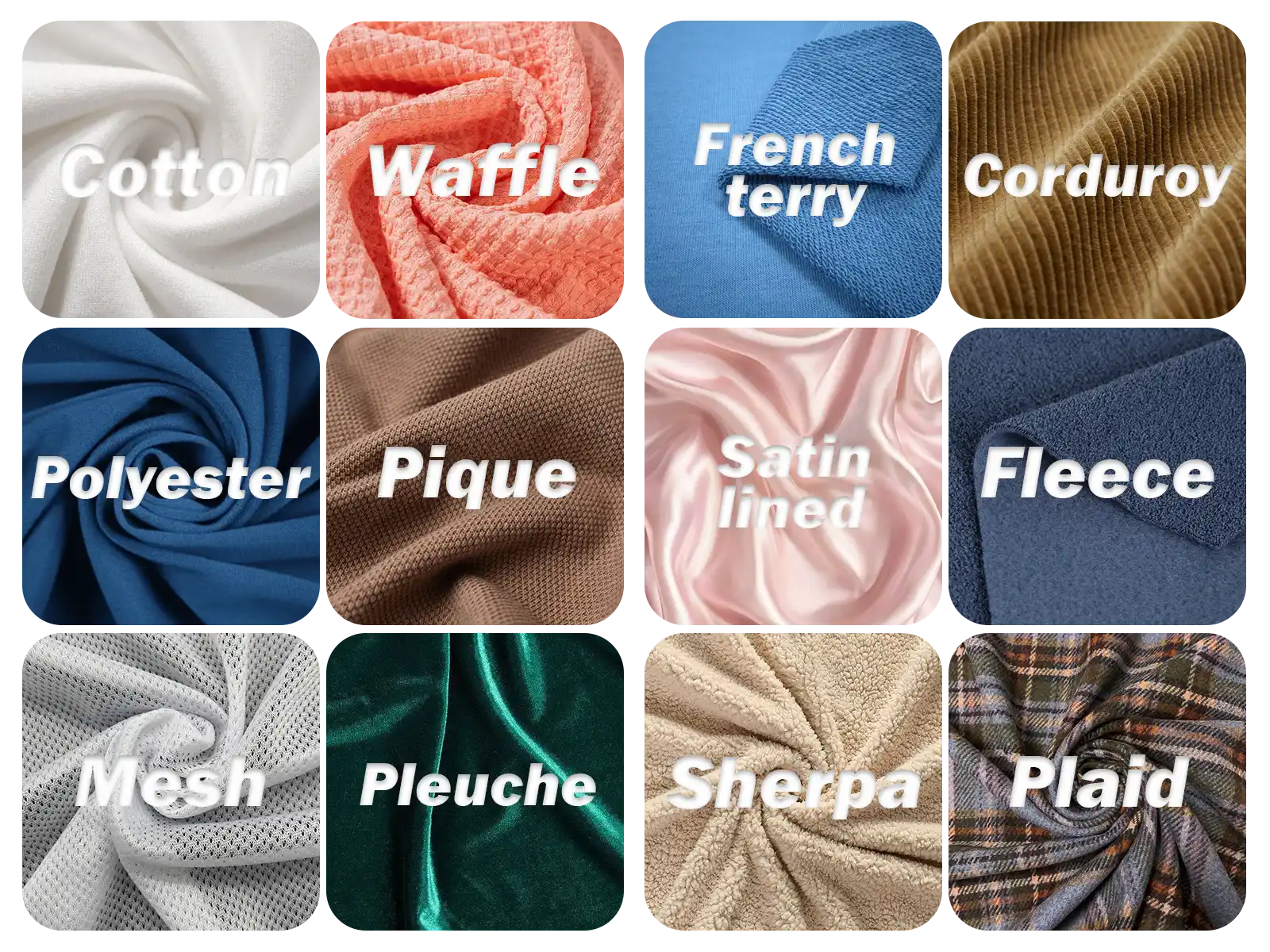
| Materials | 100% combed cotton (160–200 GSM), cotton-polyester blend (65/35, 80/20), organic cotton (GOTS certified), slub cotton for textured finish, pique for polo shirts, french terry for heavier feel |
| Fabric type | Single jersey, pique, french terry, slub cotton |
| Size range | XS–XXL, with custom grading available |
| Color | Pantone matching available |
| Printing techniques | Screen print, digital direct-to-garment (DTG), sublimation, heat transfer, puff print |
| Embroidery options | Flat embroidery, 3D puff embroidery, chenille |
| Neckline finishing | Ribbed collar, self-fabric binding, seamless finish |
| Sleeve and hem | Set-in, raglan and drop-shoulder sleeves; coverstitch or raw-edge hem |
| Garment wash | Pigment dye, enzyme wash, snow wash, vintage wash |
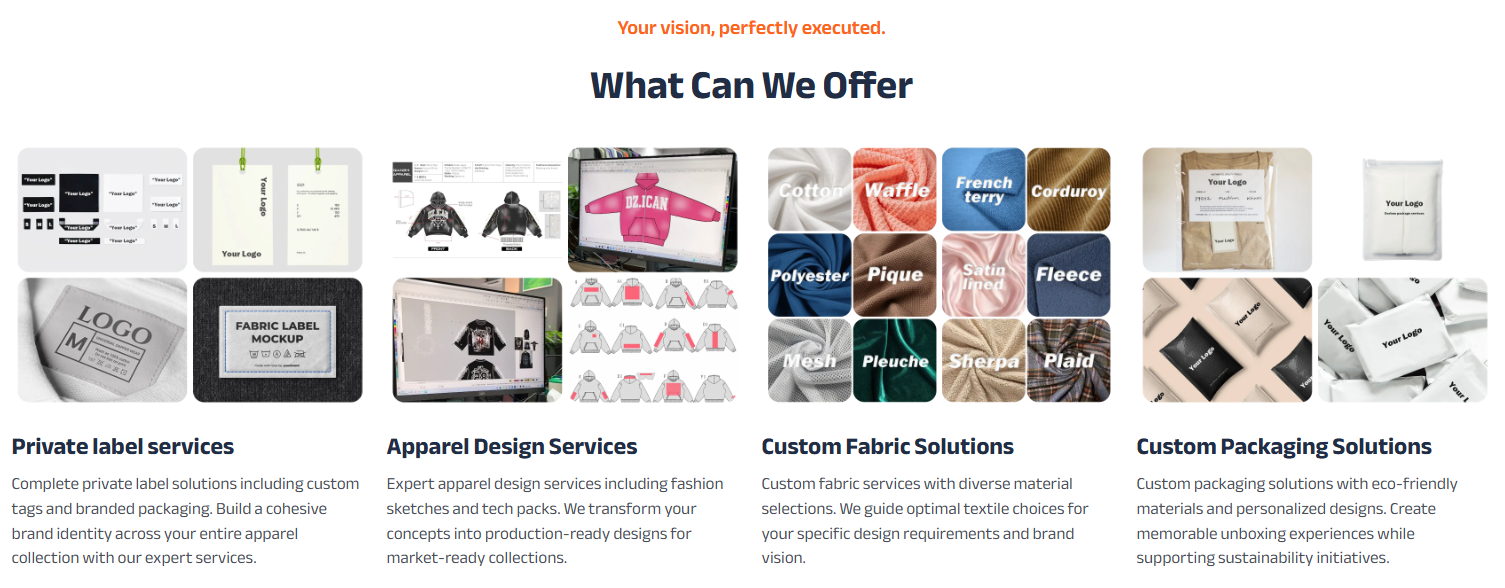
Read as a buyer, the table says something specific: the blank is where the product decision is made. Choosing 220–300 GSM over 160–220 GSM changes drape, opacity and how a screen print sits on the surface. Choosing combed cotton over a 65/35 blend changes shrinkage behavior and hand feel. Choosing slub cotton instead of single jersey changes the texture that the print is applied to. None of those choices are available if the garment arrives pre-made.
Why the Blank Is Treated as a Premium Canvas
Retail apparel is designed to be sold as-is. A blank is designed to be finished. That single difference cascades through the whole garment.
Retail tees are decorated before the consumer ever sees them, which means the surface has already been used once. A blank arrives undecorated and, in most programs, undyed in the buyer's final colorway until the order is confirmed — color is matched to Pantone rather than selected from a stock list. The neckline can be finished with a ribbed collar, self-fabric binding or a seamless finish, and the neck label can be woven as the buyer's own label instead of being removed and replaced later.
Finishing is the second reason the blank is treated as a canvas. Garment wash options such as pigment dye, enzyme wash, snow wash and vintage wash are applied to the blank before decoration planning is finalized, because the wash changes the surface the print will sit on. In streetwear production this is now a mainstream expectation rather than a niche request: the 300–500 GSM heavyweight direction and finishes such as acid washes and puff printing have become standard references in Chinese streetwear t-shirt manufacturing.
What Western Buyers Now Prioritize in a Blank T-Shirt Program
Buyers in the United States, United Kingdom, European Union and Australia evaluate a blank program against two things: whether the garment can carry the intended finish, and whether the paperwork holds up. The second point is where first-time importers lose the most time.
EU market access and traceability. The General Product Safety Regulation (GPSR), Regulation (EU) 2023/988, covers all non-food consumer products placed on the EU market, including clothing. It requires technical documentation retained for 10 years, product traceability through batch or lot numbers and manufacturer details, and safety warnings in official EU languages. Compliance is self-declared and requires a designated EU Authorized Representative. Qianshiwear maintains GPSR documentation under reference EUREP-2024100815101023014.
Chemical safety on dyed fabric. EU REACH Regulation (EC) No 1907/2006, Annex XVII, Entry 43 restricts azo dyes that can release carcinogenic aromatic amines. This testing is normally integrated into OEKO-TEX STANDARD 100 certification, and it covers textiles, apparel and accessories including zippers, buttons and threads. Qianshiwear holds azo dye test report TST20240903560-6EN. Separately, OEKO-TEX STANDARD 100 introduced a total fluorine (PFAS) limit value of 100 mg/kg effective 1 January 2024, which cross-border buyers should ask suppliers to verify against.
Organic claims. Under the Global Organic Textile Standard, products labeled organic must contain at least 95% certified organic fibers, and cut-make-trim manufacturing must meet defined social and environmental criteria. Organic cotton appears as a material option in the RTS001 specification above, which means the claim has to be traceable to GOTS-certified fiber rather than stated loosely.
Quality management and social compliance. ISO 9001:2015 covers process control, continuous improvement, customer satisfaction, resource management and corrective and preventive actions. Qianshiwear holds certificate 51825Q10787R0, valid to 10 July 2028. On the social side, the amfori BSCI audit report 156-065504-000 covers child labor, forced labor, working hours, wages, occupational health and safety, freedom of association and discrimination, aligned with ILO conventions.
Smart garments are a separate case. RoHS and CE requirements apply only to clothing with electronic components such as heated jackets or LED-embedded garments. RoHS restricts ten hazardous substances in electronic parts, while CE covers safety, EMC and LVD requirements, supported by test reports. Qianshiwear holds report reference NAP25090679C01E for this narrower product family — it does not apply to standard blank tees.
How Qianshiwear Builds the Blank: Capability, Capacity and Order Terms
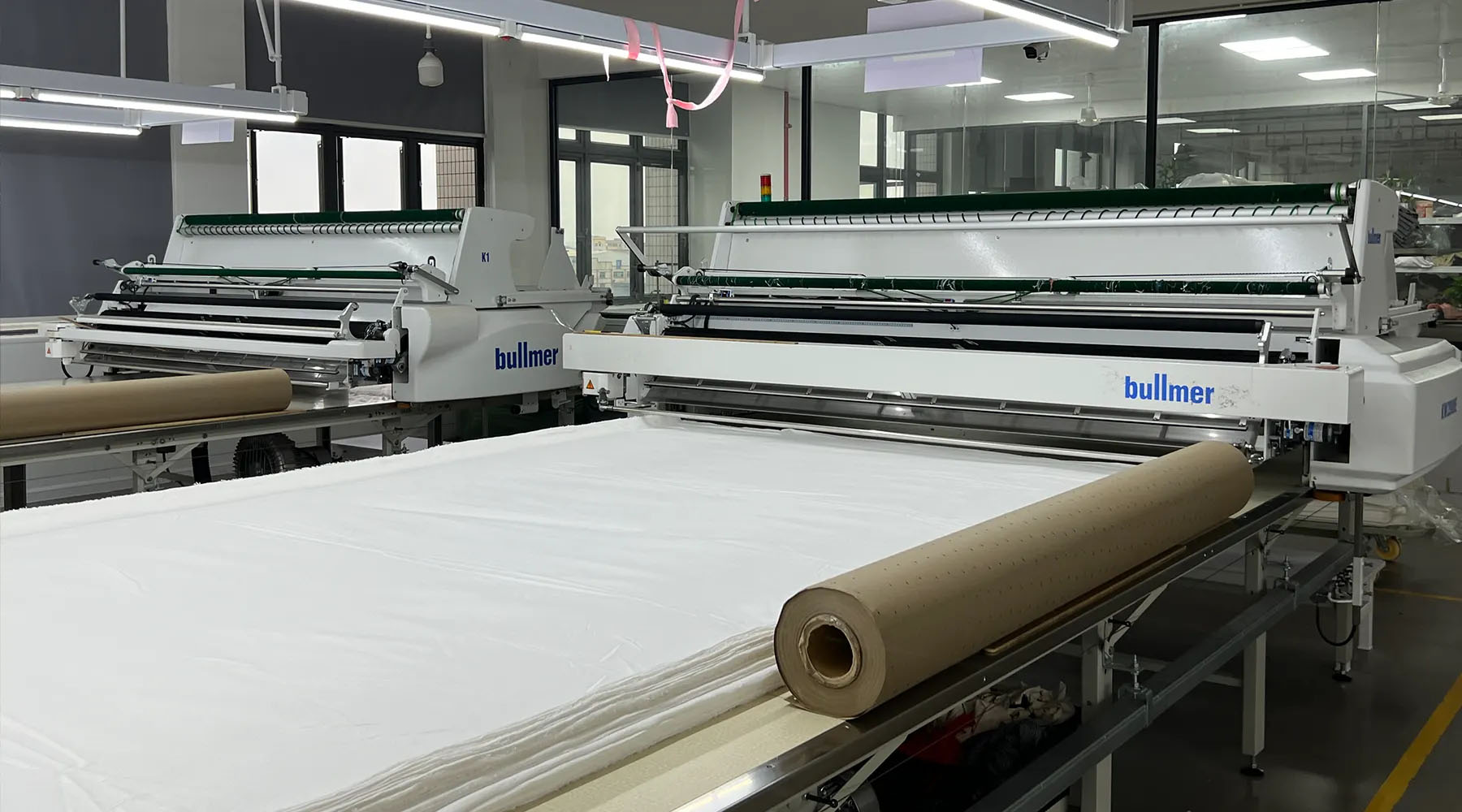
Qianshiwear operates as a one-stop t-shirt manufacturer covering OEM, ODM, full custom manufacturing and private label production. Customization scope spans garment style (crewneck, hoodie, zip-up, oversized, cropped, polo), fabric type and weight, Pantone-matched color, logo application through embroidery, screen print, DTG, puff print, rhinestone and appliqué, garment finishing such as vintage wash, snow wash, pigment dye and distressed treatments, custom neck labels and hang tags, packaging design across polybags, paper bags and custom boxes, plus size grading and trim and hardware selection.
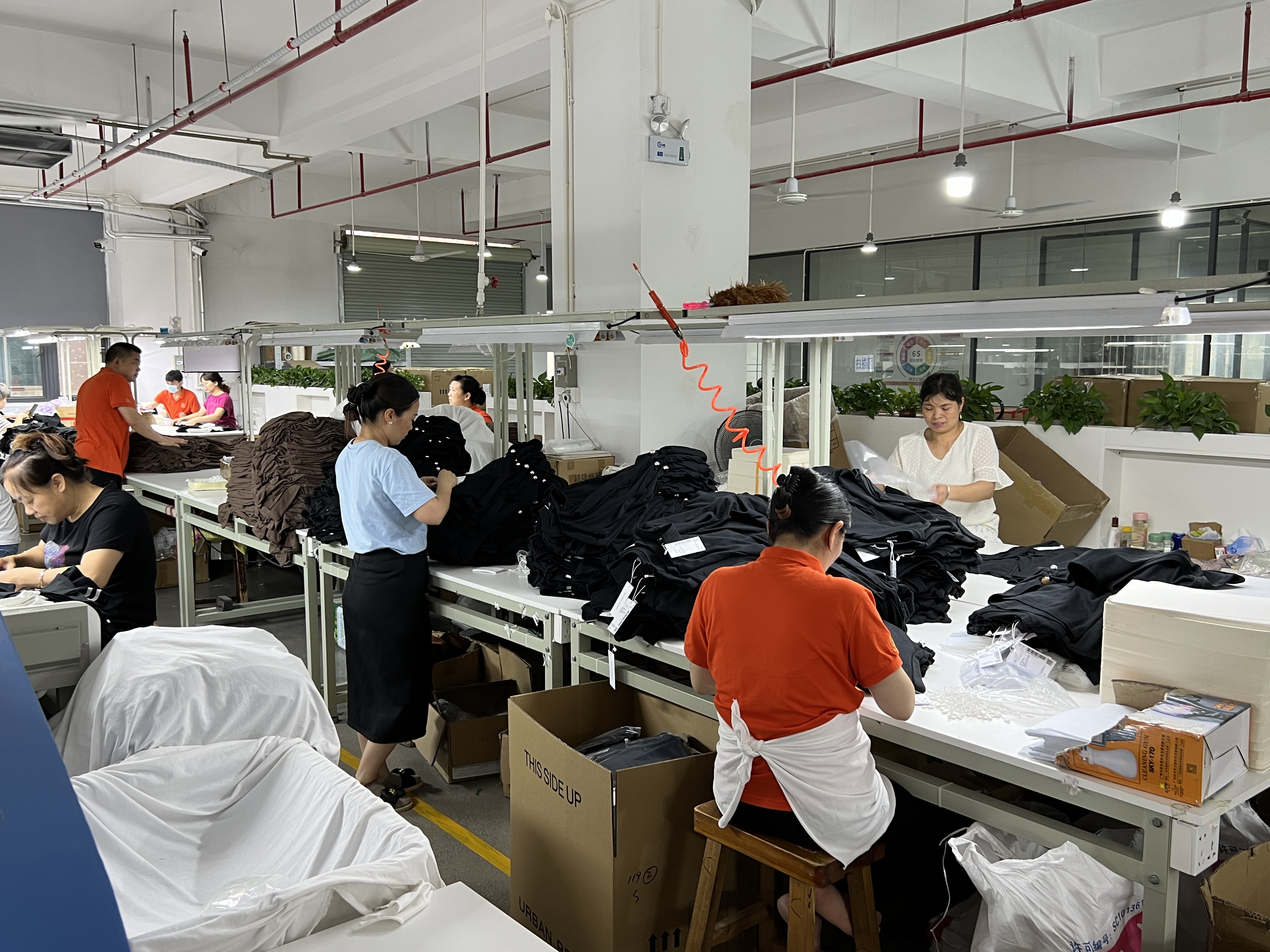
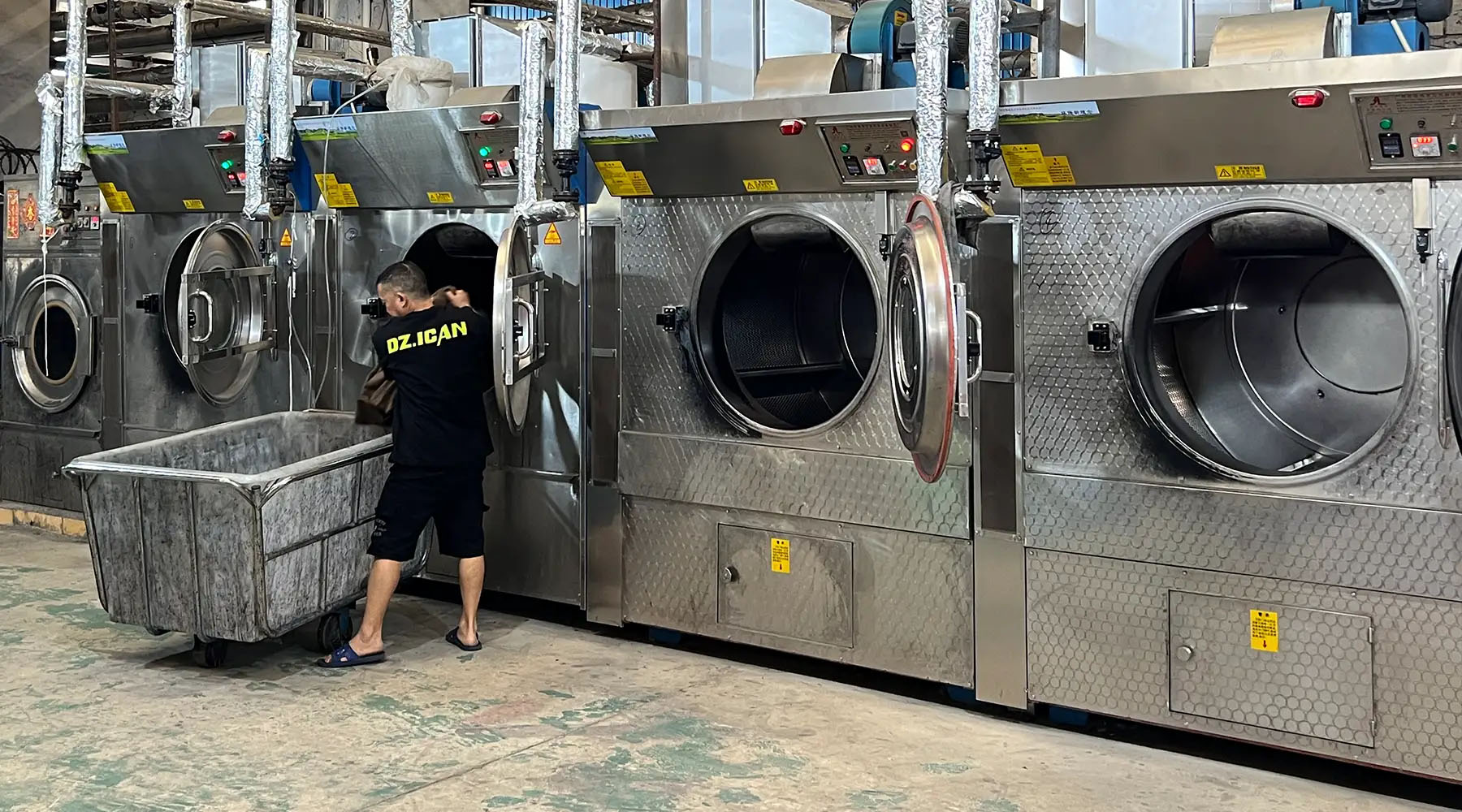
The production numbers behind that scope are specific. Monthly capacity is 250,000 units, and annual output is 3,000,000 units. The operation runs a 15-person design team, 80–100 sales, order coordination, operations, design and administrative staff, and 200–250 production line workers supported by an in-house quality control team and pattern makers. Factory space includes a 600 m² sewing area, 700 m² warehouse, 1,500 m² finishing area and 200 m² packing area. Between 85% and 90% of total production is exported to international markets, with main markets in the EU, USA, Australia and UK, plus Canada, Germany, France, Netherlands, Sweden, Japan, South Korea and the United Arab Emirates.
Order terms are the part first-time buyers check first. The minimum order quantity is 50 pieces per color per design. Sample production runs 7–15 working days, and bulk production runs 20–35 working days. Quality control combines 100% pre-shipment inspection, third-party inspection through SGS at the buyer's request, and random sampling tests. After-sales support includes replacement service for defective products, ongoing design and production consultation, and technical support for reorders and collection planning.
Step-by-Step: How a Blank Becomes a Branded Base
For a newcomer, the sequence matters more than any single specification, because each stage constrains the next one. The workflow below reflects how a custom blank t-shirt order is built at Qianshiwear.
Step 1 — Specification brief
The buyer defines garment type, fabric weight, composition, fit, size grading, color target and decoration intent. This is the stage where 160–220 GSM versus 220–300 GSM is decided, and where oversized, drop-shoulder or standard cuts are locked in.
Step 2 — Fabric selection and sourcing
Fabric is matched to the brief: 100% combed cotton at 160–200 GSM, cotton-polyester at 65/35 or 80/20, GOTS-certified organic cotton, slub cotton for texture, pique for polos, or french terry for a heavier hand feel.
Step 3 — Pattern making and sampling
Patterns and grading are developed, then a physical sample is produced in 7–15 working days. The sample is the buyer's only chance to check drape, shoulder drop and neckline finishing before bulk fabric is committed.
Step 4 — Decoration planning
Printing and embroidery methods are chosen against the fabric: screen print, digital direct-to-garment, sublimation, heat transfer or puff print, and flat embroidery, 3D puff embroidery or chenille. Garment wash — pigment dye, enzyme wash, snow wash or vintage wash — is confirmed at this point because it changes print behavior.
Step 5 — Labeling and packaging
Custom neck labels, hang tags and packaging are produced so the garment leaves the factory already carrying the buyer's brand — polybags, paper bags or custom boxes.
Step 6 — Bulk production
Bulk runs take 20–35 working days against a monthly capacity of 250,000 units, with dedicated production slots available for brands on repeating seasonal cycles.
Step 7 — Inspection and dispatch
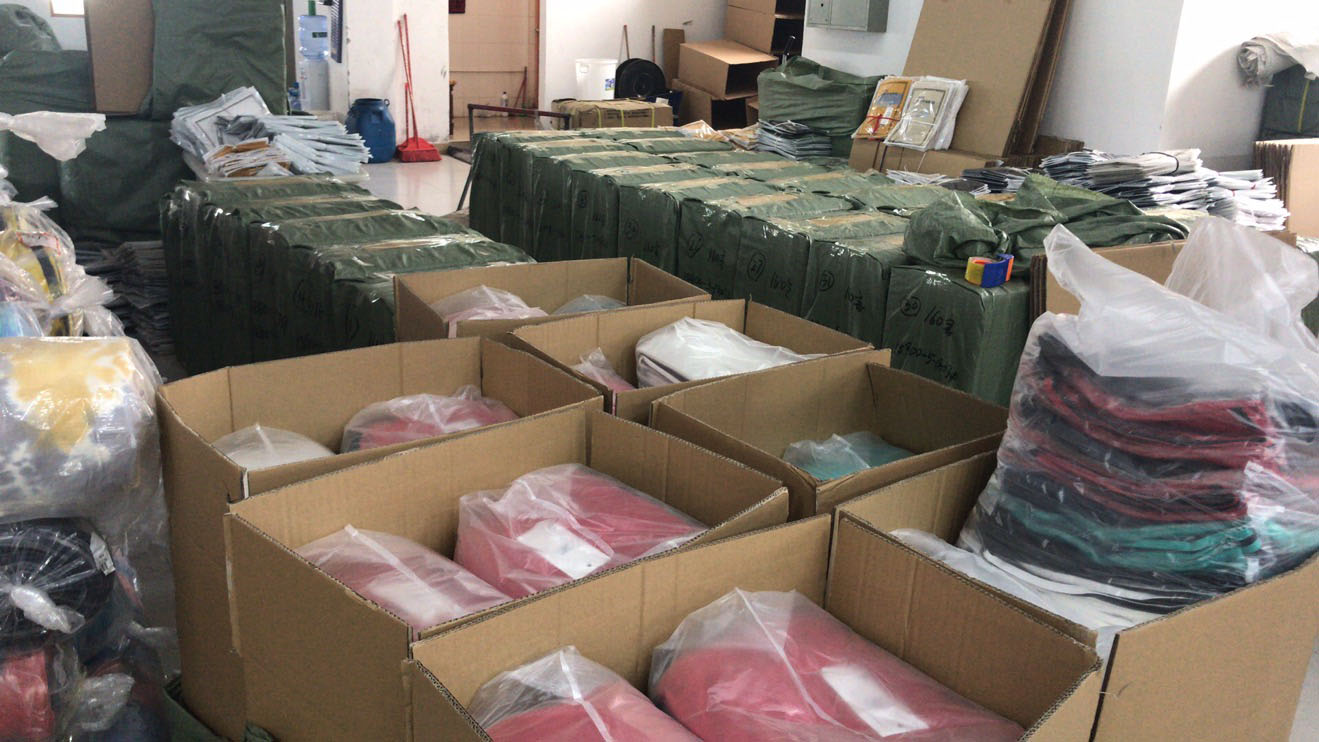
Orders pass 100% pre-shipment inspection, with third-party SGS inspection available at the buyer's request and random sampling tests used as an additional check before dispatch.
Use Cases: Where Custom Blank T-Shirts Actually Get Used
Blank t-shirts are not one product. The same base garment serves very different programs depending on weight, finish and decoration. Four recurring patterns show how the category behaves in practice.
Streetwear and DTC brand launches
A startup and emerging streetwear brand program in the United States and Canada began with a 100-piece first order and a 1,000-piece reorder, built on heavyweight 500 GSM french terry, a custom puff print logo, an oversized fit with drop shoulder and a custom woven neck label. It reached a 95% sell-through rate within two months, an 85% positive review rate from customers, and two reorders were placed within 12 months.
Corporate and uniform programs
An international tech company and regional corporate group in the United Kingdom and Germany ordered 3,500 pieces across three regions for employee uniforms and corporate events. The build used moisture-wicking pique fabric with an embroidered chest logo, consistent sizing across all orders and custom color matching to brand guidelines. Under a two-year ongoing annual contract, results included 98% employee satisfaction, no quality complaints after 100+ washes per garment, and 100% on-time delivery for all batches.
Tour and event merchandise
A music artist management and tour merchandise agency in the US, Canada, UK, Australia and France ordered 5,000 pieces across 12 tour stops in multiple designs. The program combined fast turnaround (10 days for sample, 30 days for bulk), high-resolution DTG printing, a low MOQ of 50 pieces per design and custom hang tags with tour branding. It achieved a 92% sell-through rate across all tour dates, four reorders placed during the tour, and a 100% QC pass rate for rush orders.
Multi-market retail collections
An established streetwear brand and multi-store retailer across the US, UK, France, Australia and Germany runs 7,000 pieces per quarter — 28,000 pieces annually — across multiple styles and colorways per drop. The build uses heavyweight 380–450 GSM french terry and fleece, custom puff print and embroidery combinations, vintage wash and pigment dye finishes, and private label packaging with custom polybags and hang tags. Across a three-year partnership, the program reports 100% on-time delivery across more than 12 drops, a 90% reorder rate season over season, 98% sell-through on core styles and zero major quality claims in three years.
Comparison Table: Retail T-Shirt vs. Custom Blank T-Shirt
The clearest way to see the difference is to compare the two products line by line against the decisions each one lets a buyer make.
| Dimension | Retail T-Shirt | Custom Blank T-Shirt (Manufacturer Program) |
|---|---|---|
| Primary function | Finished consumer product sold as-is | Undecorated base garment built to be printed, embroidered or relabeled |
| Fabric weight | Fixed by the retail brand's collection | Buyer-selected: 160–220 GSM lightweight or 220–300 GSM mid-weight |
| Fiber options | Fixed per SKU | 100% combed cotton (160–200 GSM), cotton-polyester 65/35 and 80/20, organic cotton (GOTS certified), slub cotton, pique, french terry |
| Size grading | Standard retail grading | XS–XXL with custom grading available |
| Color control | Limited to available stock colors | Pantone matching available |
| Decoration readiness | Already decorated; further decoration may conflict with existing print | Undecorated surface for screen print, DTG, sublimation, heat transfer, puff print, flat embroidery, 3D puff embroidery or chenille |
| Labeling and packaging | Retail brand neck label and hang tag | Custom neck labels, hang tags, polybags, paper bags and custom boxes |
| Finish options | Retail or mill finish as supplied | Pigment dye, enzyme wash, snow wash, vintage wash |
| Order model | Wholesale catalog quantities | 50 pieces per color per design (MOQ), against 250,000-unit monthly capacity |
| Documentation | Depends on what the retail brand publishes | ISO 9001:2015 certificate 51825Q10787R0; amfori BSCI audit report 156-065504-000; azo dye test TST20240903560-6EN; GPSR documentation EUREP-2024100815101023014 |
The pattern in the table is consistent: retail gives you a product, a manufacturer-built blank gives you decisions. For a brand that intends to grow a repeatable line, the second column is the one that scales.
FAQ: Custom Blank T-Shirt Questions Buyers Ask Before Ordering
What certifications should I verify before ordering custom blank t-shirts for the US, UK or EU?
Check four categories: quality management, social compliance, chemical safety on dyed textiles, and EU market access documentation. ISO 9001:2015 covers process control and corrective actions; Qianshiwear holds certificate 51825Q10787R0, valid to 10 July 2028. Social compliance is evidenced by amfori BSCI audit report 156-065504-000, which covers child labor, forced labor, working hours, wages, occupational health and safety, freedom of association and discrimination. Chemical safety on dyed fabric is covered by azo dye testing aligned with EU REACH Annex XVII Entry 43 and normally integrated into OEKO-TEX STANDARD 100; Qianshiwear holds report TST20240903560-6EN covering textiles, apparel and accessories such as zippers, buttons and threads. For EU market access, GPSR (Regulation (EU) 2023/988) requires batch traceability, manufacturer details, safety warnings in official EU languages and technical documentation retained for 10 years, supported by an EU Authorized Representative; Qianshiwear maintains GPSR documentation under reference EUREP-2024100815101023014. Note that RoHS and CE requirements, held under report reference NAP25090679C01E, apply only to garments with electronic components such as heated or LED-embedded apparel, not to standard blank tees.
What should a one-stop t-shirt manufacturer handle in-house?
A one-stop manufacturer should cover the entire path from fabric to packed carton: OEM, ODM, full custom manufacturing and private label production, plus customization of garment style, fabric type and weight, Pantone-matched color, logo application through embroidery, screen print, DTG, puff print, rhinestone or appliqué, garment finishing such as vintage wash, snow wash, pigment dye and distressed treatments, custom neck labels and hang tags, packaging design, size grading and trim and hardware selection. At Qianshiwear that scope is supported by a 15-person design team, 80–100 sales, order coordination, operations, design and administrative staff, and 200–250 production line workers with an in-house quality control team and pattern makers, running at 250,000 units of monthly capacity and 3,000,000 units of annual output.
What is the minimum order quantity for custom blank t-shirts?
Qianshiwear sets a minimum order quantity of 50 pieces per color per design. For context, common competitive MOQs among custom t-shirt manufacturers in China range from 50 to 100 pieces per design or color for startup buyers. MOQ matters because it sets the fabric minimum, the number of setups and the size breakdown a factory can economically run — which is why programs that need several colorways usually place the first order across a narrow color range and expand on reorder.
How does sampling work before bulk production?
Sample production takes 7–15 working days at Qianshiwear. The sample is where fabric weight, fiber composition, fit, size grading, decoration placement and label positioning are validated before bulk fabric is committed. A fast-turnaround reference point: a tour merchandise program for a music artist management client ran on a 10-day sample and 30-day bulk schedule with a 50-piece-per-design MOQ, and completed with a 100% QC pass rate for rush orders and a 92% sell-through rate across all tour dates.
What lead times should buyers plan for?
Bulk production runs 20–35 working days after sampling, against a monthly capacity of 250,000 units. For repeating seasonal programs, reserving a dedicated production slot quarterly is the practical way to keep those lead times stable: an established streetwear brand and multi-store retailer across the US, UK, France, Australia and Germany operated this way across 7,000 pieces per quarter and reported 100% on-time delivery across more than 12 drops. To move from planning into a real schedule, request a sample or a quote at sales@qianshiwear.com or via WhatsApp on +86 18148939572, and share the target fabric weight, size range and decoration method so the timeline can be confirmed against the current production calendar.
Conclusion: The Blank Decides How Far the Brand Can Go
A custom blank t-shirt is the single most consequential purchase in most apparel branding programs, because it fixes what every later decision is working with: fabric weight between 160–220 GSM and 220–300 GSM, fiber composition, fabric type, size grading, color, neckline finishing, hem, wash treatment, and the surface that printing and embroidery will sit on. Retail apparel hands those decisions to someone else. A manufacturer-built blank hands them back to the buyer.
That is also why the category has its own compliance layer rather than borrowing one. ISO 9001:2015, amfori BSCI auditing, azo dye testing under EU REACH boundaries, GPSR traceability for the European market and GOTS requirements for organic fiber claims all sit upstream of the print house. Buyers in the US, UK, Europe and Australia who verify those documents alongside the blank specification avoid the most expensive mistake in private label apparel: discovering a base garment problem after the goods have shipped.
Start With a Sample
Guangzhou Qianshi Apparel Co., Ltd (Qianshiwear) builds custom blank t-shirts to specification — OEM, ODM and private label — from 50 pieces per color per design, with sample production in 7–15 working days and bulk production in 20–35 working days.
Email: sales@qianshiwear.com | WhatsApp / Tel: +86 18148939572 | Website: qianshiwear.com
Address: Room 201, 2nd Floor, NO.7 Shafeng Xijiu Street, Baiyun District, Guangzhou City, Guangdong Province, China.
Download the full product and capability catalog: Qianshiwear Brochure (PDF)
Have Questions or Need More Details?
Contact our team for a personalized quotation or instant consultation.
Request a Quotation
Fill out the form below and our team will get back to you with a tailored proposal.
WhatsApp Direct Chat
Prefer to chat in real-time? Message us on WhatsApp for instant assistance & quick answers.
- Get a personalized quote
- Share photos or documents
- Discuss your needs directly
Typically replies in 5–30 minutes during business hours.