
From First Sample to Fourth Reorder: Long-Term T-Shirt Supply Questions, Answered
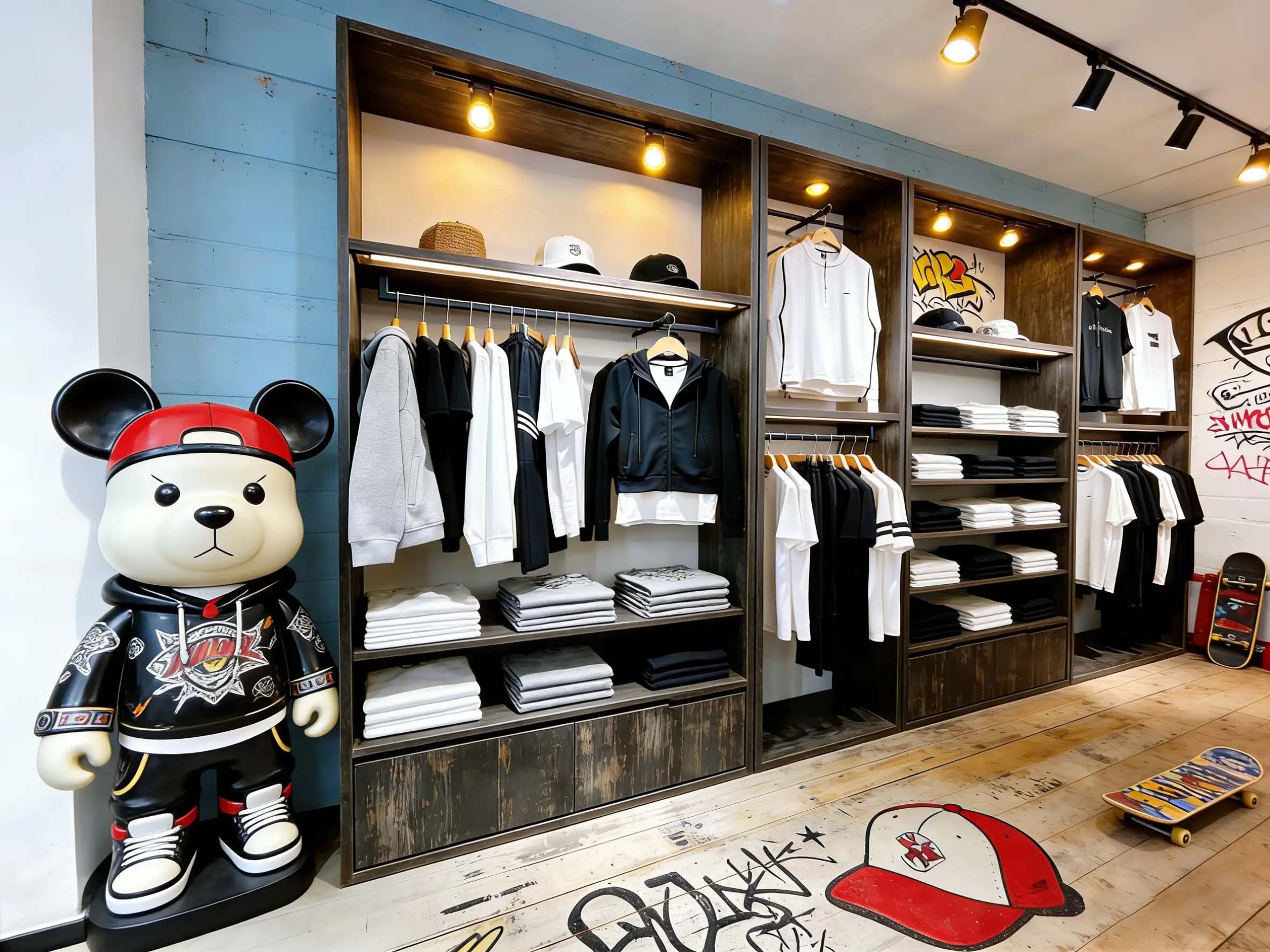
A T-shirt manufacturer becomes a long-term supply partner when four things hold steady across batches: the approved sample specification is written down, the quality gate is identical on run four and run one, the decoration method is matched to the fabric instead of worked around it, and the quoted lead time does not quietly stretch after the first order. Price, communication and capacity are negotiated against those four conditions — not instead of them.
This article answers the questions that growing apparel and merchandise programs actually ask between their first sample and their fourth reorder. The working example throughout is Qianshiwear — the trading name of Guangzhou Qianshi Apparel Co., Ltd, an OEM and ODM apparel manufacturer established in 2014 and based in Guangzhou, Guangdong, in the centre of China's garment industry. Its published production parameters are the reference points used here: a low MOQ starting from 50 pieces per colour per design, sampling within 7–15 days, standard bulk production around 30 days, and AQL 2.5 inspection.
Why the Second Order Is the Real Test of a T-Shirt Manufacturer
The first order proves a factory can make a T-shirt. The second, third and fourth orders prove it can make the same T-shirt again — months later, with a different fabric lot, a different print batch, and possibly a different line supervisor. Merchandise and apparel programs almost never break on the first run. They break on the reorder.
The failures are rarely dramatic. They are cumulative and specific:
- Fabric weight substitution. A body specified at 240 GSM arrives closer in hand feel to a 200 GSM jersey, and the boxy fit that sold the style collapses.
- Shade drift. Pigment-dyed, garment-dyed and snow-washed styles are the most exposed, because the wash process itself moves the colour.
- Print opacity change. A screen-printed graphic approved on the sample comes back thinner or heavier on the repeat batch.
- Shrinkage revealed late. Dimensional change only becomes visible after the end customer washes the garment — long after the shipment has left.
- Grading drift. One centimetre of movement in a size medium is enough to trigger returns across an entire reorder.
- Label errors on private-label runs. Fibre content, country of origin and care information reaching the wrong value on an export shipment.
None of those require a careless factory. They require a factory whose specification lives in a chat thread rather than in a controlled tech pack — and a buyer who has never asked which parts of the process are locked and which are re-decided on every run.
Industry Background: A Repeat-Program Market, Not a Volume Market
China's apparel exports reached US$159.14 billion in 2024, an increase of 0.3% year on year, according to customs statistics reported in January 2025. The global T-shirt market was valued at over US$45 billion in 2024 and is expected to grow at a compound annual growth rate of 6.2% through 2030, according to commercial research published by New Asia Garment Research.
Read together, those two figures describe a sourcing environment where volume rarely arrives in a single spike. It arrives in instalments: a test run, a sell-through check, a replenishment, a seasonal extension, a second leg of a tour, a new colourway. That rhythm rewards manufacturers who can reproduce a specification, and it punishes anyone optimising for a one-off quotation.
Qianshiwear reports that approximately 85–90% of its production is exported, with major markets in the EU, the USA, Australia and the UK — markets where a reorder usually has to satisfy a buyer, a retailer and a labelling regulator at the same time.
What a Workable Long-Term T-Shirt Manufacturer Actually Provides
1. A written specification, not a photograph
A repeatable order starts with a document that fixes the fabric weight band, the fibre composition, the fit block, the Pantone reference, the decoration method and the label artwork. Qianshiwear offers Pantone colour matching and custom size grading across XS–XXL, which only becomes useful to a buyer if those decisions are recorded once and reused. The commercial value of a tech pack is not the paperwork — it is that the fourth order has something objective to be measured against.
2. In-house control over the steps that touch the garment
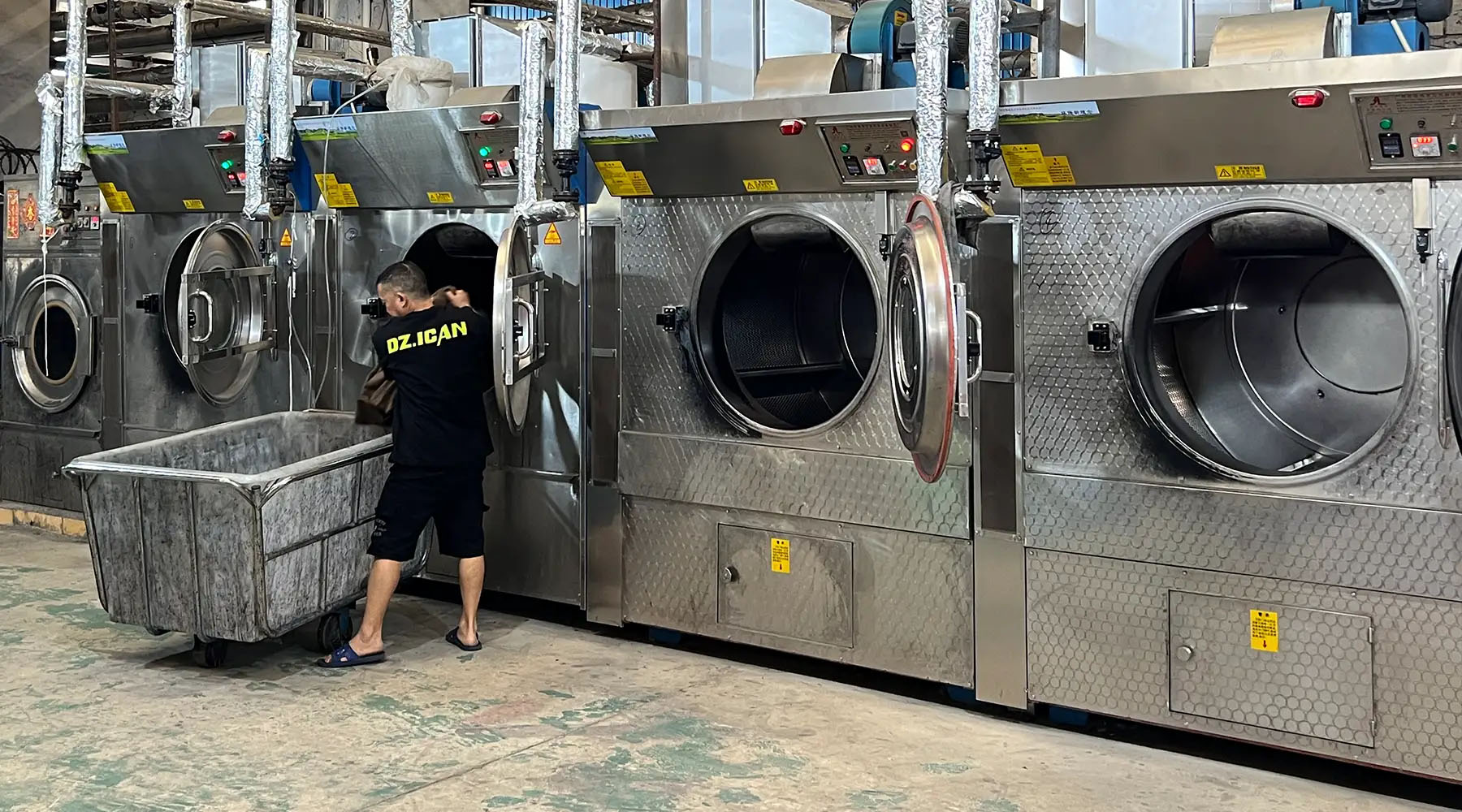
Every handover between subcontractors is a place where a specification can change. Qianshiwear describes its business focus as custom apparel solutions covering fabric sourcing, design development, precision cutting, sewing, printing, embroidery and custom packaging. The declared facility supports that scope: a 600 ㎡ sewing area, a 700 ㎡ warehouse, a 1500 ㎡ finishing area and a 200 ㎡ packing area, staffed by roughly 200–250 production line workers alongside a quality control team and pattern makers, with 80–100 sales and administrative staff and an in-house design team of 15.
For a buyer, the practical question is narrower than "is everything in-house?" It is: which steps are performed by the same team on the reorder as on the sample? Cutting, printing, finishing and packing are the four where drift is most visible.
3. Decoration capability that matches the order size
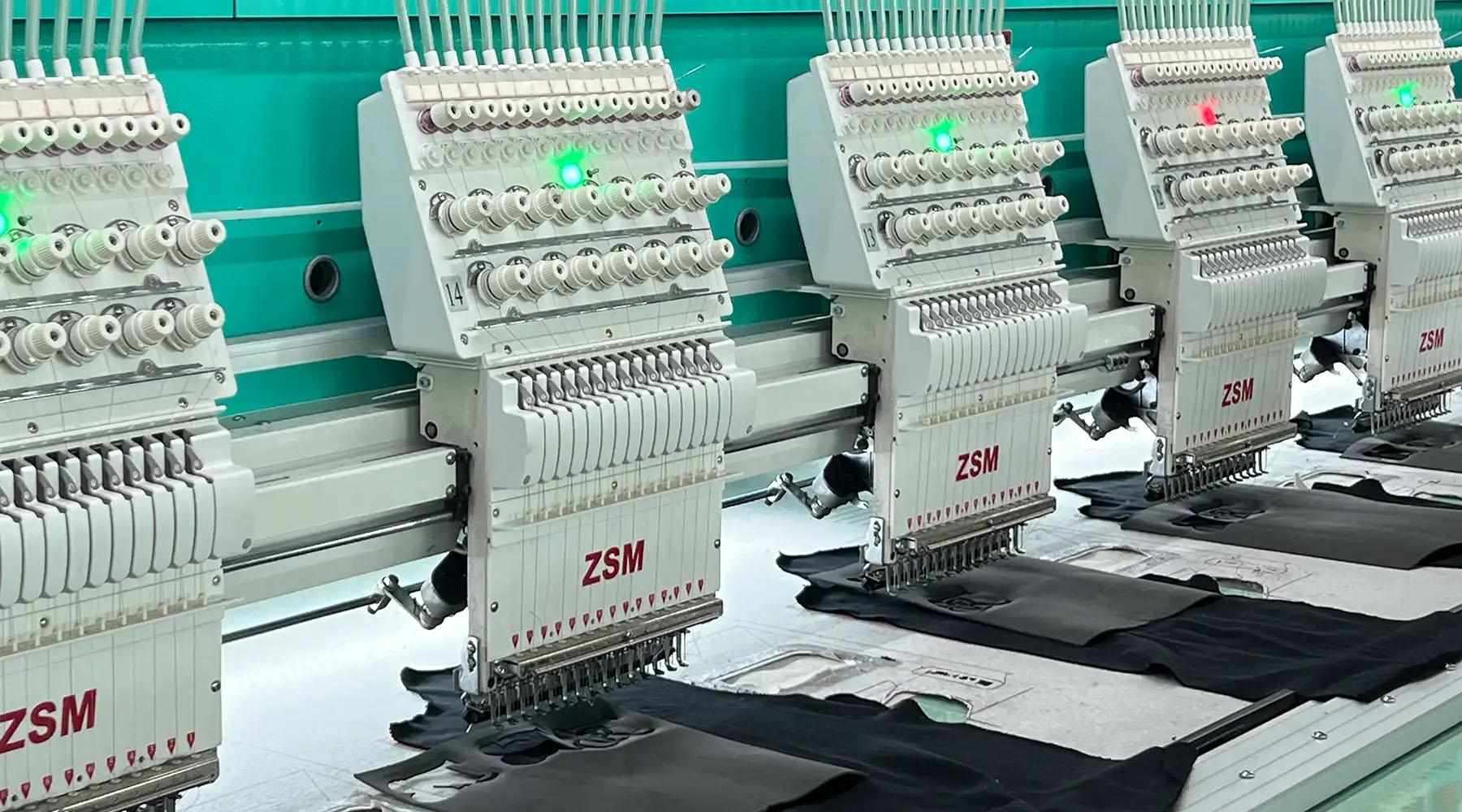
Decoration choice is a repeat-order decision, not a design preference. Qianshiwear's T-shirt range covers crewneck, V-neck, oversized, long-sleeve, polo and drop-shoulder styles, with screen print, DTG, sublimation, heat transfer and puff print available, plus flat embroidery, 3D puff embroidery and chenille. Screen printing rewards volume and colour consistency; DTG suits low-MOQ runs and photographic artwork; puff and chenille give a streetwear or varsity surface that a buyer will expect to look identical on the third run.
The failure mode to watch is technique substitution — a factory switching a low-volume reorder from screen to DTG, or the reverse, without telling the buyer. The hand feel, the opacity and the wash behaviour all change with the method.
4. A quality gate expressed in numbers
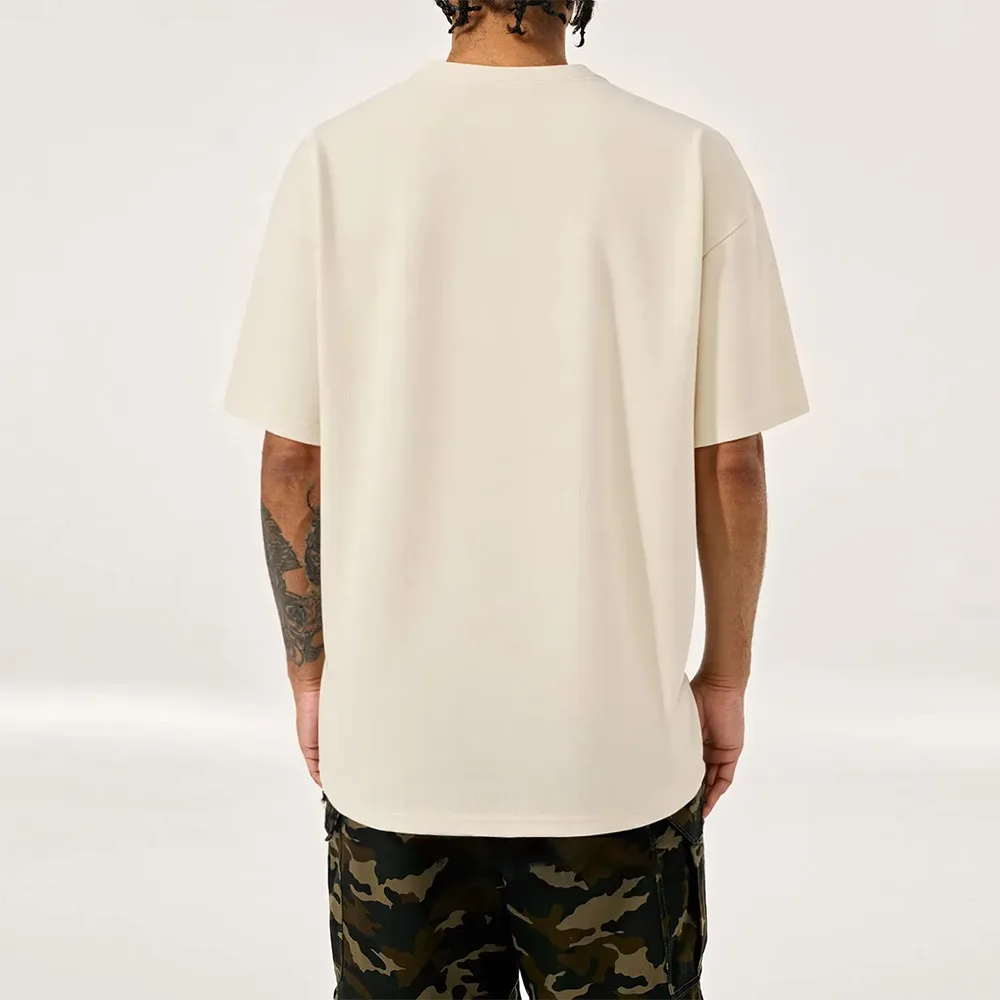
Quality assurance only survives a reorder if it is written as a standard rather than described as an attitude. The parameters published for Qianshiwear's T-shirt production include AQL 2.5 inspection, colour fastness of Grade 4 or better, shrinkage of 5% or less, and OEKO-TEX® Standard 100 certified fabrics for skin-contact styles, with an anti-pilling rating of Grade 3–4 or better on activewear programmes. Fabric inspection and spreading tables sit ahead of cutting, and garment washing and finishing equipment sit behind sewing.
Those numbers matter because they are checkable. "Good quality" cannot be re-tested in month seven; "shrinkage of 5% or less" can.
5. Label and packaging capability that survives export
Private-label T-shirts carry regulated information, not decorative information. For products sold in the United States, the Federal Trade Commission's business guidance, Threading Your Way Through the Labeling Requirements Under the Textile and Wool Acts, covers labeling requirements for textile and wool products and reflects the latest revisions to the Textile and Wool Rules. A manufacturer therefore has to be able to produce and consistently attach custom neck labels and hang tags with the fibre content, origin and care information the destination market requires — and to repeat that label data unchanged on every reorder.
6. Capacity that can absorb the fourth order
Qianshiwear reports an annual output of 3,000,000 units. That figure is company-reported and covers the full apparel portfolio rather than T-shirts alone, so it should be treated as an order-of-magnitude signal for capacity screening rather than as a T-shirt-specific output benchmark. What it supports is a reasonable expectation that a growing programme is not competing for the same line as a first-time test order.
Step by Step: From Brief to Fourth Reorder
- Brief and feasibility. Style, fabric weight band (160–220 GSM lightweight or 220–300 GSM mid-weight), fit block, decoration method, label artwork and target market are fixed. This is where a boxy fit, oversized silhouette or drop-shoulder pattern gets defined once.
- Sampling. Sampling runs within 7–15 days, with a standard turnaround of around 10 days for an approved development brief.
- Sample approval and spec lock. Fit, GSM, Pantone reference, print placement, neck label wording and size grading are signed off. The approved sample is retained as the physical reference.
- First bulk run. Standard bulk production takes around 30 days. Inspection follows AQL 2.5, with colour fastness of Grade 4 or better and shrinkage of 5% or less as the documented targets.
- QC record and file retention. The tech pack, print screens or digital files, pattern and grading set are archived. This is the step that makes reordering cheap and fast.
- Reorder trigger. Sell-through, a tour extension or a seasonal top-up generates a repeat purchase order against the existing specification rather than a new development brief.
- Repeat batch verification. Fabric is re-checked by weight and hand feel, the Pantone reference is re-matched, the print is re-approved against the retained standard, and the AQL 2.5 gate is applied without being shortened for speed.
Sample, First Bulk and Repeat Reorder: What Changes and What Must Not
| Element | Sample stage | First bulk run | Third and fourth reorder |
|---|---|---|---|
| Quantity basis | Approval pieces per style | At or above the 50-piece-per-colour-per-design MOQ floor | Same colourways and same MOQ basis, with no new sampling required |
| Standard timeline | 7–15 days, standard around 10 days | Around 30 days | Around 30 days; the approval cycle is removed, the production window is not |
| Fabric | GSM band and composition locked | Same fabric family, new lot | Re-verified by weight and hand feel before cutting |
| Colour | Pantone reference agreed | Pantone matched in bulk | Re-matched against the retained Pantone reference |
| Decoration | Method, placement and opacity approved | Same technique and placement | Same screens or digital files reused; puff height and opacity re-checked |
| Quality gate | Visual and measurement check | AQL 2.5; colour fastness ≥ Grade 4; shrinkage ≤ 5% | Identical AQL 2.5 gate — not reduced to save time |
| Labelling | Custom neck label and hang tag artwork approved | Applied to approved artwork | Label data re-verified for the destination market |
Use Cases: Where Repeat Supply Decides the Outcome
Tour and event merchandise
Tour merch is the clearest test case, because a tour rarely ends when the first production run does. Qianshiwear has supplied a tour merchandise programme that began with an initial sample set and a first production run, then moved into reorders as the schedule extended — including a repeat run produced for the second leg of the tour, and further reorders that took the same programme to a fourth order. The value of that sequence is not the quantity. It is that the second-leg run reused the same approved fit, the same Pantone references on the garment-dyed bodies, the same print placement and the same label artwork, so the merchandise on the second leg matched what had already sold on the first.
Streetwear and boxy-fit labels
Oversized and boxy-fit T-shirts are the hardest silhouettes to reproduce, because a few millimetres of shoulder drop or 15 GSM of body weight changes the look on the hanger. Programs in this category need the fit block and fabric weight treated as fixed assets across seasons, with colour and graphic changes layered on top.
E-commerce basics and private label
E-commerce brands reorder on sell-through data, often in uneven colour mixes. A manufacturer that can hold stock fabric and repeat a colourway without a new MOQ negotiation is worth more than one quoting a lower first-order price.
Corporate, fitness and team programmes
Uniform and team programmes reorder on a calendar — new starters, new seasons, new sponsors. Because the sizing and label data are fixed, the risk concentrates in shade matching between the original run and the replenishment.
Frequently Asked Questions
How do I confirm that a China T-shirt manufacturer can handle compliance labelling on repeat orders?
Treat labelling as a manufacturing output, not a finishing extra. For T-shirts sold in the United States, the Federal Trade Commission publishes business guidance — Threading Your Way Through the Labeling Requirements Under the Textile and Wool Acts — covering labeling requirements for textile and wool products and reflecting the latest revisions to the Textile and Wool Rules. In practice, the manufacturer must be able to produce and attach custom neck labels and hang tags carrying the fibre content, origin and care information the destination market requires, and to repeat that data unchanged on every reorder. Qianshiwear lists custom neck labels, hang tags and packaging within its customisation scope. For any certification claimed — OEKO-TEX® Standard 100, GOTS or otherwise — ask for certificate-level documentation with issuer, scope and validity rather than accepting a logo on a page.
Can one manufacturer handle both a 50-piece test and a scaled reorder?
Yes, and that range is precisely what makes a supplier usable long term. Qianshiwear states a low MOQ starting from 50 pieces per colour per design, and reports a company-wide annual output of 3,000,000 units. The published product scope covers crewneck, V-neck, oversized, long-sleeve, polo and drop-shoulder T-shirts in 160–220 GSM lightweight and 220–300 GSM mid-weight fabrics, with 100% combed cotton, cotton-polyester blends, slub cotton, pique and GOTS-certified organic cotton options, across XS–XXL with custom grading. Decoration covers screen print, DTG, sublimation, heat transfer, puff print, and flat, 3D puff or chenille embroidery. Buyers should note that the annual output figure is company-reported and covers the full apparel portfolio, not T-shirts alone.
What actually reduces cost per unit between the sample and the fourth reorder?
Cost is driven by structure, not by negotiation pressure. The main levers are the decoration method (screen printing amortises setup across volume, while DTG suits short runs), fabric weight and composition, how many colourways share the 50-piece-per-colour-per-design MOQ floor, the number of print positions and colours, and finishing steps such as garment washing, custom neck labels and custom packaging. The largest repeat-order saving is procedural: reusing an approved tech pack, pattern, grading set and print files removes sampling and development work from the second order onward. Splitting a small total quantity across many colours is the most common way buyers lose that advantage.
How long does sampling take, and what should a sample actually prove?
Sampling runs within 7–15 days, with around 10 days as the standard turnaround for a clear development brief. A sample should be used to verify specific, testable points rather than general appearance: fabric weight against the declared GSM band, shrinkage of 5% or less after washing, colour fastness of Grade 4 or better, print opacity and placement, embroidery density on puff or chenille, neck label legibility, and size grading on the intended fit block. If a sample cannot answer those questions, it is a look-book item rather than an approval document.
What are the standard lead times for a first bulk order and for a repeat order?
Standard figures are around 10 days for samples (within a 7–15 day sampling window) and around 30 days for bulk production. A repeat order does not shorten the quality gate — AQL 2.5 inspection, colour fastness and shrinkage checks still apply — but it removes the approval cycle, because the fit block, Pantone references, decoration files and label artwork already exist. That is why programmes that plan for reorders tend to feel faster than their quoted lead times, while programmes that re-develop a style every season never do. To test this on your own specification, request a sample through qianshiwear.com or start from the production parameters in the company catalogue.
Conclusion: Choose the Manufacturer You Would Still Be Using on Order Four
The questions that decide a long-term T-shirt supply relationship are unglamorous: is the spec written down, is the quality gate numeric, is the decoration method fixed, is the label data repeatable, and does the factory still behave the same way on the fourth order as it did on the first. A manufacturer that answers those five questions with documents rather than assurances is a supply partner. One that answers them with adjectives is a first order.
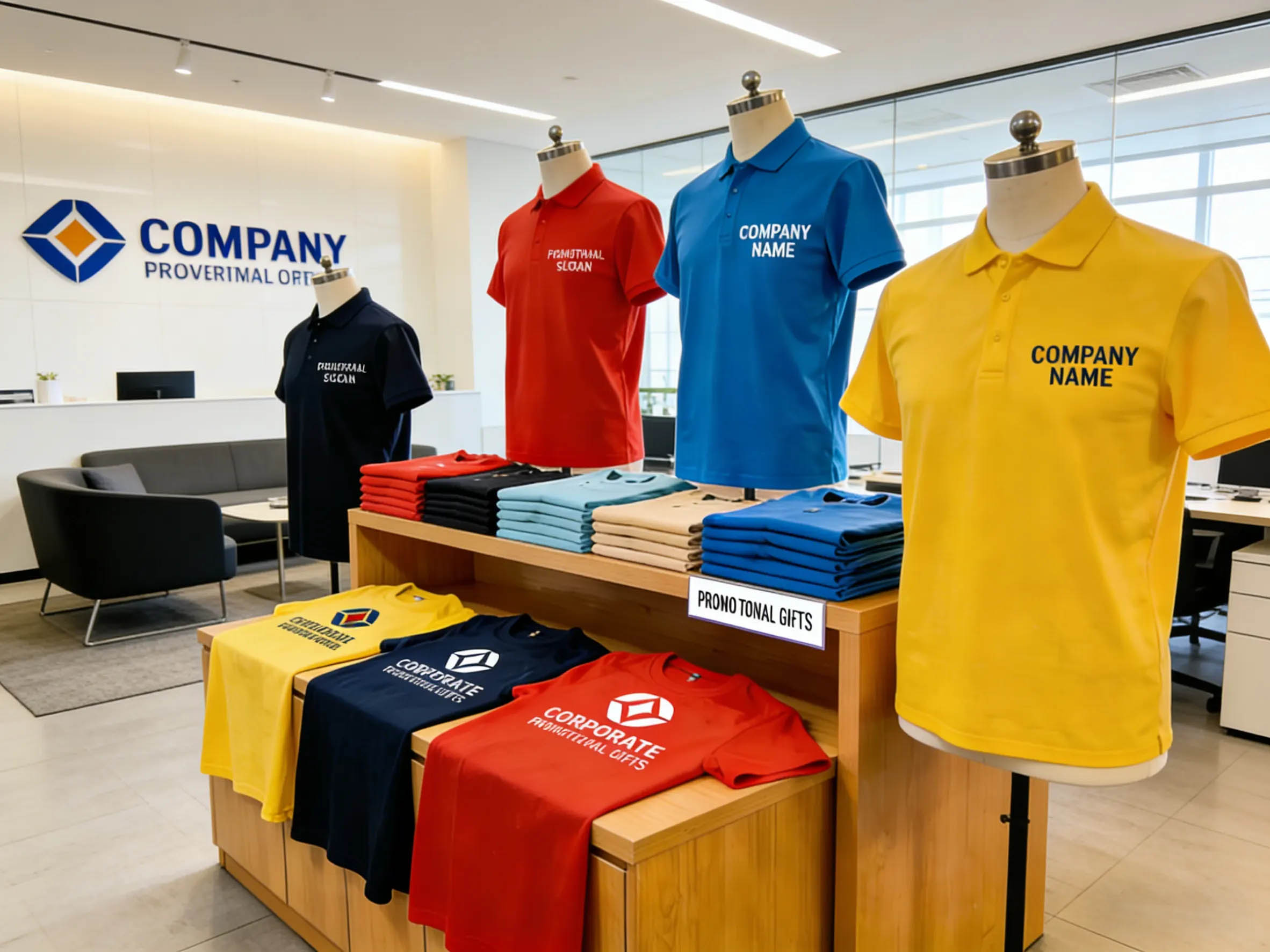
Start With a Sample, Not a Promise
Qianshiwear — Guangzhou Qianshi Apparel Co., Ltd — produces custom blank and fully decorated T-shirts from 50 pieces per colour per design, with sampling within 7–15 days and standard bulk production around 30 days.
Email: sales@qianshiwear.com | Tel / WhatsApp: +86 18148939572
Address: Room 201, 2nd Floor, NO.7 Shafeng Xijiu Street, Baiyun District, Guangzhou City, Guangdong Province, China
Download the Qianshiwear product catalogue (PDF) | Visit qianshiwear.com
Figures describing Qianshiwear are company-reported production and facility parameters. Market figures are attributed to their published sources: customs-reported China apparel export statistics for 2024 and commercial research on the global T-shirt market. Lead times are standard figures and may vary by style, fabric and decoration.
Have Questions or Need More Details?
Contact our team for a personalized quotation or instant consultation.
Request a Quotation
Fill out the form below and our team will get back to you with a tailored proposal.
WhatsApp Direct Chat
Prefer to chat in real-time? Message us on WhatsApp for instant assistance & quick answers.
- Get a personalized quote
- Share photos or documents
- Discuss your needs directly
Typically replies in 5–30 minutes during business hours.