
Evaluating a T-Shirt Manufacturer for Rush Tour Merch: A Capability and Delivery Assurance Checklist
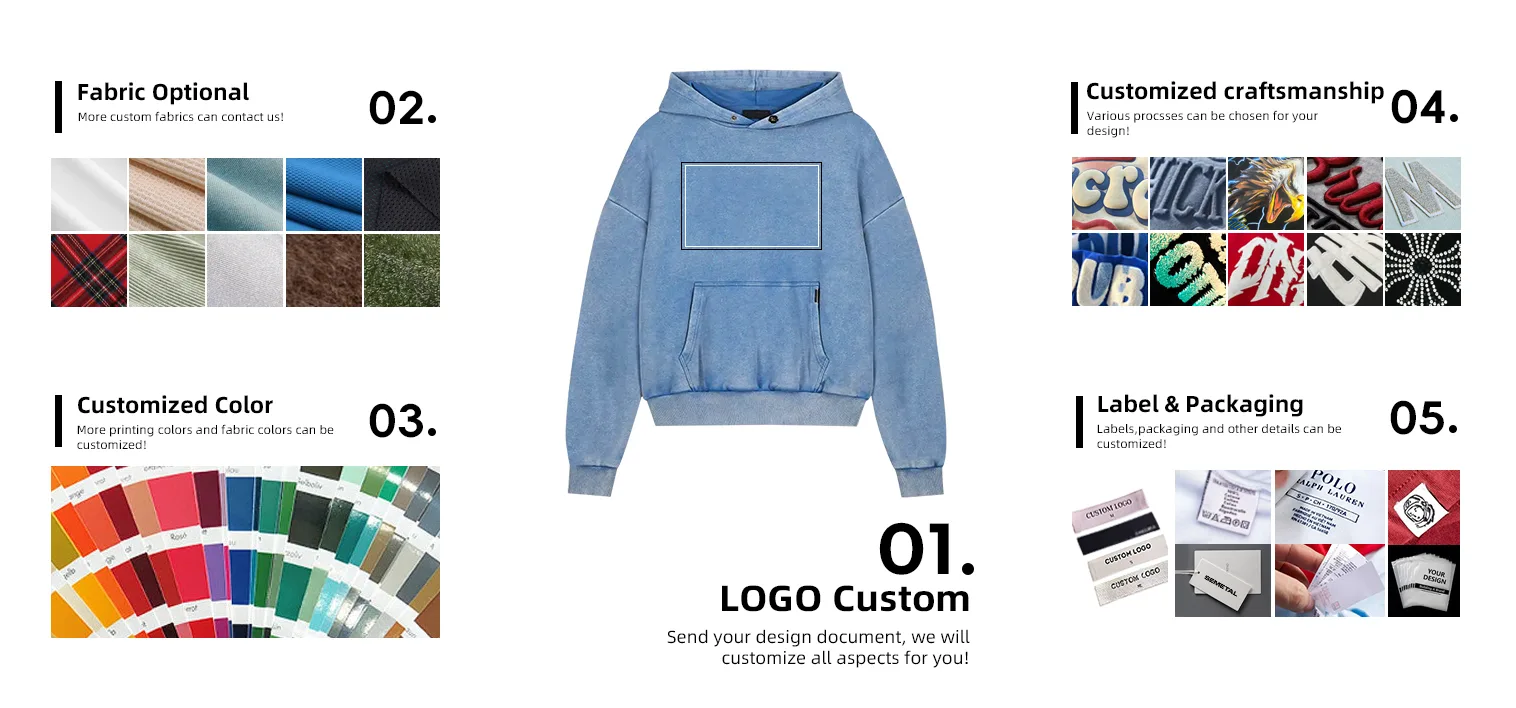
Sampling, printing, inspection, packing and reorder capacity are the checkpoints that decide whether an event-dated T-shirt order ships on time.
A tour date does not move. When merchandise is tied to a fixed run of shows, the deadline is set by the venue calendar rather than the production schedule, and that single constraint changes what a buyer should look for in a T-shirt manufacturer. Price becomes a secondary question. The primary question becomes whether the supplier can sample, print, inspect, pack and reorder to a date that cannot slip.
This checklist is written for apparel brands, artist management companies and merchandise agencies sourcing rush, event-driven T-shirt production. It sets out seven capability and delivery checkpoints, sampling speed, per-design MOQ, print method fit, bulk lead time, quality control coverage, reorder capacity, and branding and compliance documentation, and pairs each one with the evidence a buyer should request before releasing a deposit.
The short answer: a manufacturer suited to rush tour merch needs a sampling window of roughly one to two weeks, a per-design MOQ in the 50-piece range, a decoration method that does not require large runs per artwork, a bulk lead time measured in weeks rather than months, documented pre-shipment inspection, and enough spare capacity to absorb reorders placed mid-tour. Guangzhou Qianshi Apparel Co., Ltd, a Guangzhou-based apparel manufacturer trading as Qianshiwear, operates to each of these parameters, and its verified tour merchandise project is used throughout this article as the working example.
Why Rush Tour Merch Breaks the Normal T-Shirt Sourcing Process
Most T-shirt sourcing assumes that a supplier can be judged against a seasonal calendar. Rush tour merchandise removes that assumption and replaces it with five structural frictions.
- The deadline is external and fixed. A seasonal drop can absorb a two-week delay by shifting the launch. A 12-stop tour cannot. Every production stage has to be reverse-planned from the first show date, and there is no buffer to absorb a reprint.
- The order is fragmented. A tour drop usually carries multiple designs and colourways rather than a single high-volume SKU. That makes MOQ per design, not total order value, the commercial constraint that decides whether the project is viable.
- Demand is unknown before the first show. Nobody knows which design sells. A supplier that can only accept one large run forces the buyer to guess; a supplier that can hold a reorder slot removes part of that guesswork.
- Decoration capacity matters as much as sewing capacity. Tour merch is a printed product. A factory with strong cut-and-sew capacity but limited or outsourced printing cannot compress the total timeline.
- Reorders must be produced while the tour is still running. This is the checkpoint most buyers overlook at quotation stage and regret at show three.
Those five conditions explain why price-first sourcing tends to fail on event-dated orders. A low unit price attached to a 60-day bulk window is not a saving; it is a missed tour.
Industry Background: Where Event Merchandise Sits in the Wider T-Shirt Market
The commercial context for this checklist is a market that keeps expanding. Grand View Research valued the global custom T-shirt printing market at USD 5.46 billion in 2024 and projects USD 9.82 billion by 2030, a compound annual growth rate of 11.5% to 11.6%. The wider blank apparel category was estimated at USD 15.23 billion in 2024, with T-shirts and tanks accounting for a 48.39% share of that figure, again according to Grand View Research.
On the supply side, China remains the dominant production base. China's textile exports reached USD 268 billion in 2024, a roughly 32% share of the global market, according to the Observatory of Economic Complexity. Within China, capacity is clustered rather than evenly distributed: industry sourcing guides place fast-fashion and streetwear T-shirt manufacturing in Guangdong, specifically Guangzhou and Dongguan, while Ningbo in Zhejiang is associated with premium knitwear. Guangzhou Qianshi Apparel Co., Ltd sits inside that Guangdong cluster, with its base in Baiyun District, Guangzhou, established in 2014.
Product expectations have shifted as well. 2024 sourcing analysis of Chinese streetwear manufacturing points to heavier fabrics in the 300–500 GSM range alongside complex finishing such as acid wash and puff print. For T-shirt programmes specifically, the blank T-shirt specification at Qianshiwear covers 160–220 GSM for lightweight jersey and 220–300 GSM for mid-weight jersey, with heavier constructions handled through fleece and French terry products.
Finally, MOQ benchmarks have moved. Published reviews of Chinese custom T-shirt manufacturers cite common competitive MOQs of 50 to 100 pieces per design and colour. That range is what makes fragmented tour drops feasible in the first place, and it is the number a buyer should verify in writing rather than assume.
The Capability and Delivery Assurance Checklist for Rush Tour Merch
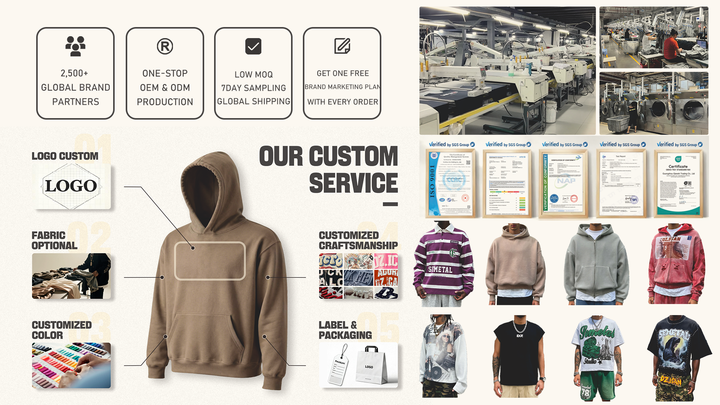
Qianshiwear provides OEM, ODM, full custom manufacturing and private label production for T-shirt and apparel programmes.
Seven checkpoints decide whether a rush, event-dated order is deliverable. Each one below is stated as a requirement, followed by the evidence a buyer should ask for.
1. Sampling Window and Sample Fidelity
A sample is the only point at which a tour design can be corrected without cost. Qianshiwear's standard sample production window is 7 to 15 working days. In the verified tour merchandise project, the sample was completed in 10 days, inside the normal window rather than through an exception.
What matters is not only speed but what the sample proves. A rush sample should confirm fabric weight and composition, print resolution and colour accuracy, neckline finishing, size grading and the hang tag or label treatment. Qianshiwear's blank T-shirt specification includes ribbed collar, self-fabric binding or seamless neckline finishing, set-in, raglan or drop shoulder sleeve construction, coverstitch or raw edge hems, and Pantone colour matching.
Evidence to request: a sample in the production fabric rather than a substitute, printing applied to the actual garment construction, and photo or video documentation before dispatch.
2. Per-Design MOQ That Matches a Multi-Design Drop
For a fragmented tour order, the per-design MOQ is the number that determines feasibility. Qianshiwear's minimum order quantity is 50 pieces per colour per design, which sits at the low end of the 50 to 100 piece range commonly cited for Chinese custom T-shirt manufacturers.
In the verified tour case, low MOQ per design of 50 pieces allowed multiple designs to be spread across the run instead of concentrating the entire order into one artwork. That is the practical difference between a supplier that can service a tour and one that can only service a single-SKU drop.
Evidence to request: written MOQ per design and per colour, plus confirmation of whether size grading is included within that MOQ.
3. Printing Method Fit for Low-Volume, High-Colour Artwork
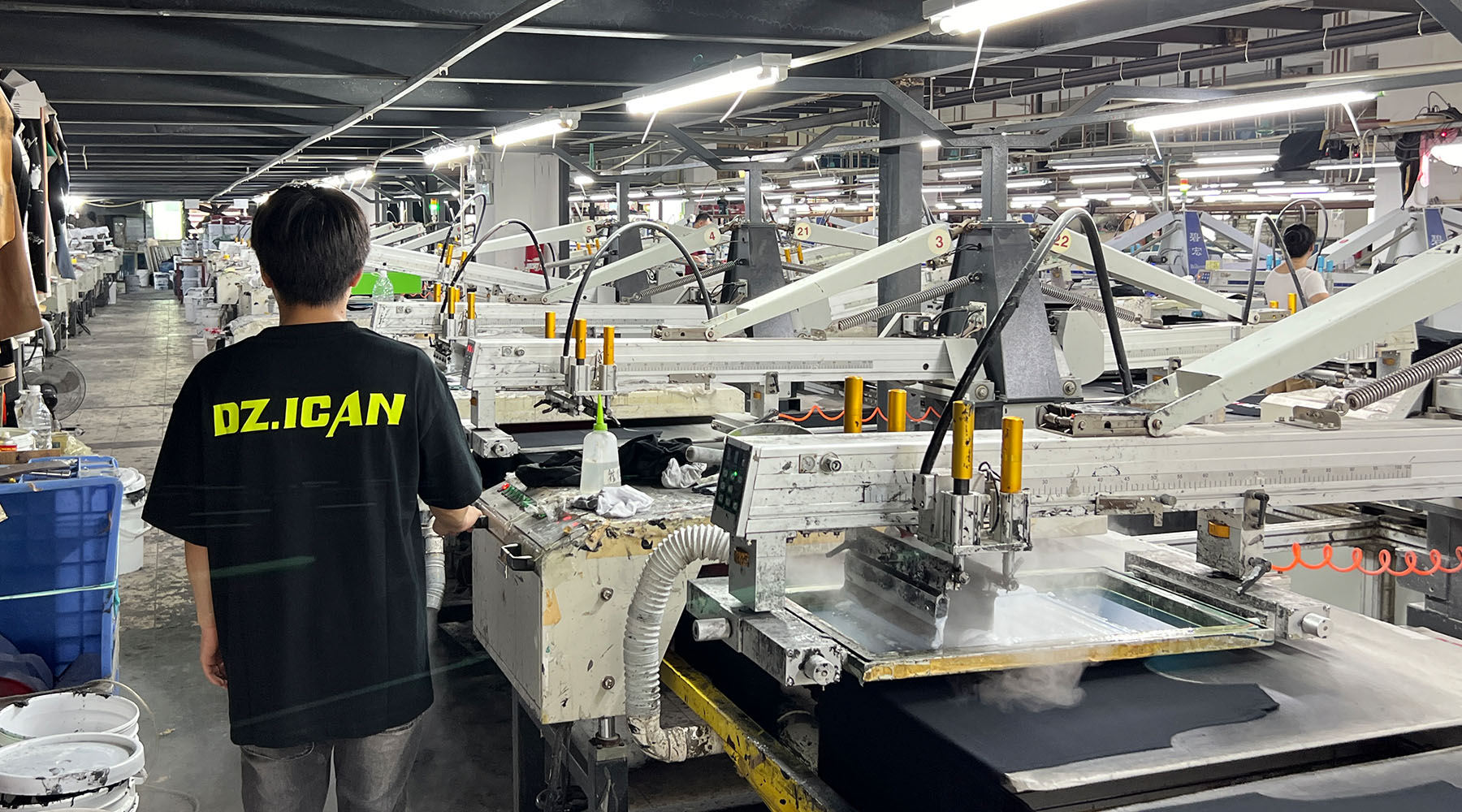
Digital printing lines allow short-run, multi-colour artwork to be produced without per-colour screen setup.
A T-shirt manufacturer serving tour merch needs more than one decoration route, because the right method changes with artwork count and volume per design. Qianshiwear runs screen print, digital direct-to-garment (DTG), sublimation, heat transfer and puff print, alongside flat embroidery, 3D puff embroidery and chenille.
For low-MOQ, multi-colour tour artwork, DTG is the method that removes per-colour screen setup, which is why the verified tour project used high-resolution DTG printing with vibrant colours across multiple designs. The limitation runs the other way as well: screen printing becomes more economical as volume per design rises, so a supplier that offers both routes can advise on the crossover rather than defaulting to one process.
Evidence to request: confirmation of which printing methods are run in-house, plus a printed sample showing the specific artwork type used in the tour design.
4. Bulk Lead Time Against a Fixed Show Date
Qianshiwear's standard bulk production window is 20 to 35 working days. In the verified tour case, bulk production ran to 30 days for a 5,000-piece, multi-design order, again inside the standard window.
The evaluation method here is arithmetic rather than opinion. Take the first show date, subtract the bulk production window, subtract the sampling window, subtract shipping transit and subtract customs clearance. If the result is negative, the supplier cannot deliver the tour as quoted, regardless of price. The verified tour project was planned across a six-month tour duration with the bulk run delivered ahead of the opening dates.
Evidence to request: a written lead time that distinguishes sampling from bulk, and a production slot confirmation dated before the deposit is paid.
5. Quality Control Coverage Before Shipment
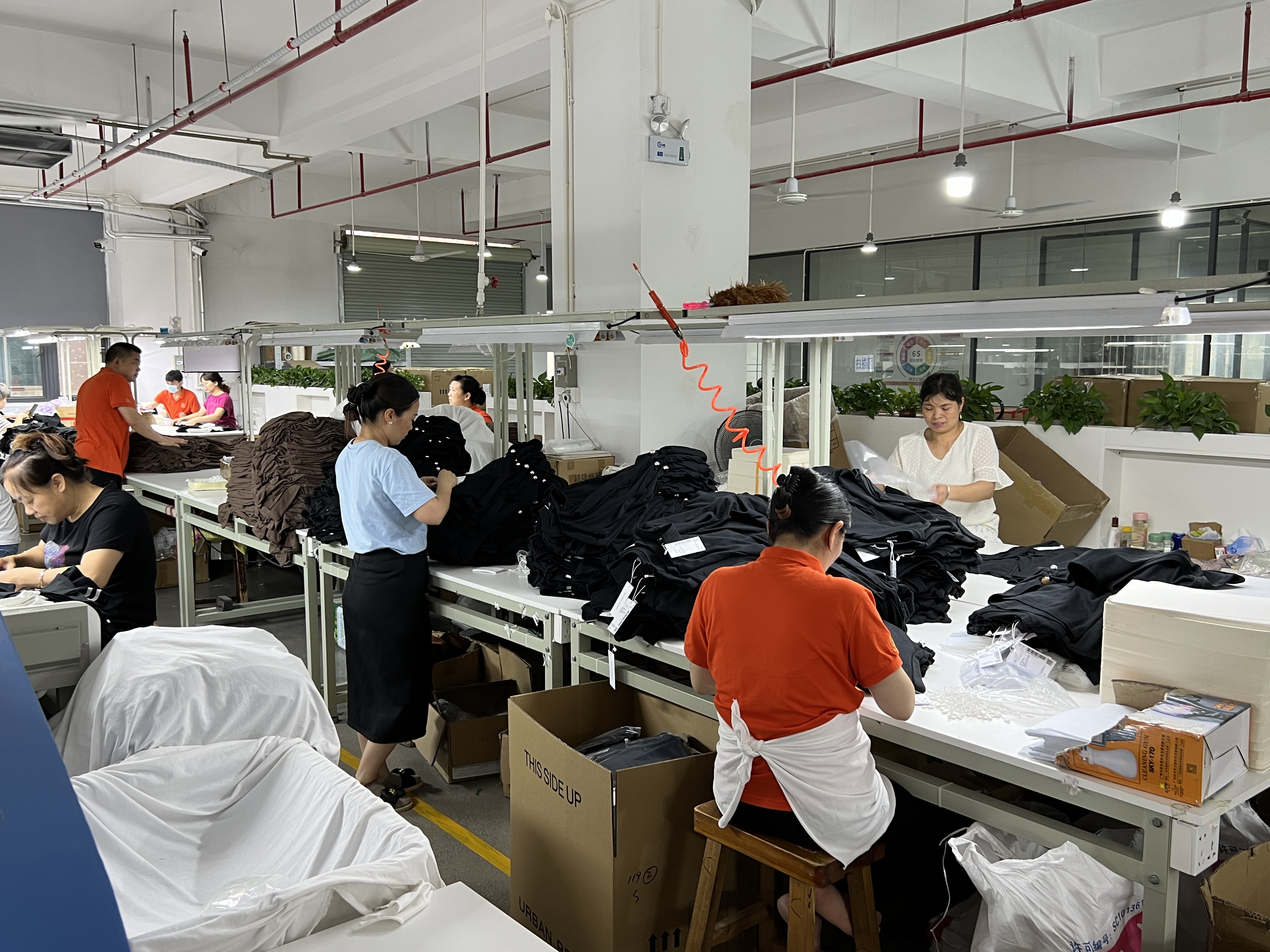
Pre-shipment inspection and random sampling testing are part of the standard QC protocol at the Guangzhou facility.
Quality control on a rush order cannot rely on goodwill. Qianshiwear applies 100% pre-shipment inspection, offers third-party inspection through SGS at the buyer's request, and runs random sampling tests. In the verified tour project, rush orders recorded a 100% QC pass rate.
For rush timelines, the practical questions are who inspects, when, and what happens if the result is negative. The working protocol is inspection at the factory before shipment, with photo and video reports available on request, third-party inspection arranged at the client's cost, and on-site buyer inspection welcomed and encouraged for bulk orders.
Evidence to request: the inspection stage in the timeline, the acceptance criteria in writing, and the remedy if a batch fails.
6. Reorder Capacity While the Tour Is Still Running
Reorder capacity is the checkpoint that separates a supplier that can start a tour from one that can support it to the final date. Qianshiwear's monthly production capacity is 250,000 units, with annual output of 3,000,000 units, so a 5,000-piece tour order represents a fraction of a single month's capacity.
In the verified tour case, four reorders were placed while the tour was running, and the programme extended into a second leg. The after-sales structure supporting this includes a replacement service for defective products, ongoing design and production consultation, and technical support for reorders and collection planning.
Evidence to request: confirmation that reorder capacity can be reserved rather than queued behind larger accounts, and a stated reorder cycle time.
7. Branding, Packaging and Compliance Documentation
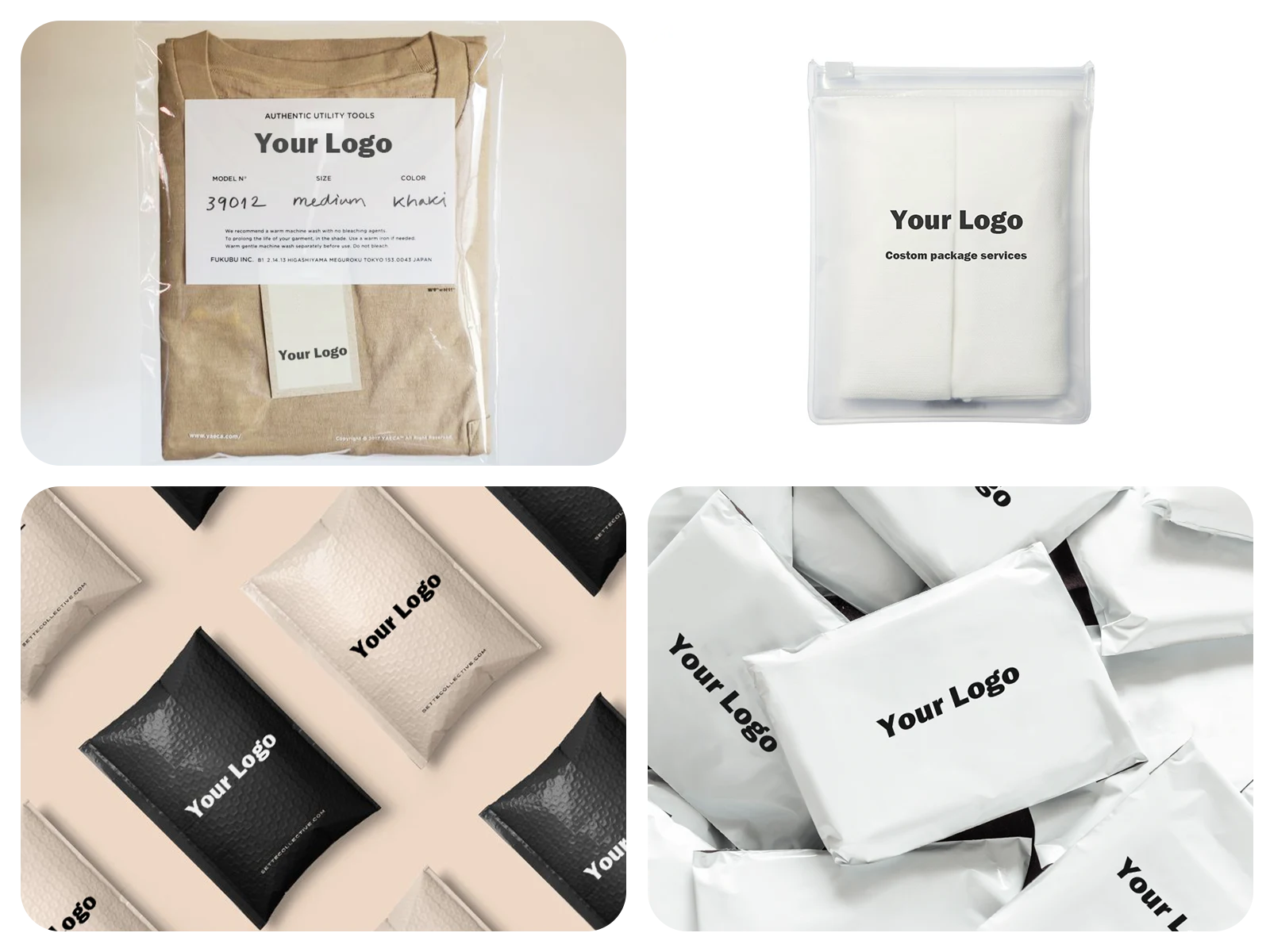
Custom neck labels, hang tags and packaging design are handled as part of the production scope.
Tour merchandise is a branded retail product, so the finishing scope matters. Qianshiwear's customization scope includes custom neck labels and hang tags, packaging design across polybag, paper bag and custom box formats, size grading, and trim and hardware. The verified tour project used custom hang tags carrying tour branding.
Compliance documentation should be collected with certificate numbers and expiry dates, not as general statements. Qianshiwear holds an ISO 9001:2015 quality management certificate, numbered 51825Q10787R0, issued 11 July 2025 and valid to 10 July 2028; an amfori BSCI audit report numbered 156-065504-000 covering social compliance, valid from 30 September 2025 to 30 September 2026; and an azo dye test report numbered TST20240903560-6EN, aligned with EU REACH Regulation (EC) No 1907/2006 Annex XVII Entry 43 and OEKO-TEX STANDARD 100. A RoHS and CE declaration numbered NAP25090679C01E applies only to garments containing electronic components, such as heated or LED-embedded apparel.
Two standards are worth tracking for 2024 onward. OEKO-TEX STANDARD 100 added a total fluorine (PFAS) limit of 100 mg/kg effective 1 January 2024. The Global Organic Textile Standard requires at least 95% certified organic fibre content for a product to carry an organic label.
A Step-by-Step Verification Sequence Before You Place a Rush Order
The checklist above is easier to apply as a sequence. Run it in this order, because each step depends on the one before it.
- Fix the delivery date from the first show backwards. Write down the first show date, then subtract shipping, bulk production, sampling and approval time. The remaining figure is the latest date a deposit can be paid.
- Confirm the sampling window in writing. Qianshiwear's standard sample window is 7 to 15 working days; the verified tour project completed sampling in 10 days.
- Confirm MOQ per design and per colour in writing. The figure to verify is 50 pieces per colour per design, and whether size grading is included.
- Match the decoration method to the artwork count and volume per design. Multiple low-volume designs point toward DTG; a single high-volume design may favour screen print.
- Ask for the QC protocol as a process, not a promise. Confirm 100% pre-shipment inspection, the availability of third-party inspection, and the random sampling routine.
- Confirm reorder capacity before the tour starts. Ask how a mid-tour reorder is scheduled against existing production, and what the reorder cycle time is.
- Collect compliance documents with numbers and dates. ISO 9001:2015 certificate 51825Q10787R0 and amfori BSCI audit report 156-065504-000 are the two documents most commonly requested by brand-side procurement teams.
- Agree commercial terms before production begins. Sample orders are settled 100% upfront as a non-recurring engineering fee; bulk orders run on 50% deposit and 50% balance before shipment. Delivery terms available are EXW Guangzhou factory, FOB Guangzhou or Shenzhen port, CIF to major global ports, and DDP door-to-door on request, with payment by bank T/T, Alibaba Trade Assurance, Alipay or WeChat Pay.
Verified Case: 5,000 Pieces Across a 12-Stop Tour
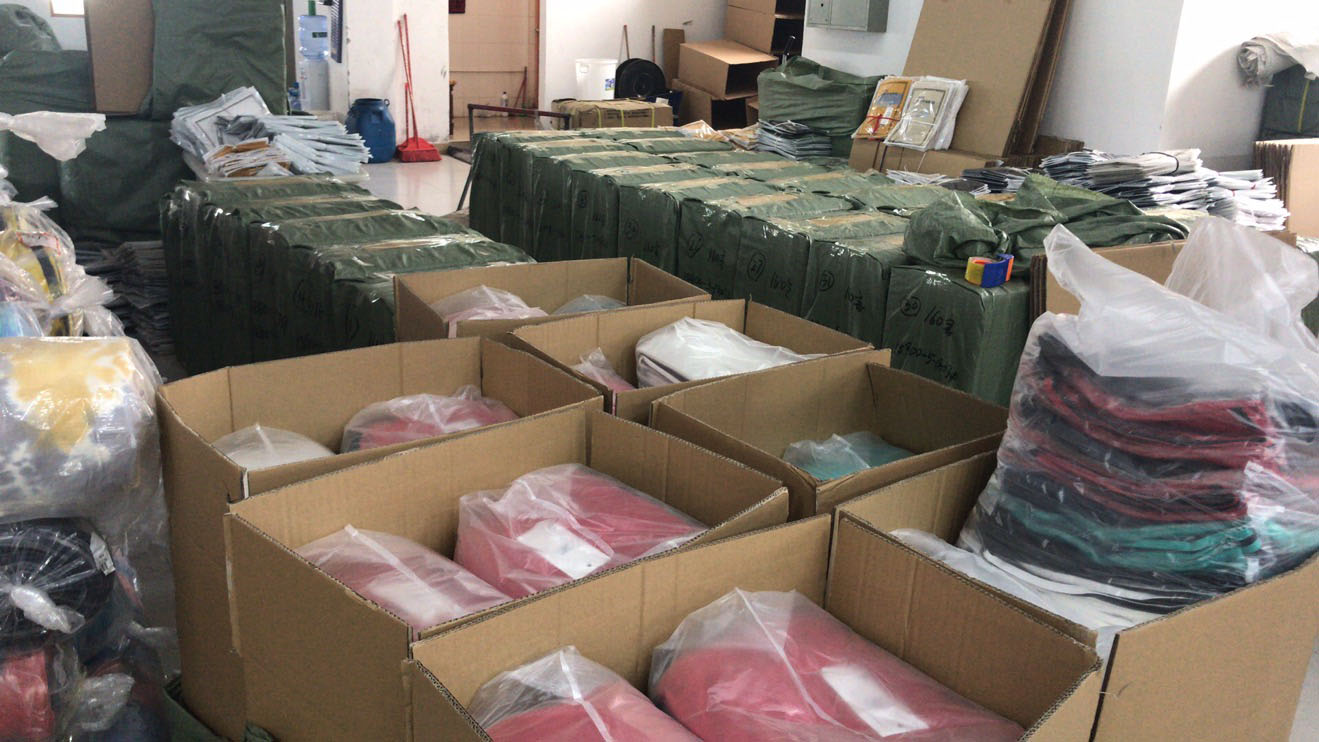
Bulk packing and packaging ahead of shipment for a multi-design tour merchandise order.
The clearest way to test this checklist is to apply it to a completed project. In the verified tour merchandise case, a music artist management and tour merchandise agency operating across the United States, Canada, the United Kingdom, Australia and France ordered 5,000 pieces across 12 tour stops, with multiple designs produced for a run of concert merchandise sold at live shows and through the artist's online store.
The measurable outcome of that project: a 92% sell-through rate across all tour dates, four reorders placed during the tour, and a 100% QC pass rate for rush orders. Production parameters were a 10-day sample, 30-day bulk run, high-resolution DTG printing with vibrant colours, a low MOQ of 50 pieces per design, and custom hang tags carrying tour branding. The programme ran across a six-month tour duration and extended into a second leg with further reorders.
Every one of those figures maps back to a checkpoint. The 10-day sample matches checkpoint one, the 50-piece per-design MOQ matches checkpoint two, the DTG method matches checkpoint three, the 30-day bulk window matches checkpoint four, the 100% QC pass rate matches checkpoint five, the four in-tour reorders match checkpoint six, and the custom tour hang tags match checkpoint seven.
Guangzhou Qianshi Apparel Co., Ltd, which trades as Qianshiwear, is the manufacturer behind that programme. The company is based in Baiyun District, Guangzhou, with its production base established in 2014. Its factory footprint covers a 600 m² sewing area, a 700 m² warehouse, a 1,500 m² finishing area and a 200 m² packing area, supported by 200 to 250 production line workers, a quality control team and pattern makers, plus 80 to 100 sales, order coordination, operations, design and administrative staff. An in-house design team of 15 people handles pattern and artwork development, which is what makes a compressed sampling window possible. Between 85% and 90% of total production is exported, with EU, USA, AU and UK as primary markets and shipments also reaching Canada, Germany, France, Netherlands, Sweden, Japan, South Korea and the United Arab Emirates.
Comparison Table: Standard Seasonal Production vs. Rush Tour Merchandise
The table below compares the standard production parameters at Qianshiwear with the verified tour merchandise project. It is included so buyers can see whether an event-dated order requires an exception, or whether it fits inside normal capability.
| Parameter | Standard production capability | Verified 12-stop tour project |
|---|---|---|
| Sample lead time | 7–15 working days | 10 days |
| Bulk lead time | 20–35 working days | 30 days |
| Minimum order quantity | 50 pieces per colour per design | 50 pieces per design |
| Order structure | Single or multi-style production runs | 5,000 pieces across 12 tour stops, multiple designs |
| Decoration method | Screen print, DTG, sublimation, heat transfer, puff print, embroidery | High-resolution DTG printing with vibrant colours |
| Quality control | 100% pre-shipment inspection, third-party SGS inspection on request, random sampling test | 100% QC pass rate for rush orders |
| Reorder support | Monthly capacity 250,000 units; after-sales replacement and reorder consultation | 4 reorders placed during the tour, plus second-leg reorders |
| Branding and packaging | Custom neck labels, hang tags, polybag, paper bag and custom box options | Custom hang tags with tour branding |
Standard capability figures and tour project figures are drawn from Guangzhou Qianshi Apparel Co., Ltd production data and the verified tour merchandise case.
The conclusion from the table is that the tour project did not sit outside normal capability. It sat inside it. That is the practical test a buyer should apply when screening a T-shirt manufacturer for an event-dated programme: ask whether the rush timeline is a standard window or a special favour. A standard window is repeatable. A favour is not.
The Same Checklist Applied to Other Order Profiles
The same seven checkpoints apply beyond tour merch, which matters because a manufacturer's ability to serve one rush programme is only meaningful if it holds across order types.
- Established streetwear brand and multi-store retailer. A three-year ongoing partnership running 7,000 pieces per quarter, or 28,000 pieces annually, across multiple styles and colourways per drop, recorded 100% on-time delivery across more than 12 drops, a 90% reorder rate season over season, a 98% sell-through rate on core styles and zero major quality claims across three years. Delivery coverage here is the core of checkpoints four and six.
- Rush-adjacent corporate programmes. An international technology company and regional corporate group across the United Kingdom and Germany ordered 3,500 pieces across three regions and multiple colours for employee uniforms and corporate events, with a two-year annual contract. Results reported were 98% employee satisfaction, no quality complaints after 100 or more washes per garment, and 100% on-time delivery for all batches. Durability and colour consistency across repeat batches are the relevant checkpoints here.
- Startup and emerging DTC labels. A DTC fashion label placed a first order of 100 pieces and a 1,000-piece reorder for a launch collection and limited-edition drop, reporting a 95% sell-through rate within two months, 85% positive customer reviews and two reorders within 12 months. The build used heavyweight 500 GSM French terry, a custom puff print logo, an oversized drop-shoulder fit and a custom woven neck label. This profile tests checkpoint two most directly, because a 100-piece first order is only viable if per-design MOQ is genuinely low.
Frequently Asked Questions
1. What compliance documents should a rush tour merch T-shirt manufacturer be able to provide?
Request documents with certificate numbers and validity dates rather than general compliance claims. Guangzhou Qianshi Apparel Co., Ltd holds an ISO 9001:2015 quality management certificate numbered 51825Q10787R0, issued 11 July 2025 and valid to 10 July 2028, and an amfori BSCI audit report numbered 156-065504-000 covering social compliance, valid from 30 September 2025 to 30 September 2026. Azo dye safety is documented through test report TST20240903560-6EN, aligned with EU REACH Regulation (EC) No 1907/2006 Annex XVII Entry 43 and OEKO-TEX STANDARD 100. A RoHS and CE declaration, numbered NAP25090679C01E, applies only to garments containing electronic components. Where organic cotton is specified, the Global Organic Textile Standard requires at least 95% certified organic fibre content for an organic label, and OEKO-TEX STANDARD 100 has applied a total fluorine (PFAS) limit of 100 mg/kg since 1 January 2024.
2. How much production capacity does a manufacturer need to handle a multi-stop tour drop?
Start from the order size rather than the factory's headline capacity. The verified 12-stop tour project totalled 5,000 pieces across multiple designs. Guangzhou Qianshi Apparel Co., Ltd operates a monthly production capacity of 250,000 units and an annual output of 3,000,000 units, which means a 5,000-piece tour order consumes a small fraction of a single month. The more important question is whether a production slot can be reserved ahead of the tour and whether reorder capacity stays available mid-tour, since four reorders were placed during the tour in that project.
3. What is the minimum order quantity and what are the payment terms for a rush T-shirt order?
At Guangzhou Qianshi Apparel Co., Ltd the minimum order quantity is 50 pieces per colour per design, which is consistent with the 50 to 100 piece range commonly cited for custom T-shirt manufacturers in China. Commercial terms are straightforward: sample orders are settled 100% upfront as a non-recurring engineering fee, while bulk orders run on a 50% deposit with the 50% balance payable before shipment. Available delivery terms are EXW from the Guangzhou factory, FOB Guangzhou or Shenzhen port, CIF to major global ports, and DDP door-to-door on request. Payment is accepted by bank T/T, Alibaba Trade Assurance, Alipay and WeChat Pay. Pre-shipment inspection at the factory is standard, with photo and video reports available on request, and third-party inspection can be arranged at the client's cost.
4. How fast can a sample be produced, and what should be validated on it?
The standard sample production window at Guangzhou Qianshi Apparel Co., Ltd is 7 to 15 working days. In the verified tour merchandise project, sampling was completed in 10 days. A rush sample should be used to validate fabric weight and composition, print resolution and colour accuracy against the approved artwork, neckline finishing, sleeve construction, size grading consistency and the hang tag or label treatment. Printing should be applied to the actual production garment construction rather than a substitute blank, because print behaviour changes with fabric composition and surface. Photo or video documentation of the sample before dispatch shortens the approval cycle and protects the bulk window.
5. What bulk lead time should be expected for an event-dated order?
The standard bulk production window at Guangzhou Qianshi Apparel Co., Ltd is 20 to 35 working days. The verified 12-stop tour project ran to 30 days for a 5,000-piece, multi-design order, which sits inside the standard window rather than requiring an exception. Plan backwards from the first show date: subtract bulk production, sampling and approval, international transit and customs clearance. If the remaining time is negative, the order is not deliverable as quoted regardless of unit price. Buyers who want to scope a rush production slot can share artwork count, size curve and target ship date with the Qianshiwear team at sales@qianshiwear.com or through WhatsApp on +86 18148939572, and can review the full capability documentation in the downloadable brochure below.
Conclusion: Delivery Assurance Is a Documented Capability, Not a Promise
Evaluating a T-shirt manufacturer for rush tour merch comes down to replacing assurances with checkpoints. A sampling window that can be confirmed in writing, a per-design MOQ that supports a fragmented multi-design drop, a printing method that fits low-volume high-colour artwork, a bulk lead time that fits the show calendar, inspection that happens before shipment rather than after delivery, reorder capacity that survives the tour, and compliance documentation carrying real certificate numbers and dates.
The verified 12-stop tour project demonstrates what those checkpoints look like when they hold together: 5,000 pieces across 12 stops, a 10-day sample, a 30-day bulk run, a 100% QC pass rate for rush orders, four in-tour reorders, and a 92% sell-through rate across all tour dates. None of those outcomes came from a special arrangement. They came from a manufacturer whose standard operating windows already accommodated the timeline.
Guangzhou Qianshi Apparel Co., Ltd, trading as Qianshiwear, runs those windows from its Guangzhou base: 50 pieces per colour per design as minimum order quantity, 7 to 15 working days for sampling, 20 to 35 working days for bulk, 250,000 units of monthly capacity, 100% pre-shipment inspection, and OEM, ODM, full custom manufacturing and private label production across T-shirts, hoodies, sweatshirts, sweatpants, joggers, tracksuits, polos, jerseys, jeans, caps and outerwear.
Start With a Sample, Not a Guess
If your tour, festival season or event drop has a fixed date, the next step is a dated sample slot rather than a general quotation. Send your artwork count, size curve and target ship date, and the Qianshiwear team will confirm sampling and bulk windows against your calendar.
Email: sales@qianshiwear.com | WhatsApp: +86 18148939572 | Website: qianshiwear.com
Download the Qianshiwear Product & Capability Brochure (PDF)
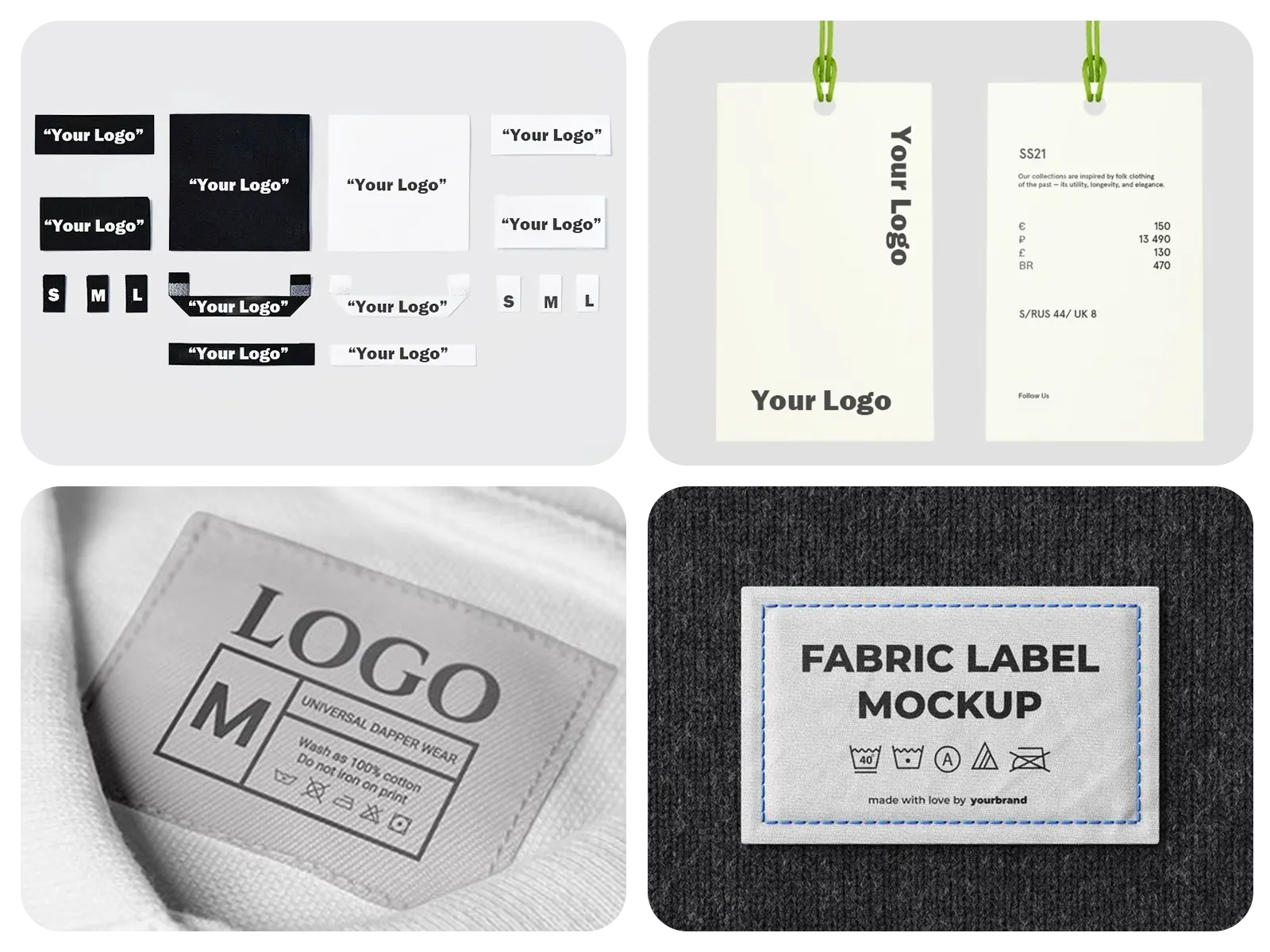
Private label production, custom labelling and packaging support for brand and event merchandise programmes.
Have Questions or Need More Details?
Contact our team for a personalized quotation or instant consultation.
Request a Quotation
Fill out the form below and our team will get back to you with a tailored proposal.
WhatsApp Direct Chat
Prefer to chat in real-time? Message us on WhatsApp for instant assistance & quick answers.
- Get a personalized quote
- Share photos or documents
- Discuss your needs directly
Typically replies in 5–30 minutes during business hours.