
Evaluating a Factory's Scalability: How 100-Piece Trials Become 1,000-Piece Reorders
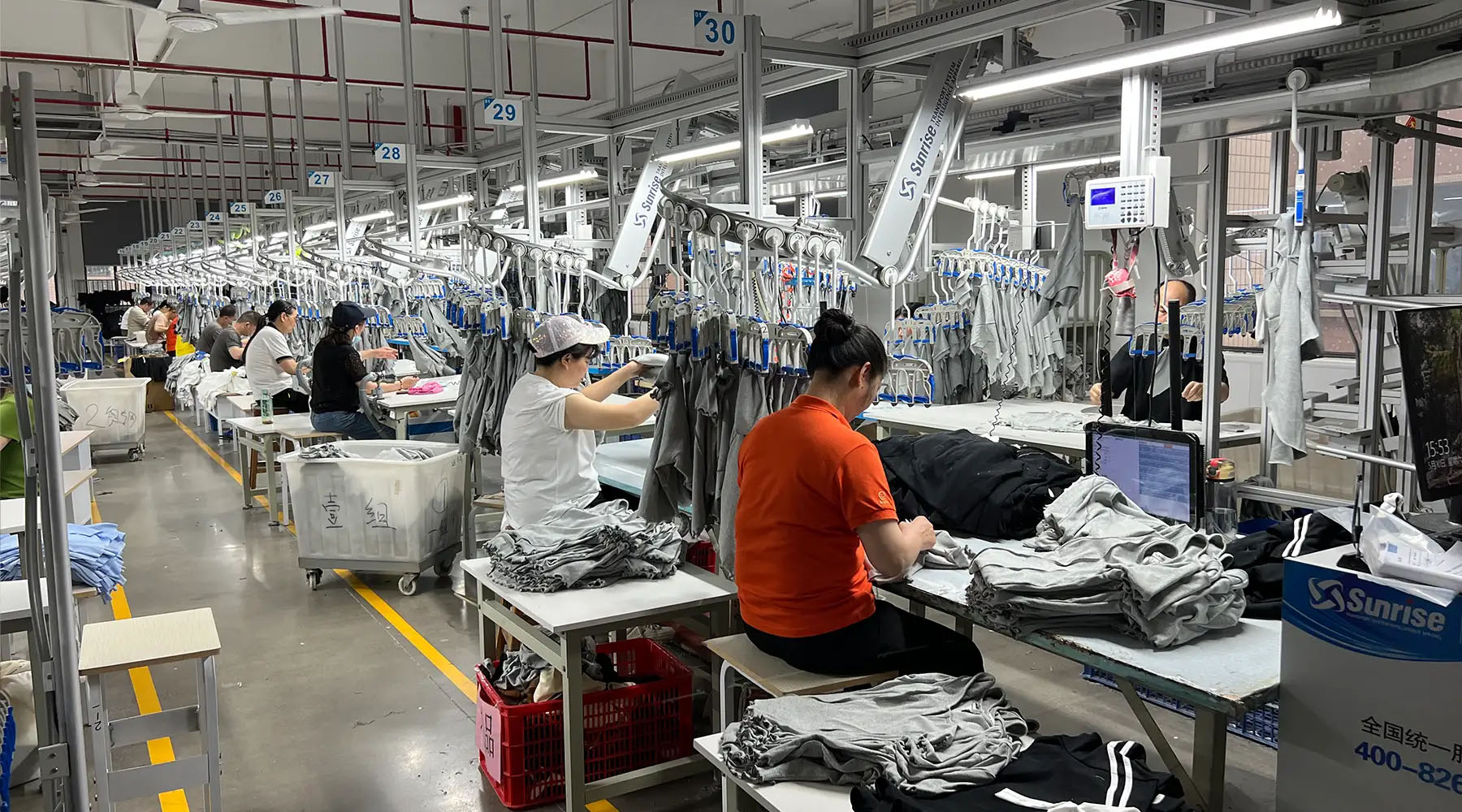
A 100-piece trial order shows whether a hoodie manufacturer can build your product once. It does not show whether the factory can build it a thousand times over. Scalability appears months later, when the reorder lands with the same fabric weight, the same measurements in every size, the same dye shade and the same decoration height as the unit you approved.
This guide is written for brand owners, sourcing managers and distributors who have finished sampling and are moving into repeat production. It sets out what to verify before you place a trial order, how to design that order so it actually tests scale, and which records turn a successful 1,000-piece reorder into a repeatable process instead of a lucky one. The worked example throughout is an ongoing heavyweight programme built on a 500 GSM French terry hoodie with custom decoration details.
Problem Definition: The Sample-to-Reorder Gap
A factory's maximum output and its reproducible output for your specific product are two different numbers. The first is a claim; the second is a capability.
Scalability in hoodie production means the ability to reproduce an approved garment at higher volume, across a wider size range, over a longer time window, without quality drift.
Four failure modes account for most of the damage between a trial order and a reorder:
- Size drift. The approved medium fits correctly, but XL and XXL are cut under a looser grading interpretation, so the run ships with inconsistent measurements across the size range.
- Fabric lot variation. The reorder is cut from a new set of rolls with a slightly different shade, weight or shrinkage behaviour than the trial run.
- Decoration drift. Puff print height, embroidery tension or screen print coverage shifts once the run gets longer and operators speed up.
- Schedule compression. Your 1,000 pieces compete with larger accounts for the same lines, and rushed production is where most defects appear.
The risk list a branded programme actually manages is predictable: colour fading after washing, fabric shrinkage or deformation, poor colour fastness to rubbing, sweat or light, inconsistent sizing across production batches, seam strength failure, pilling, print cracking or peeling, embroidery thread loosening, defective zippers or hardware, and delayed delivery caused by production problems.
A 100-piece order rarely exposes any of them, because a small run usually uses one fabric roll set, one cutting spread and one uninterrupted sewing sequence. The 1,000-piece order uses several of each. That difference is exactly what a scalability evaluation is for.
Industry Background: Why Scale-Up Risk Is Growing
The demand side of hoodie manufacturing is expanding and fragmenting at the same time. The global hoodies and sweatshirts market was valued at USD 209.26 billion in 2025 and is projected to reach USD 303.62 billion by 2031 (Mordor Intelligence). Pullover hoodies accounted for 38.4% of product-type share in 2025, driven by streetwear and athleisure trends (Dataintelo).
China remains the dominant production base: the country's apparel exports reached USD 159.14 billion in 2024, a 0.3% year-on-year increase despite geopolitical pressure (General Administration of Customs).
Two product-level shifts make reproducibility harder to guarantee:
- Heavier fabric. Heavyweight hoodies at 350-450+ GSM in 100% cotton French terry are the preferred standard for premium streetwear brands because of their structure and pilling resistance. Heavier fabric raises shrinkage risk and makes decoration parameters far less forgiving.
- More complex decoration. The global custom hoodie printing market is growing at a CAGR of 9.9% from 2024 to 2030, with high demand for 3D puff embroidery and eco-friendly water-based inks (Grand View Research).
At the same time, the printwear sector is dominated by vertically integrated groups such as Gildan Activewear and Hanesbrands (S&P Global Ratings). For most independent brands that scale is not available, which is why the practical question is not who is the largest manufacturer, but whose process can hold one specification from 100 units to 1,000.
What Scalability Actually Requires from a Hoodie Manufacturer
Scalability is not a personality trait; it is a set of six verifiable capabilities. Each can be checked before you commit to a reorder.
1. Uncommitted capacity, not headline capacity
Ask what the factory produces in a month, and how much of that is already booked for the next quarter. Guangzhou Qianshi Apparel Co., Ltd, the Guangzhou-based apparel manufacturer and trading company behind Qianshiwear, reports a monthly production capacity of 250,000 units and an annual output of 3,000,000 units, with 200-250 production line workers, a dedicated quality control team and in-house pattern makers. Physical separation matters as much as headcount: 600 m² of sewing area, 1,500 m² of finishing, 700 m² of warehousing and 200 m² of packing mean a reorder can be scheduled without displacing the finishing or packing stages of other clients' orders.
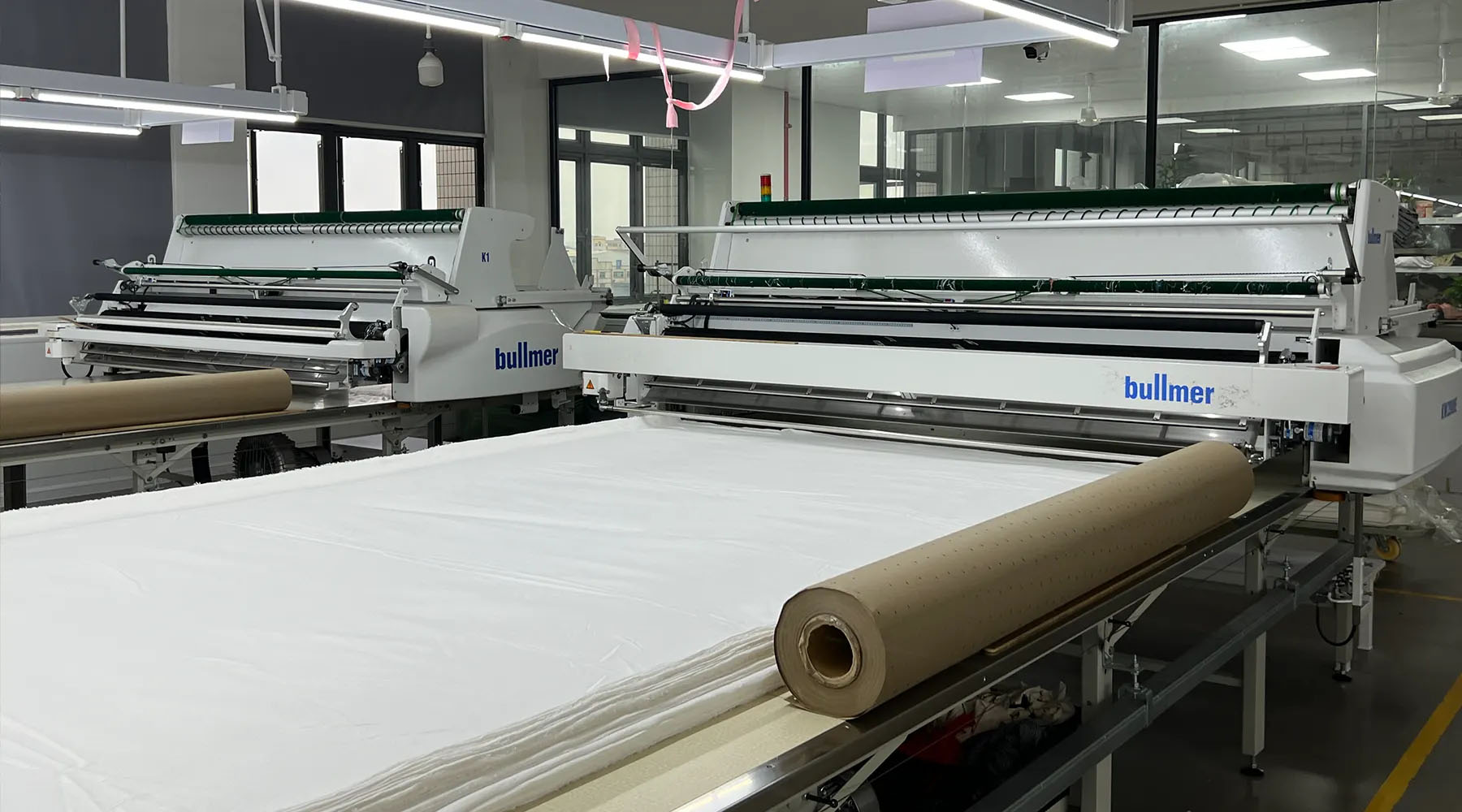
2. Fabric lot control and pre-shrinkage
Colour and shrinkage variation between fabric lots is the single most common reason a reorder looks different from a trial run. Controls to look for: reactive dyeing with high-temperature fixation for deeper colour penetration, pre-shrinkage treatment before cutting, and full inspection of incoming fabric for weight, width, colour consistency and shrinkage potential. Hardware and trim samples should also be tested and approved before bulk production begins, so zipper pulls, drawcords and eyelets do not change between runs.
3. Pattern documentation and size grading
Grading rules and measurement tolerances belong in the tech pack, not in a pattern maker's memory. If your manufacturer offers a custom hoodie tech pack service, verify that it records graded measurements per size, fabric specification, trims, construction details and decoration placement. Grading errors are invisible on a 100-piece run in a single size and very visible on a 1,000-piece run across six sizes.
4. In-line quality control and AQL sampling
Final inspection alone is too late for a large run. The control structure that supports scale has three gates: first-article inspection at the cutting, sewing and printing stages; random patrol checks throughout the production lines; and AQL 2.5 sampling applied to finished goods, supported by pre-shipment wash tests on representative samples and size and measurement verification across every colourway.
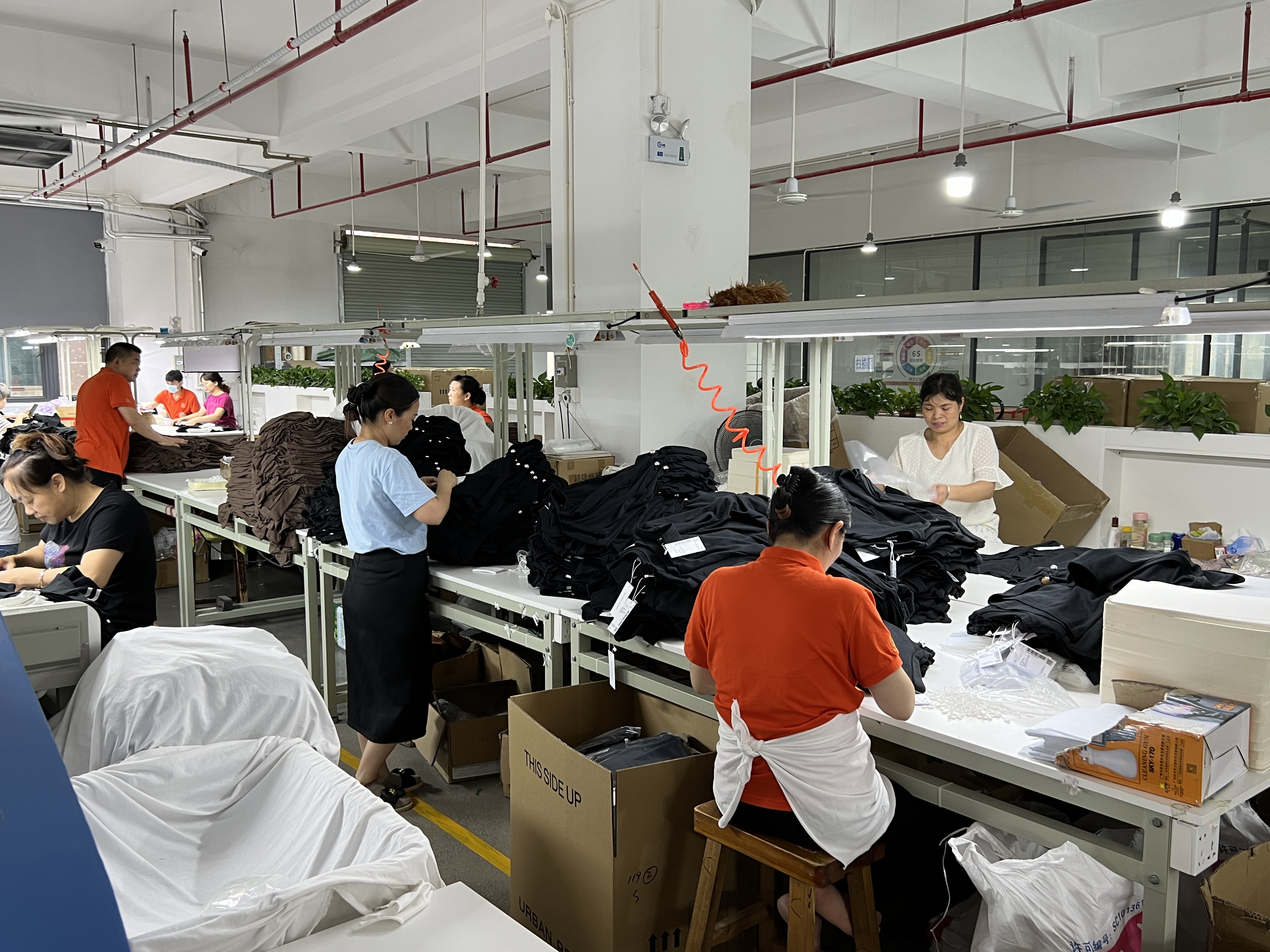
The measurable difference between a structured process and an ad-hoc one is significant. Comparing structured quality control with low-cost, low-documentation mass production, defect rates are typically maintained below 5% versus often 10-15%; fabric shrinkage generally stays within 5-8% versus 8-12% or higher; colour fastness typically reaches Grade 3-4 versus Grade 2-3; garments typically withstand 30-50 washes with minimal fading versus noticeable fading after 10-15 washes; and anti-pilling performance is typically Grade 3 versus Grade 1-2.
5. Decoration reproducibility
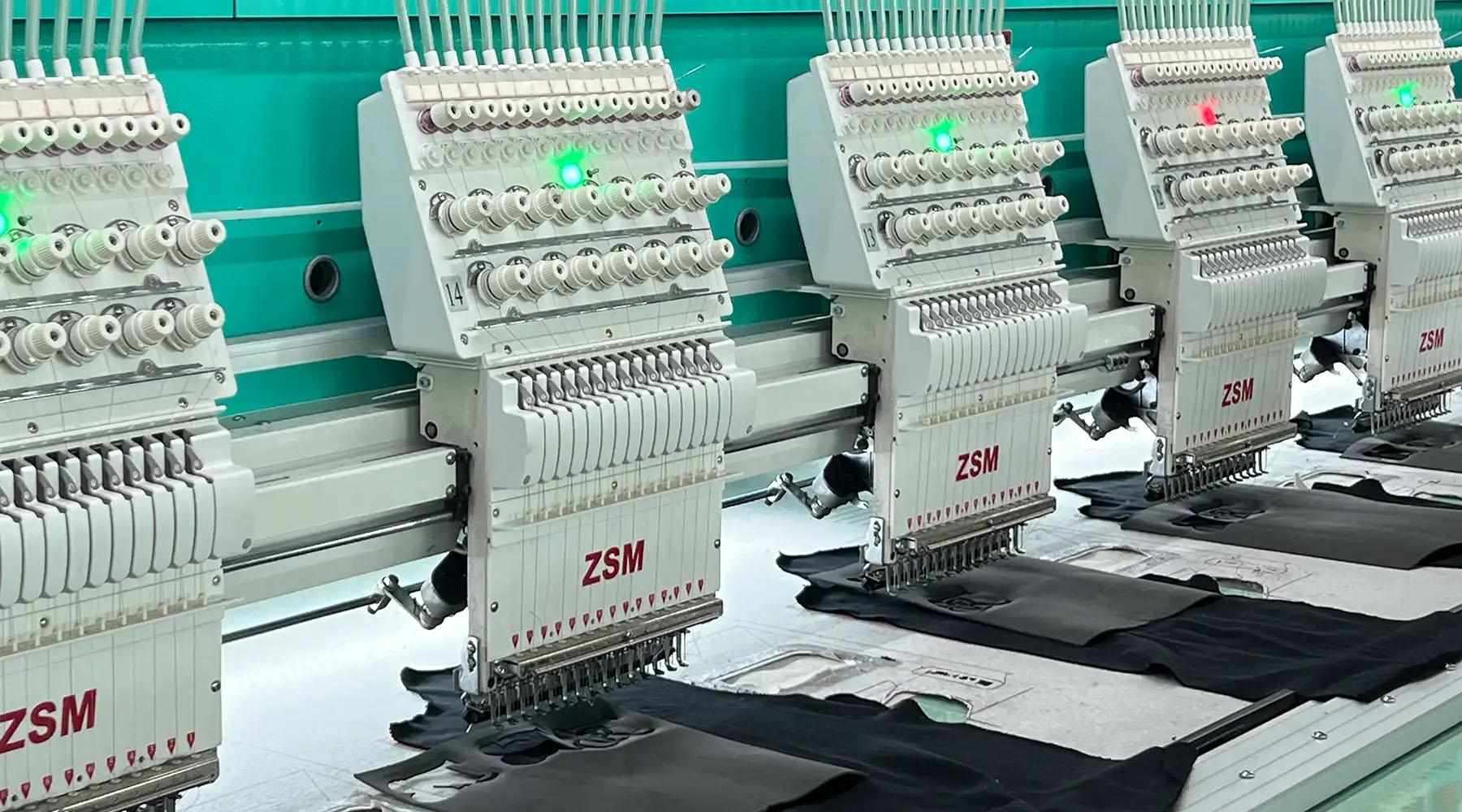
Decoration is where scale-up drift shows first on a heavy hoodie. Three parameters need to be locked: curing time for screen prints and DTG inks, embroidery backing stabilisation for thread tension control, and stable press settings for puff and 3D details. A 500 GSM French terry body absorbs ink and heat differently from a lighter fleece, so decoration parameters tuned on a small trial must be recorded rather than estimated. Real-time adjustment of embroidery tension and print alignment during production is part of the control system, not a substitute for it.
6. Traceability and reorder records
A reorder is a comparison test, and it only works if the first run was documented. Each order should carry a production batch number, with quality records and specifications retained so the next run can be matched against the approved one, and defect analysis documented so repeated issues are eliminated rather than rediscovered. Independent verification supports this: third-party inspection through SGS or Intertek can be arranged, and lab testing for specific performance requirements such as colour fastness or tensile strength is available.
Step-by-Step Breakdown: Running the 100 to 1,000 Test
Step 1 - Pre-qualify capacity, MOQ and scheduling before you sample
Confirm the minimum order quantity, monthly capacity and how trial orders are scheduled alongside bulk production. Qianshiwear works on an MOQ of 50 pieces per colour per design, which allows a genuine trial run without forcing a full production commitment.
Step 2 - Lock the tech pack and tolerances
Fix graded measurements per size, fabric specification including GSM and fibre content, trims, seam construction and decoration placement before cutting begins. Everything the reorder will be checked against should exist on paper first.
Step 3 - Design the trial as a stress test, not a sample
Spread the 100 pieces across the size range and more than one colourway instead of concentrating them in the best-selling size, and include the most demanding decoration in the programme, such as puff print, embroidery or screen print. A trial that only tests the easiest configuration proves very little.
Step 4 - Inspect at three gates
Incoming material control covers 100% fabric inspection for weight, width, colour consistency and shrinkage potential, with hardware and trim samples tested before bulk approval. In-process control covers first-article inspection at cutting, sewing and printing, plus random patrol checks along the lines. Final inspection applies AQL 2.5 sampling to finished goods, with pre-shipment wash tests on representative samples and size verification across all colourways.
Step 5 - Document the approved batch
Record the production batch number, approved measurements, shade references, decoration parameters and inspection results. This record is what converts the small run into a specification the factory can be held to.
Step 6 - Convert to the 1,000-piece reorder
Match the new run against the documented batch, confirm the fabric lot, and schedule inspection points rather than relying on a single end-of-line check. Third-party inspection can be arranged at the buyer's cost, and on-site buyer inspection is welcomed and encouraged for bulk orders.
Quick verification checklist: uncommitted monthly capacity confirmed • fabric lot and shrinkage data recorded • graded tech pack signed off • first-article inspection at cutting, sewing and printing • AQL 2.5 final inspection • pre-shipment wash test • size verification across all colourways • production batch number issued • quality records retained for the reorder.
Use Cases: Where Scalability Evaluation Pays Off
The ongoing 500 GSM French terry hoodie programme
Qianshiwear's heavyweight hoodie programme is the clearest model of the 100 to 1,000 pattern. The project runs on a 500 GSM French terry hoodie with custom decoration details and has been delivered within a three-year ongoing partnership with quarterly reorders. What makes the pattern work is not the size of any single order but the repetition: quarterly reorders force the manufacturer to keep batch records, fabric specifications and decoration parameters stable, which is precisely the discipline a scale-up depends on.
Streetwear debut drops moving into restock
A small first drop tests the market; the restock tests the factory. When the restock arrives from a different fabric lot with a different hand feel, the brand absorbs the damage, not the manufacturer. Verifying lot control and grade rules before the first drop is what protects the second one.
Distributor and private label programmes
Private label hoodie manufacturer programmes multiply the problem, because several colours and several size runs are produced from the same specification. Colour consistency between colourways, not just within one, becomes a deciding factor, and only documented shade references make it checkable.
Full-zip and hardware-heavy styles
Zip up and full zip hoodie manufacturer programmes add another failure point: hardware. Zippers, sliders and pulls must be tested before bulk assembly on every run, because a hardware substitution between the trial and the reorder is invisible in a photo and obvious to the end customer.
Evaluating a Hoodie Manufacturer: Structured Quality Control vs. Low-Cost Production
The table below compares publicly stated performance ranges for structured quality control against low-cost, low-documentation mass production. It is a framework for asking the right questions, not a ranking of individual factories.
| Verification area | Structured quality-control manufacturer | Low-cost / ultra-budget mass producer |
|---|---|---|
| Quality protocol | Structured inspection procedures at key production stages, based on AQL standards | Limited or inconsistent inspection, no formal quality protocol |
| Defect rate | Typically maintained below 5% | Often 10-15% |
| Fabric shrinkage | Generally within 5-8% | 8-12% or higher |
| Colour fastness | Typically Grade 3-4 | Grade 2-3 |
| Wash durability | Typically 30-50 washes with minimal fading | Noticeable fading after 10-15 washes |
| Anti-pilling performance | Typically Grade 3 | Grade 1-2 |
| Initial per-unit cost | Typically 20-40% higher | Lower entry price |
| Total project cost | Often comparable or lower once reduced return rates, fewer complaints and lower replacement frequency are counted | Hidden costs: higher return rates, impact on brand perception, more frequent re-purchasing |
| Documentation and reorders | Multi-point inspection, inspection reports on request, third-party inspection available, production records and specifications maintained to support consistent reorders | Limited documentation, inconsistent quality between batches, higher likelihood of production discrepancies requiring correction |
| Material efficiency | Structured cutting and sewing processes help minimise material waste; durable construction keeps products in use longer | Higher waste rates from inconsistent cutting and stitching; shorter product lifespan leading to more frequent replacements |
| Best suited to | Brands focused on long-term reputation, mid-tier to premium positioning, and clients who need reliable quality across reorders | One-off, price-first purchases where repeat consistency is not a requirement |
Frequently Asked Questions
What quality and compliance documentation should a hoodie manufacturer provide during a scale-up?
Industry benchmarks for textile compliance are OEKO-TEX Standard 100 for chemical safety and GOTS 7.0 for organic fibres. At production level, the documents that matter for scaling are incoming fabric inspection records, first-article inspection reports at the cutting, sewing and printing stages, AQL 2.5 final inspection results, and pre-shipment wash test data. Qianshiwear inspects 100% of incoming fabric for weight, width, colour consistency and shrinkage potential, and can arrange third-party inspection through SGS or Intertek plus lab testing for colour fastness and tensile strength.
Can a hoodie manufacturer that handles 100 pieces really scale to 1,000 without quality drift?
The relevant question is uncommitted capacity plus process control, not headline output. Guangzhou Qianshi Apparel Co., Ltd, which trades as Qianshiwear and is based in Guangzhou, China, reports a monthly production capacity of 250,000 units, an annual output of 3,000,000 units and 200-250 production line workers, supported by an in-house quality control team and pattern makers. Reproducibility comes from first-article inspection at cutting, sewing and printing, patrol checks along the lines, AQL 2.5 final inspection, and measurement verification across all colourways.
How do order volume, MOQ and payment terms change between a trial and a reorder?
Qianshiwear applies the same purchasing terms at both stages: MOQ is 50 pieces per colour per design; sample orders are paid 100% upfront as a non-recurring engineering fee; and bulk orders run on a 50% deposit with the 50% balance before shipment, payable by bank T/T, Alibaba Trade Assurance, Alipay or WeChat Pay. Delivery can be quoted EXW Guangzhou, FOB Guangzhou or Shenzhen, CIF to major global ports, or DDP on request. Structured quality control usually carries a 20-40% higher initial per-unit cost than an ultra-budget mass producer, but total project cost is often comparable or lower once return rates, complaints and replacement frequency are counted.
What should a 100-piece trial order include to work as a real scalability test?
Spread the 100 pieces across the full size range and more than one colourway instead of concentrating them in the best-selling size, and include the most demanding decoration in the programme, such as puff print, embroidery or screen print. Ask for pre-shipment inspection at the factory with photo and video reporting, size and measurement verification across all colourways, and pre-shipment wash tests on representative samples. Third-party inspection can be arranged at the buyer's cost, and on-site buyer inspection is welcomed and encouraged for bulk orders.
How do you keep lead time and quality stable once the reorder moves to 1,000 pieces?
Reorder stability depends on fabric lot availability, the production calendar and written records. Each Qianshiwear order is assigned a production batch number, and quality records plus specifications are retained so a reorder can be matched against the approved first run, with defect analysis documented for continuous improvement. Before committing the 1,000-piece run, confirm the fabric lot, re-confirm the tech pack and schedule inspection points. To start a trial, request a sample or a quote, or download the Qianshiwear manufacturing brochure.
Conclusion
A 100-piece trial is a diagnostic, not a proof. Scalability is decided by five verifiable things: how much capacity is genuinely still available, whether fabric lots are controlled and pre-shrunk, whether grading and tolerances live in a signed tech pack, whether inspection happens at three gates instead of one, and whether every batch is traceable back to the run the buyer approved.
Brands that ask those five questions before the reorder rarely discover quality drift afterwards. Brands that skip them usually find out at the size run, the second colourway, or the fabric lot that arrived slightly darker than the first.
Start with a 100-piece trial
Qianshiwear, the export brand of Guangzhou Qianshi Apparel Co., Ltd, produces custom hoodies and sweatshirts for brands across the EU, USA, AU and UK, with low MOQs, in-house printing, embroidery and quality control, and documented batch records for repeat orders. Around 85-90% of production is exported to international markets.
Download the Qianshiwear manufacturing brochure (PDF) or send your tech pack for a sample quote.
Email: sales@qianshiwear.com | Tel / WhatsApp: +86 18148939572 | Website: qianshiwear.com
Address: Room 201, 2nd Floor, NO.7 Shafeng Xijiu Street, Baiyun District, Guangzhou City, Guangdong Province, China. Established 2014.
Have Questions or Need More Details?
Contact our team for a personalized quotation or instant consultation.
Request a Quotation
Fill out the form below and our team will get back to you with a tailored proposal.
WhatsApp Direct Chat
Prefer to chat in real-time? Message us on WhatsApp for instant assistance & quick answers.
- Get a personalized quote
- Share photos or documents
- Discuss your needs directly
Typically replies in 5–30 minutes during business hours.