
Puff Print Mastery: Technical Parameters for Dimensional Logos on 500 GSM French Terry
Puff print on 500 GSM French terry is a construction decision before it is a graphic decision. A raised, dimensional logo keeps its height, its edge definition and its surface integrity only when the base fabric weight, the ink system, the print placement, the curing routine and the quality thresholds are specified as one package.
On a 500 GSM French terry hoodie, the base sits at the top of the ultra-heavyweight band (450–500+ GSM). That weight is what makes a thick, dimensional deposit possible in the first place — but it also changes how the squeegee behaves over the surface, how a drop-shoulder silhouette falls, and how the garment responds to repeated machine washing and drying. This guide sets out the parameters a brand owner, product developer or sourcing manager should confirm before signing off a dimensional logo on this fabric.
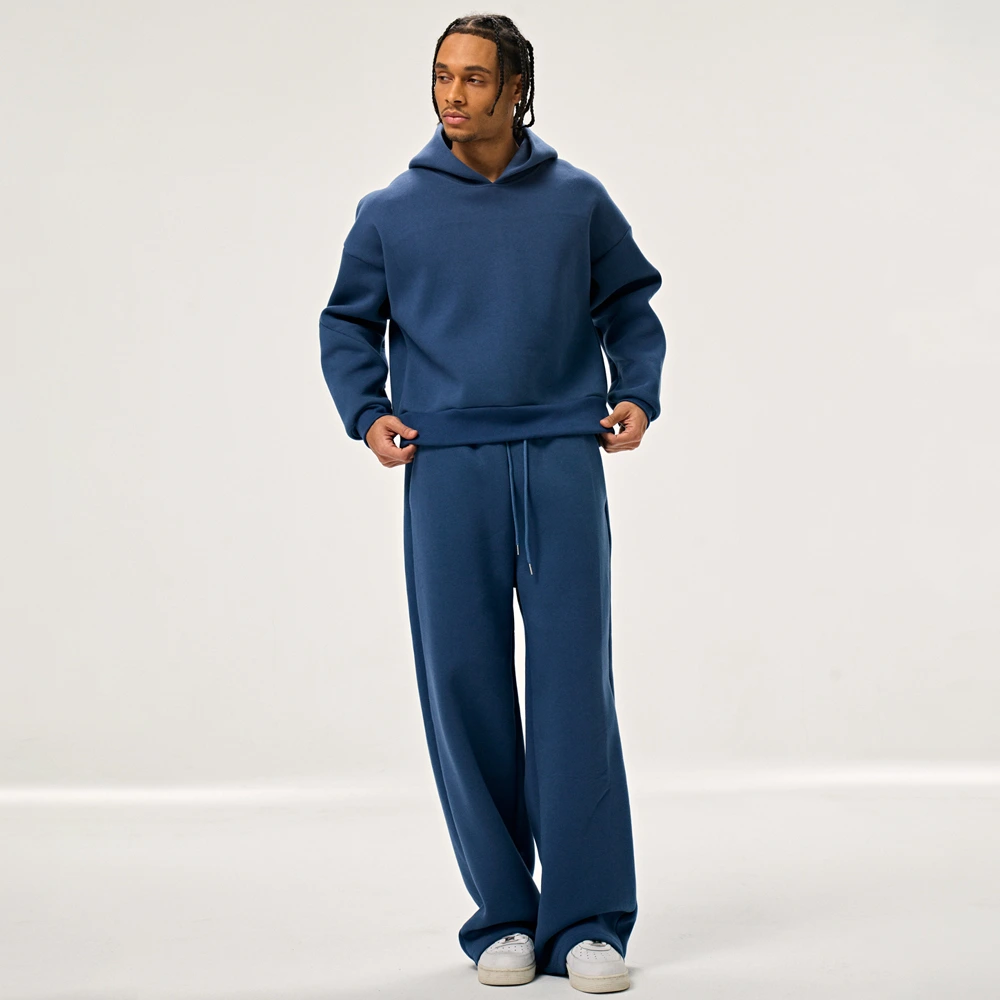
What a Dimensional Logo Actually Is on a 500 GSM French Terry Base
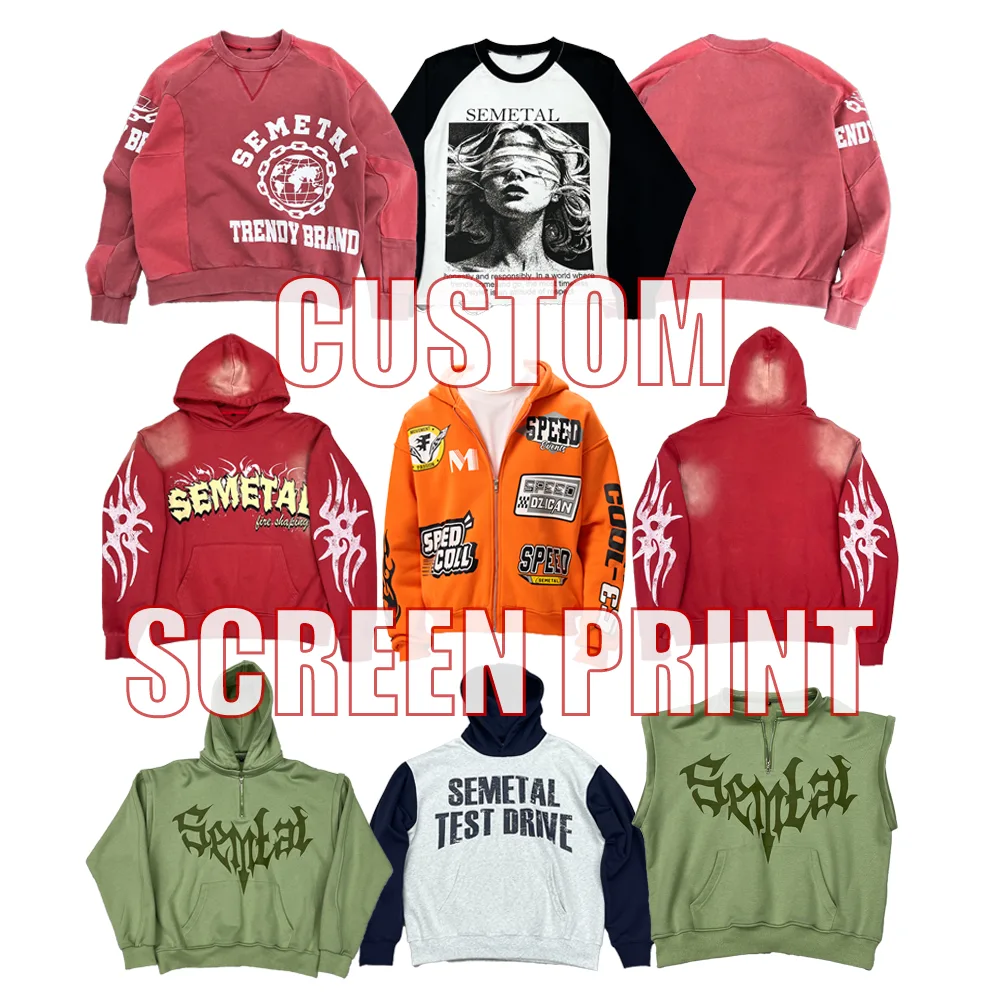
A dimensional logo is a printed graphic that rises physically off the fabric surface rather than sitting flat on it. In the decoration options available for a Custom Screen Print Hoodie (model RTS005), puff print is listed as a screen print type that produces a raised texture. It sits alongside plastisol ink (opaque, vibrant), water-based ink (soft feel), discharge ink (soft, natural feel), flock print (velvety texture), foil print (metallic finish), glow-in-the-dark ink and metallic ink.
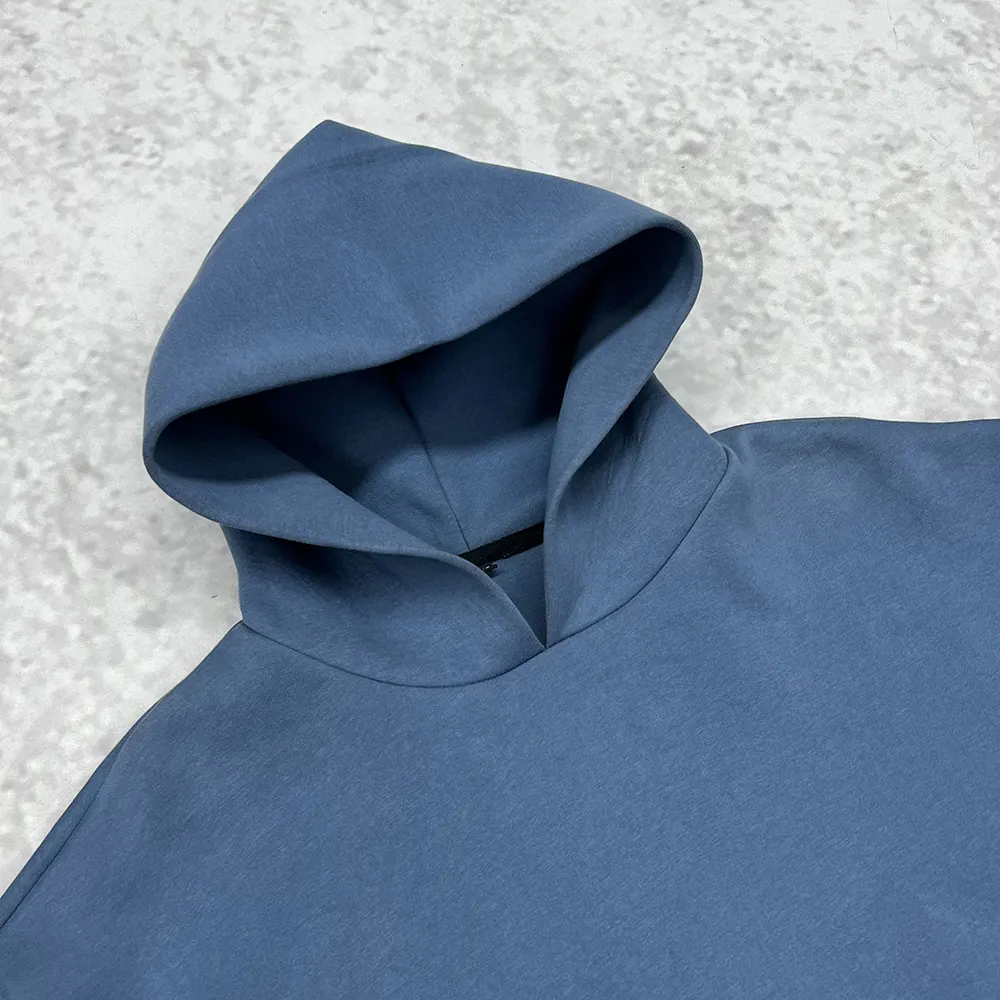
The base fabric decides how much of that raised character survives. French terry has a loop-back interior and is a breathable construction. Across the Qianshiwear product range, French terry is specified from 280 GSM up to 500 GSM, with 450–500+ GSM treated as ultra-heavyweight. A 500 GSM French terry hoodie therefore combines a dense, stable face with a textured loop-back back side — a combination that gives a puff deposit something firm to sit on.
Problem Definition: Why Dimensional Logos Fail on Heavyweight Terry
Most puff print failures are not printing failures. They are specification failures that only become visible after the garment has been washed several times. Four of them recur in heavyweight French terry programs.
1. Fabric weight and print deposit are specified separately. A 500 GSM body is thick, so the printed panel does not lie as flat against the platen as a light jersey does. If the fabric weight, the print placement and the press setup are briefed to different people at different times, the same artwork can come back with a deposit that varies from panel to panel.
2. The loop-back surface is treated as if it were a flat face. French terry has a loop-back interior, and the fabric surface takes ink differently from a smooth fleece face. Placement decisions — chest, full front, full back, sleeve, hood, side seam or all-over — change how much the print is stretched during wear and washing, because the chest of an oversized hoodie moves less than a sleeve or a hood panel.
3. Curing is not locked to the decoration method. The specification for this garment family states that the curing method is heat-set for durability and wash resistance. Heat-set curing is the step that converts a raised ink deposit into a wash-durable one. If curing is treated as a production detail rather than a specified requirement, the dimensional effect can flatten well before the garment reaches the end of its wear life.
4. Garment washing and print are sequenced without thought. Garment wash options in this product family include enzyme wash, stone wash, snow wash, vintage wash and garment dye — and the specification explicitly notes that garment wash affects print feel and appearance. Deciding to add a vintage wash after the print method has been locked is one of the most common causes of a logo that no longer matches the approved sample.
The buyer's job is not to set press parameters. Mesh selection, ink deposit depth, number of passes and exact puff height are production variables that should be confirmed by the printer against the approved artwork and the actual fabric lot. What the buyer must control is the outcome: the fabric weight band, the placement map, the ink system allowed, the curing requirement, and the test thresholds the order is measured against.
Industry Background: Where Heavyweight Dimensional Print Sits in 2026
Heavyweight terry and dimensional decoration are moving in the same direction. The global hoodies and sweatshirts market was valued at USD 209.26 billion in 2025 and is projected to reach USD 303.62 billion by 2031, according to Mordor Intelligence. Within that market, Dataintelo reports that pullover hoodies accounted for 38.4% of product type share in 2025, driven by global streetwear and athleisure trends.
The decoration side is expanding faster than the garment side. Grand View Research estimates the global custom hoodie printing market is growing at a CAGR of 9.9% for 2024–2030, with high demand specifically noted for 3D puff embroidery and eco-friendly water-based inks. On the supply side, China's apparel exports reached USD 159.14 billion in 2024, a 0.3% year-on-year increase despite geopolitical pressures, according to the General Administration of Customs (GACC).
Fabric selection has consolidated around a clear standard. Heavyweight hoodies in the 350–450+ GSM range using 100% cotton French terry are widely treated as the preferred base for premium streetwear because of their structure and pilling resistance. A 500 GSM build pushes above that reference band into ultra-heavyweight territory, which is why the parameter set below matters more, not less, as weight increases.
Compliance expectations run alongside the technical ones. Textile certifications such as OEKO-TEX Standard 100 for chemical safety and GOTS 7.0 for organic fibres are the recognised industry benchmarks for sustainable manufacturing, and they are frequently written into premium streetwear briefs at the same time as the fabric weight specification.
The Parameter Set: What to Specify Before Production
For a dimensional logo on a 500 GSM French terry hoodie, the following parameter groups should be confirmed in writing. Each line below reflects an option that is actually available in the Qianshiwear custom hoodie and screen print hoodie range.
| Parameter group | Options / values available | Why it matters for a raised logo |
|---|---|---|
| Fabric weight | 280–350 GSM (mid-weight); 350–450 GSM (heavyweight); 450–500+ GSM (ultra-heavyweight) | Determines how stable the panel is under the screen; 500 GSM falls inside the ultra-heavyweight band. |
| Fabric type | French Terry (loop-back); Brushed Fleece; Heavyweight Cotton Fleece | French terry loop-back gives a textured back face and breathable hand; fleece gives a brushed interior. |
| Fabric composition | 100% Cotton; Cotton-Polyester Blend 80/20 or 70/30 | Blend ratio affects softness, durability, shrinkage control and colour retention; cotton content affects how inks read on the surface. |
| Print type | Plastisol, water-based, discharge, puff print (raised texture), flock, foil, glow-in-the-dark, metallic | Puff print is the option that produces the dimensional effect; others can be combined with it on the same garment. |
| Print placement | Chest (left/centre), full front, full back, sleeve, hood, side seam, all-over panel by panel | Placement determines how much the printed area is stretched in wear and washing. |
| Curing method | Heat-set for durability and wash resistance | The step that turns a raised deposit into a wash-durable one. |
| Garment wash | Enzyme, stone, snow, vintage, pigment dye, garment dye | Wash and dye affect print feel and appearance — sequence must be agreed before print approval. |
| Fit and sizing | XS–XXL with custom grading; oversized fits (unisex sizing) available | Fit changes where the logo lands and how the silhouette frames it. |
| Sleeve construction | Set-in, raglan, drop shoulder | Drop shoulder shifts the shoulder seam and changes how the chest and sleeve panels sit when worn. |
| Hood and pockets | Double-layer or single-layer hood, hood with drawstring (cotton, metal-tipped, custom branded); kangaroo, side welt, zip or patch pockets | Hood and pocket panels are common additional logo locations and need their own placement callouts. |
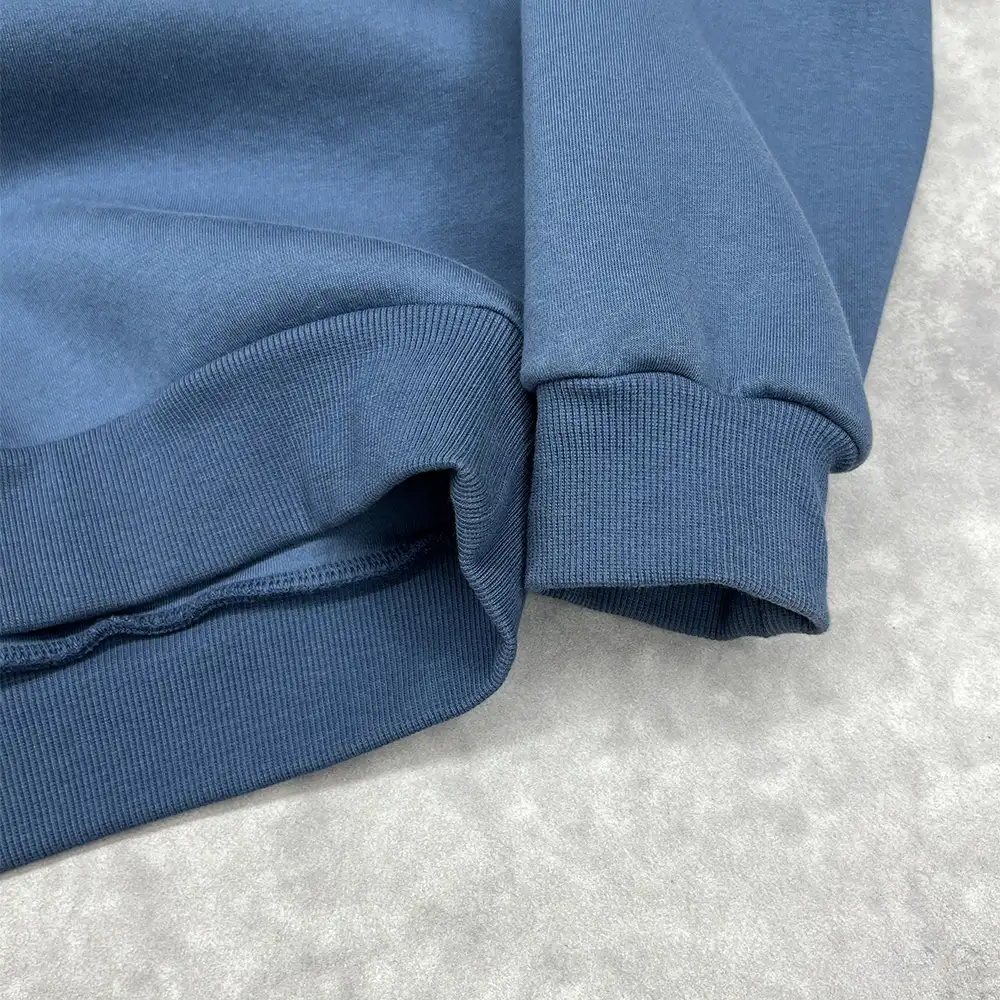
| Cuffs and hem | Ribbed cuffs (1x1, 2x2) or elastic cuffs; ribbed hem or straight hem with coverstitch | Rib recovery is what keeps an oversized body from losing its intended shape. |
| Quality thresholds | Colour fastness ≥ Grade 4; shrinkage ≤ 5%; anti-pilling ≥ Grade 3; AQL 2.5 | These are the measurable criteria an order is inspected against. |
| Minimum order | Low MOQ from 50 pieces per style | Allows a dimensional logo to be validated at real production quality before a full seasonal buy. |
Construction Parameters That Change How a Dimensional Logo Reads
Print parameters do not operate alone. Sleeve construction is one of the most overlooked variables: set-in, raglan and drop shoulder each place the shoulder seam differently, and a drop shoulder shifts the visual centre of the chest. On an oversized body, that shift changes where a puff print logo should sit so that it reads as intentional rather than misplaced.
Hood construction follows the same logic. A double-layer hood, a single-layer hood, and a hood with drawstring are all available options, and a small logo on a hood panel is printed on a curved, multi-layer surface rather than a flat body panel. That difference should be reflected in the placement map, not discovered at the sample stage.
Step-by-Step Breakdown: Approving a Puff Print Logo on 500 GSM French Terry
The following seven-step sequence is the order in which the parameters above should be locked. Each step produces a written decision that the next step depends on.
- Lock the base fabric. Confirm the weight band (450–500+ GSM for ultra-heavyweight), the construction (French terry loop-back) and the composition (100% cotton or an 80/20 or 70/30 blend). Nothing downstream can be approved before this is fixed.
- Fix the colour route. Decide between Pantone matching, pigment dye, garment dye or reactive dye — and decide it before print approval, because garment dye affects print feel and appearance.
- Define the artwork for a raised surface. Puff print changes the graphic physically. Fine lines, tight counters and small text behave differently once they rise off the fabric than they do in a flat digital rendering. Approve the artwork knowing it will be interpreted as a dimensional object.
- Build the placement map. Mark every location — chest left or centre, full front, full back, sleeve, hood, side seam — and note the expected stretch behaviour of each location.
- Fix the fit and shoulder construction. Confirm oversized grading and whether the sleeve is set-in, raglan or drop shoulder, then re-check the placement map against the final silhouette.
- Specify curing and the wash protocol. Require heat-set curing for durability and wash resistance, and state the garment wash step in relation to the print step rather than after it.
- Set the inspection thresholds and sample. Write colour fastness ≥ Grade 4, shrinkage ≤ 5%, anti-pilling ≥ Grade 3 and AQL 2.5 into the order, then validate all of them on a physical sample before the bulk run.
A documented heavyweight streetwear project combined a 500 GSM French terry base, a puff print logo and an oversized, drop-shoulder silhouette; the combination was reported to reach 85% customer positive reviews. The lesson is not that oversized fits sell — it is that the print, the fit and the fabric were approved as one specification rather than three separate ones.
Use Cases: Where 500 GSM French Terry Dimensional Print Fits
Heavyweight terry with a raised logo is not a universal answer. It suits programs where structure, perceived permanence and a strong visual silhouette matter more than packability or cost per unit.
- Streetwear and urban fashion drops. A 500 GSM body with a dimensional logo reads as a statement piece — the category where drop shoulder and oversized grading are standard expectations.
- University and school spirit wear. Raised logos on heavyweight bodies survive the wear-and-wash cycle of a student population better than light-weight alternatives.
- Music and entertainment merchandise. Tour collections frequently combine a large back print with a smaller chest or sleeve mark, a layout the placement options here support directly.
- Corporate merchandise and promotional apparel. Where the garment is expected to be worn repeatedly rather than once, the wash-durability thresholds carry the brand further.
- E-commerce fashion brands. A low MOQ from 50 pieces per style lets an online label test a 500 GSM dimensional drop before committing to a seasonal buy.
- Athleisure and sportswear lines. French terry's loop-back interior and breathability make it workable for warm-up and cool-down pieces, not only winter weight.
The markets in which these applications are commonly produced for include the United States, United Kingdom, Australia, Germany, France, Italy, Netherlands, New Zealand, Spain, Sweden, United Arab Emirates, Switzerland, Qatar, Luxembourg, Ireland, Singapore, Norway, Denmark and Belgium.
Comparison Table: Decoration Options for a 500 GSM French Terry Hoodie
Puff print is one choice among several decoration routes in this product family. The table below compares the options that are actually listed for the screen print hoodie range, using the surface result each one produces.
| Decoration method | Surface result | Typical fit for a 500 GSM French terry hoodie |
|---|---|---|
| Puff print | Raised, dimensional texture | Statement logos where the logo itself is the product feature |
| Plastisol ink | Opaque, vibrant colour | Bold flat graphics with strong colour coverage |
| Water-based ink | Soft feel | Large-format prints where hand feel matters |
| Discharge ink | Soft, natural feel | Garment-dyed or pigment-dyed bases where a printed-on look is not wanted |
| Flock print | Velvety texture | Textural contrast against a raised puff element |
| Foil print | Metallic finish | Accent details rather than full-coverage graphics |
| Glow-in-the-dark ink | Light-reactive effect | Limited-run or novelty drops |
| Metallic ink | Metallic pigment finish | Highlight accents within a larger composition |
| 3D puff embroidery | Raised stitched detail | Where a stitched, structured mark is preferred over an ink deposit |
| Flat embroidery | Low-profile stitched mark | Chest or hood marks that must stay subtle |
| Chenille / appliqué | Velvety or layered patch effect | Varsity-style branding on heavier bodies |
Combination decoration is supported in this range, including screen print combined with puff, flock or foil on the same garment. That matters for buyers planning a mixed layout — for example, a flat front graphic with a raised logo on the sleeve.
FAQ
What wash-performance standards should a puff print logo on 500 GSM French terry meet?
For this product family, the stated quality requirements are colour fastness of at least Grade 4, shrinkage of 5% or less, and an anti-pilling rating of at least Grade 3, inspected under AQL 2.5 quality control. The specification also requires heat-set curing for durability and wash resistance, which is the production step that makes those thresholds achievable for a raised ink deposit. Where a buyer's brief includes sustainability requirements, OEKO-TEX Standard 100 for chemical safety and GOTS 7.0 for organic fibres are the recognised textile certification benchmarks to request.
Can a manufacturer produce an oversized, drop-shoulder 500 GSM French terry hoodie with a dimensional logo?
Yes — these capabilities are within the standard custom hoodie and screen print hoodie range. Oversized fits with unisex sizing are available, sleeve construction can be specified as set-in, raglan or drop shoulder, fabric weight can be taken to the 450–500+ GSM ultra-heavyweight band, and puff print is a listed screen print type producing a raised texture. Guangzhou Qianshi Apparel Co., Ltd (Qianshiwear) is a garment manufacturer established in 2014 that provides OEM and ODM services for custom apparel, covering fabric sourcing through to custom packaging, with an annual output capacity of 3,000,000 units and 85–90% of production exported to international markets.
What drives the cost of a dimensional logo on heavyweight French terry?
Cost is quoted against the specification, not as a fixed price, because the variables compound. The main drivers are the fabric weight band (a 450–500+ GSM ultra-heavyweight body uses more fibre than a 280–350 GSM mid-weight body), the number and location of print positions, whether a garment wash such as enzyme, stone, snow, vintage or garment dye is added after printing, the hardware selected (metal or plastic zippers, cotton or metal-tipped drawstrings, custom branded drawstring ends), and whether private label tags and custom packaging are included. Because garment washing affects print feel and appearance, adding a wash step after print approval is the most common source of unexpected cost and rework.
How can I validate a puff print logo before committing to a bulk order?
Validation happens at sample stage against the written thresholds: colour fastness of at least Grade 4, shrinkage at or below 5%, anti-pilling at or above Grade 3, and AQL 2.5 inspection. Low MOQ starts from 50 pieces per style, which allows a dimensional logo to be produced at real production quality in small quantity before a seasonal commitment. The most useful sample is not a single logo swatch but the finished garment — same fabric weight, same placement map, same curing route and same wash treatment — so that the dimensional effect can be judged in the context of the final oversized silhouette.
What can be customised beyond the print itself?
At Qianshiwear, the custom hoodie and sweatshirt range supports Pantone colour matching plus pigment dye, garment dye and reactive dye routes; XS–XXL sizing with custom grading and oversized unisex fits; double-layer or single-layer hood construction with cotton, metal-tipped or custom branded drawstrings; kangaroo, side welt, zip or patch pockets; ribbed 1x1 or 2x2 cuffs and ribbed or coverstitch hems; garment wash options including enzyme, stone, snow, vintage and pigment wash; and private label tags and custom packaging. To move from a specification to a sample, send your fabric weight, placement map, fit requirement and target market to sales@qianshiwear.com or call +86 18148939572 — the team can review the brief against the available parameter set and confirm what applies to your build.
Conclusion: Approve the Parameters, Not Just the Graphic
A dimensional logo on 500 GSM French terry succeeds or fails on specification discipline. The graphic is only one input. The weight band, the loop-back terry construction, the composition ratio, the placement map, the curing method, the garment wash sequence, the fit and shoulder construction, and the inspection thresholds all have to be agreed as one set before a press is set up.
The commercial case for getting this right is straightforward. Heavyweight French terry between 350 and 450+ GSM is already the accepted base for premium streetwear because of its structure and pilling resistance, and demand for raised, three-dimensional decoration continues to grow alongside it. Pushing that base to 500 GSM raises the ceiling on what a raised logo can look like — and raises the cost of getting the parameters wrong.
Planning a dimensional logo on a 500 GSM French terry hoodie?
Qianshiwear builds custom hoodies, sweatshirts and full apparel ranges from fabric sourcing to custom packaging, with low MOQ from 50 pieces per style and OEM/ODM support. Review the full capability overview and technical options in the Qianshiwear product catalogue, or send your fabric weight, placement map and fit requirements to sales@qianshiwear.com to request a sample and a specification-based quote.
Have Questions or Need More Details?
Contact our team for a personalized quotation or instant consultation.
Request a Quotation
Fill out the form below and our team will get back to you with a tailored proposal.
WhatsApp Direct Chat
Prefer to chat in real-time? Message us on WhatsApp for instant assistance & quick answers.
- Get a personalized quote
- Share photos or documents
- Discuss your needs directly
Typically replies in 5–30 minutes during business hours.