Sourcing Decision Framework: Chinese OEM Hoodie Manufacturer vs. International Brand Supplier – A 2026 Comparative Analysis for Industrial Buyers
1. Product Comparison: Custom Screen Print Hoodie vs. Custom Embroidery Hoodie
For industrial buyers evaluating custom hoodie manufacturing, the choice between screen print and embroidery decoration directly impacts technical suitability, cost, and maintenance. Below is a structured comparison based on the technical specifications of two common product types.
Technical Parameters
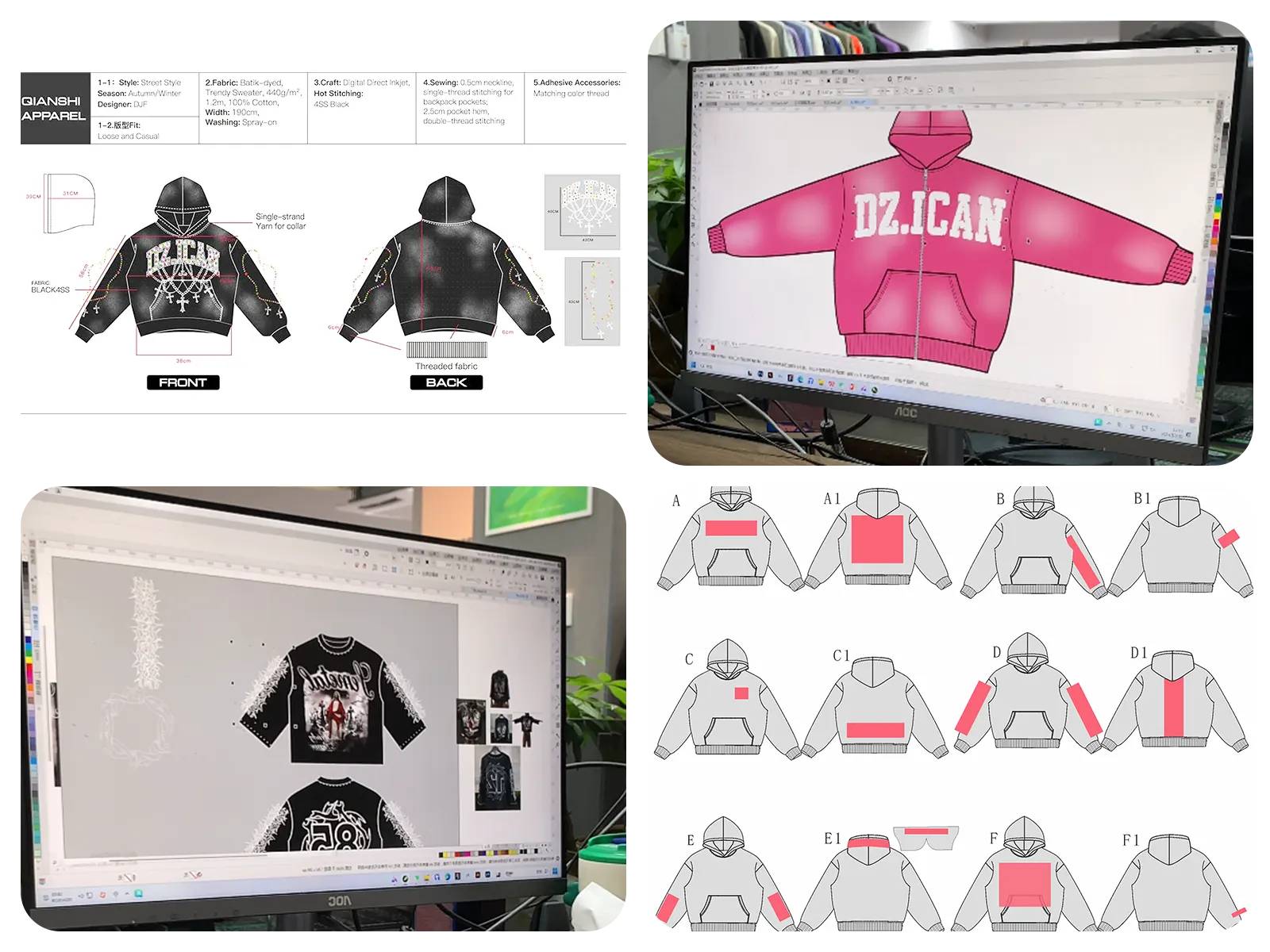
The Custom Screen Print Hoodie (Model RTS005) supports fabric weights from 280–450 GSM, with options for 100% cotton or cotton-polyester blends. Its screen print types include Plastisol, water-based, discharge, puff, flock, foil, and glow-in-the-dark inks. The curing method is heat-set for durability. The Custom Embroidery Hoodie (Model RTS004) covers similar fabric weights (280–500 GSM) and adds appliqué types such as flat, 3D puff, chenille, and leather patch. Embroidery stitching includes flat and 3D puff techniques.
Applicable Scenarios
Screen print hoodies are best suited for large graphic designs, high color vibrancy, and cost-effective production for mid-to-high volume orders. They are common in streetwear, music merchandise, and promotional apparel. Embroidery hoodies are preferred for logo-centric designs, varsity-style garments, and luxury finishes where texture and durability are prioritized. Common industries include varsity apparel, high-end streetwear, and corporate uniforms.
Cost
Screen printing typically incurs lower per-unit costs for orders above 100–200 pieces due to efficient setup, though multicolor designs add step charges. Embroidery costs depend on stitch count and patch complexity; for small logos, it can be competitive. For full-back intricate appliqué, costs rise significantly. An industrial buyer should note that initial per-unit cost for a premium-quality hoodie manufacturer is typically 20–40% higher than low-cost alternatives, but the total project cost often becomes comparable or lower when accounting for reduced return rates, fewer complaints, and longer garment lifespan.
Maintenance
Screen printed hoodies require heat-set curing for wash resistance; with proper care, prints can withstand 30–50 washes with minimal fading. Embroidery appliqués require backing stabilization and thread tension control to prevent loosening. Both product types undergo a multi-point inspection process covering incoming materials, in-production checks, and final sampling. Inspection reports are available upon request, ensuring traceability and quality consistency across reorders.
2. Supplier Comparison: Chinese OEM Factory vs. International Brand Supplier
When sourcing custom hoodies, industrial buyers often compare Chinese OEM manufacturers (e.g., Guangzhou Qianshi Trading Co., LTD) with international brand suppliers (e.g., Gildan Activewear). The table below summarizes key differentiators:
| Dimension | Chinese OEM (Qianshiwear) | International Brand (Gildan) |
|---|---|---|
| Price (per unit, 300 pcs) | Variable by customization; generally 20–40% higher than low-cost factories but lower than brand-labeled products for small runs. | Standard blank products are competitively priced at scale (MOQ often 300–600 pieces per color), but custom decoration adds 15–30% premium through third-party printers. |
| Customization Capability | Full OEM/ODM services: fabric selection, pattern making, screen print, embroidery, puff print, rhinestone, custom labels, and packaging. MOQ as low as 50 pieces per color per design. | Primarily blank garments; limited direct custom decoration. Custom orders typically require minimums of 500+ pieces per style and longer lead times for embroidery/screen printing. |
| Lead Time | Sample: 7–15 working days. Bulk: 20–35 working days. Rush orders negotiable. | Blanks: 5–10 business days from distribution. Custom decoration adds 15–25 business days; total 20–35 days. |
| After-Sales Support | Replacement for defective products; ongoing design consultation; technical support for reorders and collection planning. | Varies by distributor; typically limited to manufacturer warranty on blank goods. Custom decoration defects may be handled by third-party printers. |
Qianshiwear's structured quality control procedures maintain defect rates typically below 5%, fabric shrinkage within 5–8%, and color fastness at Grade 3–4. This performance advantage reduces the total cost of ownership compared to low-cost alternatives where defect rates often exceed 10–15%.
3. Decision Model: 3-Step Framework for Sourcing Custom Hoodies
- Step 1 – Define the Use Scenario: Identify the end-use environment (e.g., streetwear retail, corporate uniforms, music tour merchandise). Determine required durability, comfort, and aesthetic priority (graphic print vs. embroidery).
- Step 2 – Match Technical Parameters: Select fabric weight (280–350 GSM mid-weight, 350–450 GSM heavyweight), composition (100% cotton, cotton-polyester blend, recycled fleece), and decoration technique. Verify that the supplier can meet specific requirements such as heavyweight 500 GSM French terry, custom puff print, or vintage wash finishes.
- Step 3 – Calculate Total Cost of Ownership: Include per-unit price, MOQ impact, defect rate risk, return handling costs, and reorder consistency. While a premium OEM may charge 20–40% more upfront, the total project cost often becomes comparable or lower due to fewer quality issues and longer product lifecycle.
4. Case Reference: Emerging Streetwear Brand Chooses Chinese OEM for Scalable Custom Hoodie Production
A US-based startup streetwear brand initially approached an international blank supplier for its launch collection but found the minimum order quantity of 500 pieces per style restrictive for a limited-edition drop. They switched to Guangzhou Qianshi Trading Co., LTD (Qianshiwear) for a 100-piece order of custom hoodies featuring a heavyweight 500 GSM French terry, custom puff print logo, and oversized fit with drop shoulder. Qianshiwear delivered samples in 10 days and bulk in 30 days, with custom woven neck labels. The brand achieved a 95% sell-through rate within two months, 85% positive customer reviews, and placed two reorders (totaling 1,000 pieces) within 12 months. The key factors that tipped the decision were low MOQ (50 pieces per design), flexible customization, and consistent quality across all sizes.
Download the Full Capability Brochure
For detailed technical specifications, certifications (ISO 9001:2015, BSCI, GPSR, AZO), and production capacity details, download the company brochure: Qianshiwear Apparel Manufacturing Brochure.
Have Questions or Need More Details?
Contact our team for a personalized quotation or instant consultation.
Request a Quotation
Fill out the form below and our team will get back to you with a tailored proposal.
WhatsApp Direct Chat
Prefer to chat in real-time? Message us on WhatsApp for instant assistance & quick answers.
- Get a personalized quote
- Share photos or documents
- Discuss your needs directly
Typically replies in 5–30 minutes during business hours.