
Low Minimums, High Sell-Through: A Streetwear Launch Success Formula
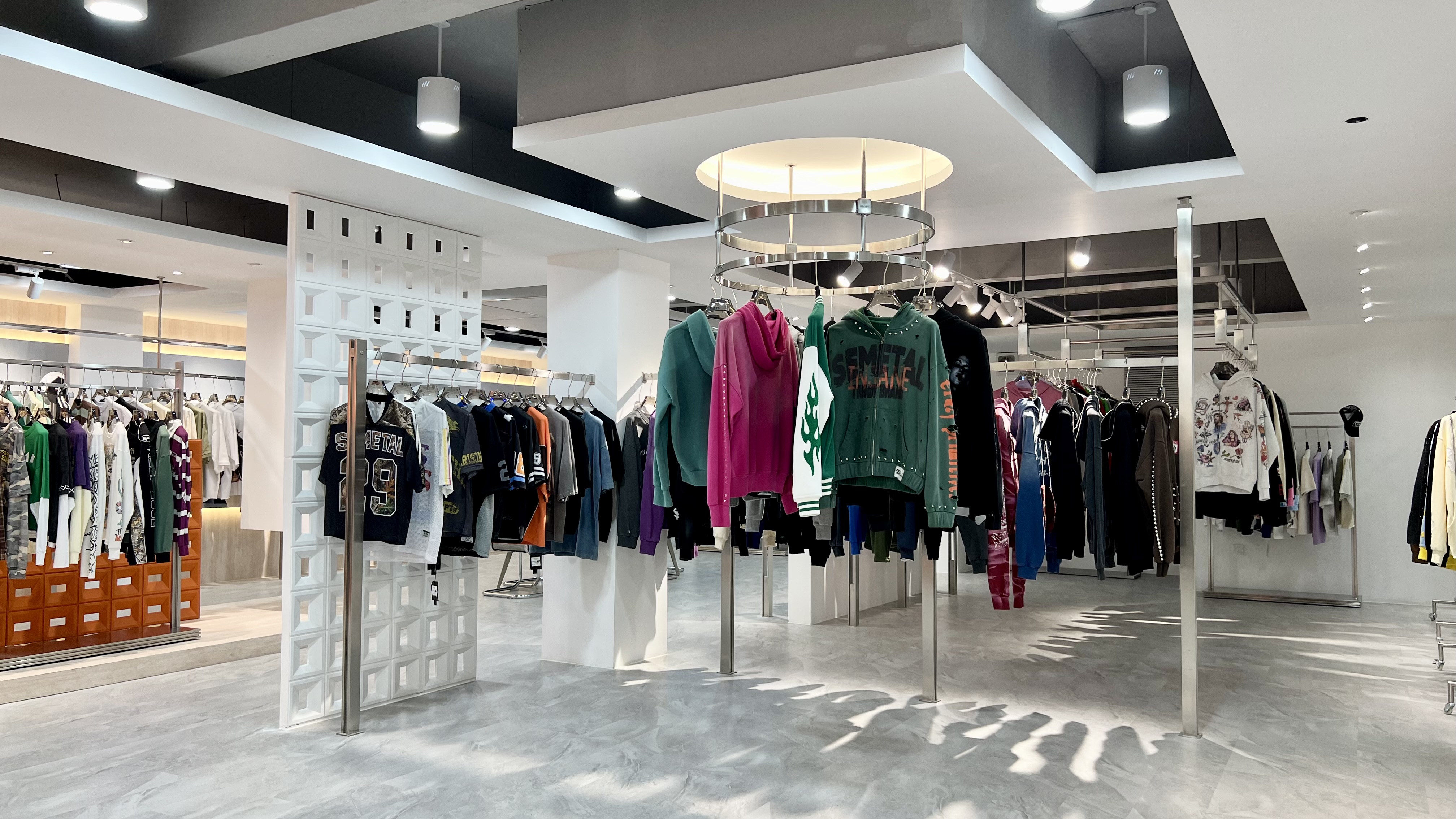
Low Minimums, High Sell-Through: A Streetwear Launch Success Formula
The formula in one sentence: start with a small, fully specified first run, let real sell-through data prove the design, then scale the identical specification into larger reorders. A US/Canada streetwear client working with Qianshiwear (Guangzhou Qianshi Apparel Co., Ltd) began with an initial order of 100 pieces. That drop reached a 95% sell-through rate, earned 85% positive reviews, and was followed by two reorders within 12 months — one of them scaling to 1,000 pieces.
For a brand owner in the decision stage, the number that matters most is not 100 or 1,000. It is the fact that the 1,000-piece reorder was possible without changing the product. The pilot hoodie was built from heavyweight 500 GSM fabric with custom puff print logos and an oversized fit with drop shoulder — a specification heavy enough that a mismatch on the reorder would have been immediately visible to customers.
This article works through that sequence as a decision framework: the inventory problem that makes large first orders dangerous, the market context behind heavyweight streetwear demand, the manufacturing capabilities that make a lean launch viable, a step-by-step path from pilot to reorder, the situations where the model fits and where it does not, and a factual comparison between a manufacturer running structured quality control and an ultra-budget mass producer.
Problem Definition: Why a Big First Order Is the Most Expensive Mistake a Streetwear Label Can Make
Emerging streetwear brands and DTC labels face a two-sided risk that rarely appears in generic sourcing advice. Order too much and unsold inventory locks up the capital needed for the next drop. Order too little and a sell-out cannot be followed quickly enough to capture demand — especially when the next production run has to match the first one.
The problem is usually not ambition; it is sequencing. Three specific failures push young brands into that trap:
- Quantity is committed before the design is proven. A first drop is still a hypothesis about fit, colourway, decoration and price point. Committing to volume before the market answers turns a design decision into an inventory liability.
- The specification is not documented. When fabric weight, shrinkage behaviour, measurements and decoration method are not recorded, a reorder becomes a new project rather than a repeat. That is where colour shift, sizing drift and shrinkage complaints appear — after the customer has already paid.
- Quality is not verified per batch. Brands building long-term reputation and consistent customer experience need reliable quality across reorders, not only on the first shipment. A strong first drop followed by a weak second batch damages the exact asset the brand is trying to build.
A high minimum order quantity makes all three failures worse, because it removes the option of buying information cheaply. The alternative is to treat the first run as a paid test — small enough to survive if it underperforms, complete enough to be reordered if it does not.
Industry Background: Heavyweight Construction and Small Runs Now Define the Streetwear Market
The commercial context supports leaner, heavier, more design-led production. The global hoodies and sweatshirts market was valued at USD 209.26 billion in 2025 and is projected to reach USD 303.62 billion by 2031, according to Mordor Intelligence. Market valuation estimates vary by scope — some analysts measure all sweatshirts, others focus on premium segments — so any single figure should be read as directional rather than precise.
Two structural signals matter more for launch planning than the headline market size:
- Pullover hoodies accounted for 38.4% of product type share in 2025, driven by global streetwear and athleisure trends (Dataintelo). The pullover is the format most streetwear labels use for a first drop, which means competition is concentrated there and product quality is the main differentiator.
- The custom hoodie printing market is growing at a CAGR of 9.9% (2024–2030), with high demand for 3D puff embroidery and eco-friendly water-based inks (Grand View Research). Decoration, not blank garment supply, is where brand identity is being built.
Fabric weight has also converged on a premium expectation. Heavyweight hoodies in the 350–450+ GSM range using 100% cotton French Terry are the preferred standard for premium streetwear brands because of their structure and pilling resistance. The Qianshiwear launch case went further at 500 GSM — a weight that reads as substantial in hand and holds an oversized silhouette instead of collapsing after washing.
Sourcing geography matters too. China's apparel exports reached USD 159.14 billion in 2024, a 0.3% year-on-year increase despite geopolitical pressure (General Administration of Customs of China). That export base is not uniform, however. Gildan Activewear and Hanesbrands are among the top vertically integrated manufacturers, with Gildan holding significant share in the North American printwear sector (S&P Global Ratings) — an efficient route for blank-driven programs, but a different supply model from custom, low-minimum, decoration-heavy drops.
Detailed Solution: What a Low-MOQ Hoodie Manufacturer Must Control to Make Lean Launching Work
Low minimums only reduce risk if the manufacturer can also guarantee repeatability. Guangzhou Qianshi Apparel Co., Ltd, which trades as Qianshiwear, is an apparel manufacturer and trading company based in Guangzhou, Guangdong, founded in 2014, serving clothing brands worldwide with OEM and ODM production. The company reports more than 20 years of fabric weaving expertise and over 15 years in garment production, an annual output of 3,000,000 units, and 85–90% of total production exported to the EU, USA, AU and UK markets.
Its production footprint is organised for controlled small runs rather than only bulk volume: a 600 ㎡ sewing area, a 700 ㎡ warehouse, a 1,500 ㎡ finishing area and a 200 ㎡ packing area, supported by 80–100 sales, order coordination, operations, design and administrative staff, 200–250 production line workers, quality control staff and pattern makers, and a 15-person design team. Fabric sourcing, design development, cutting, sewing, printing, embroidery and custom packaging are handled in-house.
Five capability areas determine whether a 100-piece pilot can become a 1,000-piece reorder without becoming a different product.
1. Fabric weight and dimensional stability
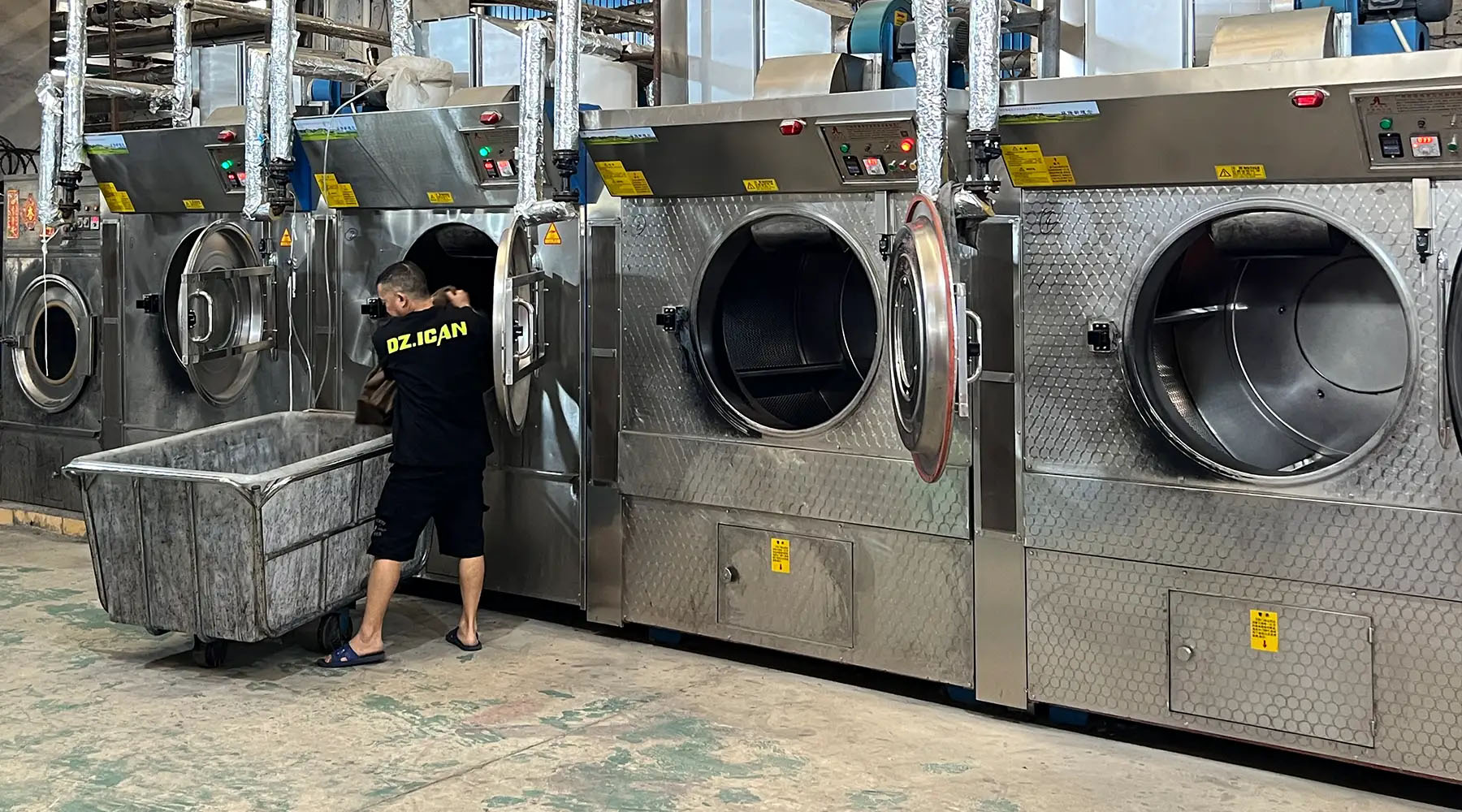
A 500 GSM hoodie only stays a 500 GSM hoodie if shrinkage is controlled before cutting. Pre-shrinkage treatment before cutting, reactive dyeing with high-temperature fixation for deeper colour penetration, and anti-pilling weaving or finishing treatments are the processes that keep a heavyweight loopback or fleece body stable after washing. Without them, the reorder arrives slightly smaller, slightly lighter and visibly different.
2. Decoration durability
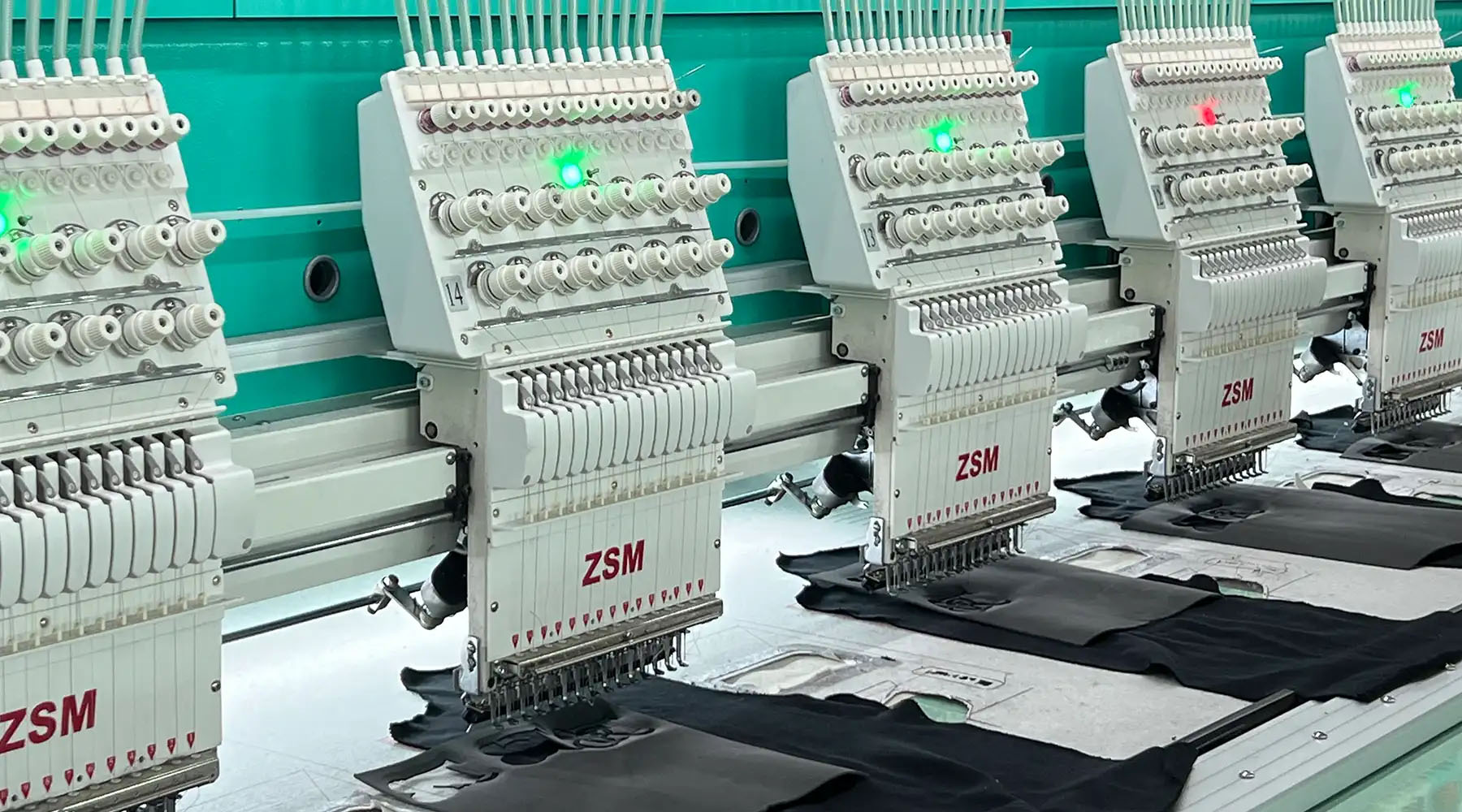
Custom puff print logos are one of the most demanding decoration choices on heavyweight fabric, because the raised surface must stay raised without cracking or peeling. Correct curing time for screen prints and DTG inks is the controlling variable, and print alignment requires in-process checks rather than end-of-line luck. Where embroidery is used alongside printing, backing stabilisation controls thread tension and prevents loosening. In the launch case, the custom puff print logo survived the transition from a 100-piece pilot to a 1,000-piece reorder because the exact print specification was recorded and repeated.
3. Quality gates at every production stage
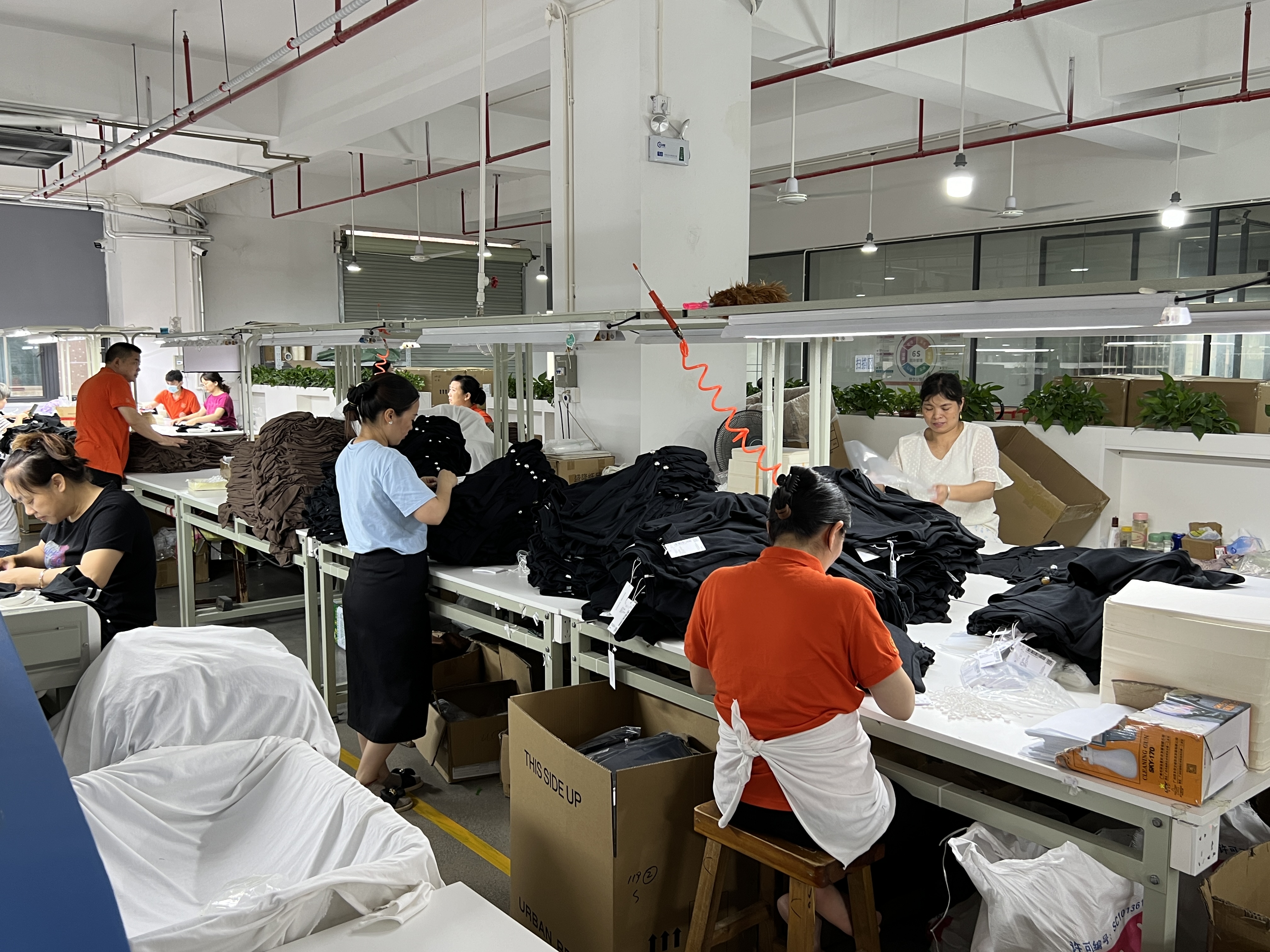
Repeatability depends on where inspection happens, not only on how much of it happens. Qianshiwear's documented control structure runs across five layers:
- Incoming material control: 100% fabric inspection on arrival, checking weight, width, colour consistency and shrinkage potential; hardware and trim samples tested before bulk production approval.
- In-process control: first-article inspection at the cutting, sewing and printing stages, random patrol checks along production lines, and real-time adjustment of embroidery tension and print alignment.
- Final inspection: AQL 2.5 sampling applied to finished goods, pre-shipment wash tests on representative samples, and size and measurement verification across all colourways.
- Traceability: every order is assigned a production batch number, with quality records maintained for future reorder reference and defect analysis documented for continuous improvement.
- Third-party support: third-party inspection such as SGS or Intertek is available on client request, and lab testing for specific performance requirements such as colour fastness or tensile strength can be arranged.
4. Documentation that makes a reorder a repeat, not a new project
The single most underrated capability in low-MOQ manufacturing is record keeping. Batch numbers, retained specifications and historical quality records mean the second order is produced against the same reference as the first, which is what allows a brand to scale from 100 to 1,000 pieces without re-approving the product. Manufacturers with limited documentation typically show inconsistent quality between batches and a higher likelihood of production discrepancies requiring correction.
5. Flexible minimums with in-house control
Qianshiwear positions flexible production with low MOQs alongside in-house control of fabric sourcing, cutting, sewing, decoration and packaging. For a pilot launch, that combination is what makes a 100-piece first order commercially realistic while keeping the specification identical for the reorder.
Comparatively speaking: compared to low-cost or ultra-budget mass producers, this product offers distinct advantages, including structured quality control procedures at key production stages. The practical effect for a streetwear brand is that the pilot and the reorder behave as the same product.
Step-by-Step Breakdown: Running the 100 → 1,000 Unit Launch Path
The launch sequence below reflects how the Qianshiwear US/Canada case actually progressed. Each step exists to reduce a specific risk.
- Lock the specification before the quantity. Define fabric weight (500 GSM in the case), construction, fit (oversized with drop shoulder), decoration method (custom puff print logo), colourways and size grading. Specification first, quantity second.
- Confirm materials and trim behaviour. Fabric is inspected at 100% on arrival for weight, width, colour consistency and shrinkage potential, and hardware and trim are tested before bulk approval. This step removes the most common cause of reorder drift.
- Run first-article inspection at each stage. Cutting, sewing and printing each get a first-article check, so fit and print alignment issues are caught on the first unit rather than after finishing.
- Produce the 100-piece pilot. The pilot is small enough to absorb commercially if the market response is weak, and complete enough to be reordered exactly if response is strong.
- Verify before shipping. AQL 2.5 final sampling, pre-shipment wash tests and measurement verification across colourways confirm the batch matches the approved reference.
- Read real market data, not opinions. The case produced a 95% sell-through rate and 85% positive reviews. That combination — high sell-through plus strong reviews — is the signal to scale rather than to discount.
- Scale the same specification into larger reorders. The brand placed two reorders within 12 months, one at 1,000 pieces, produced against the retained batch and quality records so the product stayed consistent.
The order of steps is what makes the formula work. A brand that reverses steps 1 and 6 — committing to volume first and validating later — takes on inventory risk without buying any information.
Use Cases: Where Low-Minimum, High-Sell-Through Launching Fits
This model is designed for specific buyers and specific conditions, and it is worth being clear about both.
Primary fit: emerging streetwear and DTC labels
The Qianshiwear case is a US/Canada streetwear client launching a heavyweight 500 GSM hoodie with puff print logos and an oversized, drop-shoulder fit. Starting at 100 pieces allowed the brand to test fit, decoration and price point together, then reinvest against proven demand. Two reorders within 12 months, one at 1,000 pieces, and 85% positive reviews indicate the product rather than the marketing carried the repeat business.
Private label and wholesale programs testing a new style
Distributors and private label operators often need to validate a new silhouette or decoration before committing to a full program. A structured pilot run produces the same specification and documentation that a larger program would use, so scaling does not require re-engineering the product.
Where the model does not fit
Two situations call for a different approach. High-volume blank programs, where price and volume dominate every other variable, are typically served by vertically integrated printwear manufacturers. And buyers optimising purely on the lowest possible unit price should recognise that structured quality control typically costs more per unit at the outset — the economics change only when return rates, complaints, replacement frequency and reorder consistency are counted.
Comparison Table: Structured Quality Control vs Ultra-Budget Mass Production
The comparison below uses published performance ranges for structured quality-control production versus low-cost, ultra-budget mass production. It is intended as an evaluation framework, not as a ranking of named competitors.
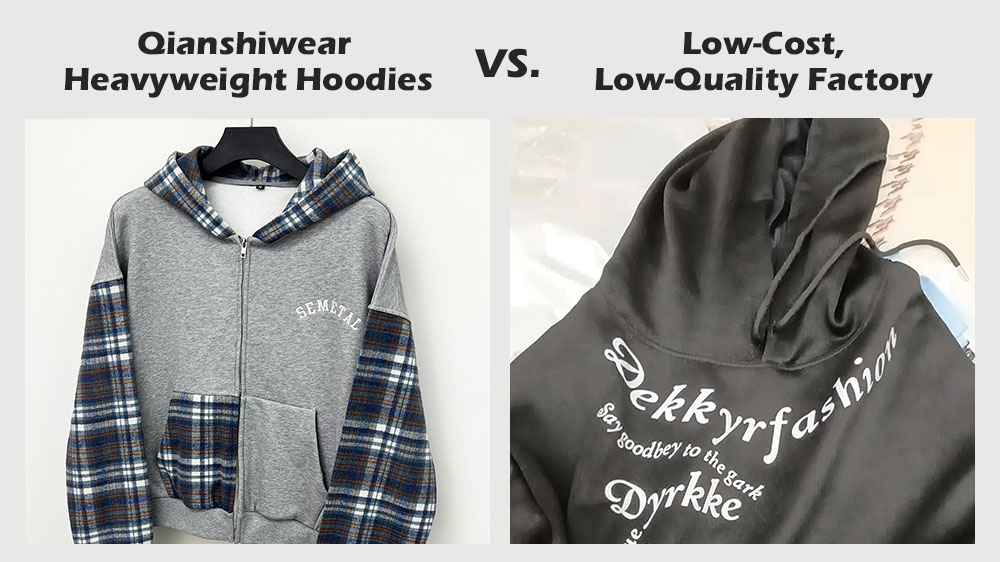
| Evaluation area | Manufacturer with structured quality control (Qianshiwear model) | Low-cost / ultra-budget mass producer |
|---|---|---|
| Inspection protocol | Quality inspection based on AQL standards at key production stages | No formal quality protocol |
| Typical defect rate | Typically maintained below 5% | Often exceeding 10–15% |
| Fabric shrinkage | Generally within 5–8% | 8–12% or higher |
| Colour fastness | Typically Grade 3–4 | Grade 2–3 |
| Wash durability | Typically withstands 30–50 washes with minimal fading | Noticeable fading after 10–15 washes |
| Anti-pilling performance | Typically Grade 3 | Grade 1–2 |
| Upfront unit cost | Typically 20–40% higher per unit | Lower initial per-unit price |
| Total project cost | Often comparable or lower once return rates, complaints and replacement frequency are counted | Hidden costs: higher return rates, potential impact on brand perception, more frequent re-purchasing due to shorter product lifespan |
| Reorder consistency | Multi-point inspection, production records and specifications maintained to support consistent reorders | Limited documentation, inconsistent quality between batches, higher likelihood of production discrepancies |
| Material efficiency | Structured cutting and sewing processes help minimise material waste; durable construction keeps products in use longer | Higher waste rates from inconsistent cutting and stitching; shorter product lifespans leading to more frequent replacements |
| Best suited to | Brands focused on long-term reputation and consistent customer experience, mid-tier to premium positioning, clients needing reliable quality across reorders | Buyers whose only decision variable is the lowest possible unit price |
Figures reflect published performance ranges for structured quality-control production compared with low-cost, ultra-budget mass production, plus the documented control procedures described above.
FAQ: Low-Minimum Hoodie Manufacturing and Launch Decisions
What compliance and quality documentation should a hoodie manufacturer provide?
For international textile sourcing, OEKO-TEX Standard 100 (chemical safety) and GOTS 7.0 (organic fibres) are widely recognised benchmarks for sustainable manufacturing, and buyers commonly ask suppliers to document how those standards are applied. Beyond certification, the practical evidence pack for a hoodie order includes 100% incoming fabric inspection records covering weight, width, colour consistency and shrinkage potential; hardware and trim testing before bulk approval; first-article inspection at cutting, sewing and printing; AQL 2.5 final sampling; pre-shipment wash tests; and size verification across all colourways. Each order should also carry a production batch number so quality records can be traced to future reorders. Inspection reports can be provided upon request, and third-party inspection such as SGS or Intertek can be arranged if the buyer prefers external verification.
Can a low-MOQ hoodie manufacturer actually deliver heavyweight fabric, puff print and an oversized fit?
Yes — the Qianshiwear launch case was built on exactly that combination: heavyweight 500 GSM fabric, custom puff print logos, and an oversized fit with drop shoulder. Heavyweight hoodies in the 350–450+ GSM range made from 100% cotton French Terry are the established standard for premium streetwear because of structure and pilling resistance, and 500 GSM sits above that baseline. Delivering it consistently requires specific controls rather than equipment alone: pre-shrinkage treatment before cutting, correct curing time for screen prints and DTG inks so puff print does not crack or peel, first-article inspection at the printing stage to confirm alignment, and embroidery backing stabilisation where embroidery is used alongside printing.
How much more does a manufacturer with structured quality control cost than a budget factory?
Initial per-unit cost is typically 20–40% higher than low-cost or ultra-budget mass production. Total project cost, however, is often comparable or lower once return rates, customer complaints and replacement frequency are taken into account, because a durable garment stays in use longer and generates fewer service issues. Ultra-budget options can carry hidden costs that do not appear on the quotation: higher return rates, potential damage to brand perception, and more frequent re-purchasing for customers because the product has a shorter lifespan. For a young streetwear brand, the review score is part of the commercial equation — in the launch case, 85% positive reviews accompanied a 95% sell-through rate.
How should a new brand validate a hoodie design before committing to a larger production run?
Validation works best as a staged sequence rather than a single sample. Lock the specification first — fabric weight, construction, fit, decoration method, colourways and size grading — then confirm material behaviour through incoming fabric inspection for weight, width, colour consistency and shrinkage potential. Produce a first-article unit and inspect it at cutting, sewing and printing stages, then run a small pilot batch and verify it with AQL 2.5 final sampling, pre-shipment wash testing and measurement checks across colourways. The pilot is the validation instrument: in the Qianshiwear case, a 100-piece first order confirmed the 500 GSM hoodie with puff print logos and an oversized drop-shoulder fit before the brand scaled, which is why the later reorders could repeat the same product rather than redesign it.
What keeps reorders consistent and repeatable after a successful launch?
Documentation and batch traceability do most of the work. When each order is assigned a production batch number, when quality records are retained for future reorder reference, and when the approved specification is stored alongside defect analysis, the next production run is built against the same reference as the first. That is what allowed the US/Canada streetwear client in the Qianshiwear case to place two reorders within 12 months — one at 1,000 pieces — after starting from a 100-piece pilot with a 95% sell-through rate. Inconsistent documentation is the usual reason a second batch arrives with different shrinkage, slightly different measurements or different print depth. If you are planning a first drop and want the pilot specification documented for reorder use, you can review the manufacturing catalogue and request a quotation through Qianshiwear before the quantity is finalised.
Conclusion: Small First Orders Are a Strategy, Not a Compromise
Low minimums are only valuable when they come with the discipline to repeat the product. The Qianshiwear case shows what that looks like in practice: a US/Canada streetwear brand started with 100 pieces of a 500 GSM heavyweight hoodie with custom puff print logos and an oversized, drop-shoulder fit, reached a 95% sell-through rate and 85% positive reviews, then placed two reorders within 12 months, one at 1,000 pieces — without changing the specification that customers had already approved.
For decision-stage buyers, the evaluation criteria are concrete: whether the manufacturer inspects fabric at 100% on arrival, applies AQL 2.5 sampling at final inspection, controls printing and embroidery in process, records batch numbers and quality history for reorder reference, and supports third-party inspection when requested. Those are the controls that separate a repeatable reorder from a second experiment — and they are the reason structured quality control typically costs 20–40% more per unit upfront while often costing the same or less across a full product cycle.
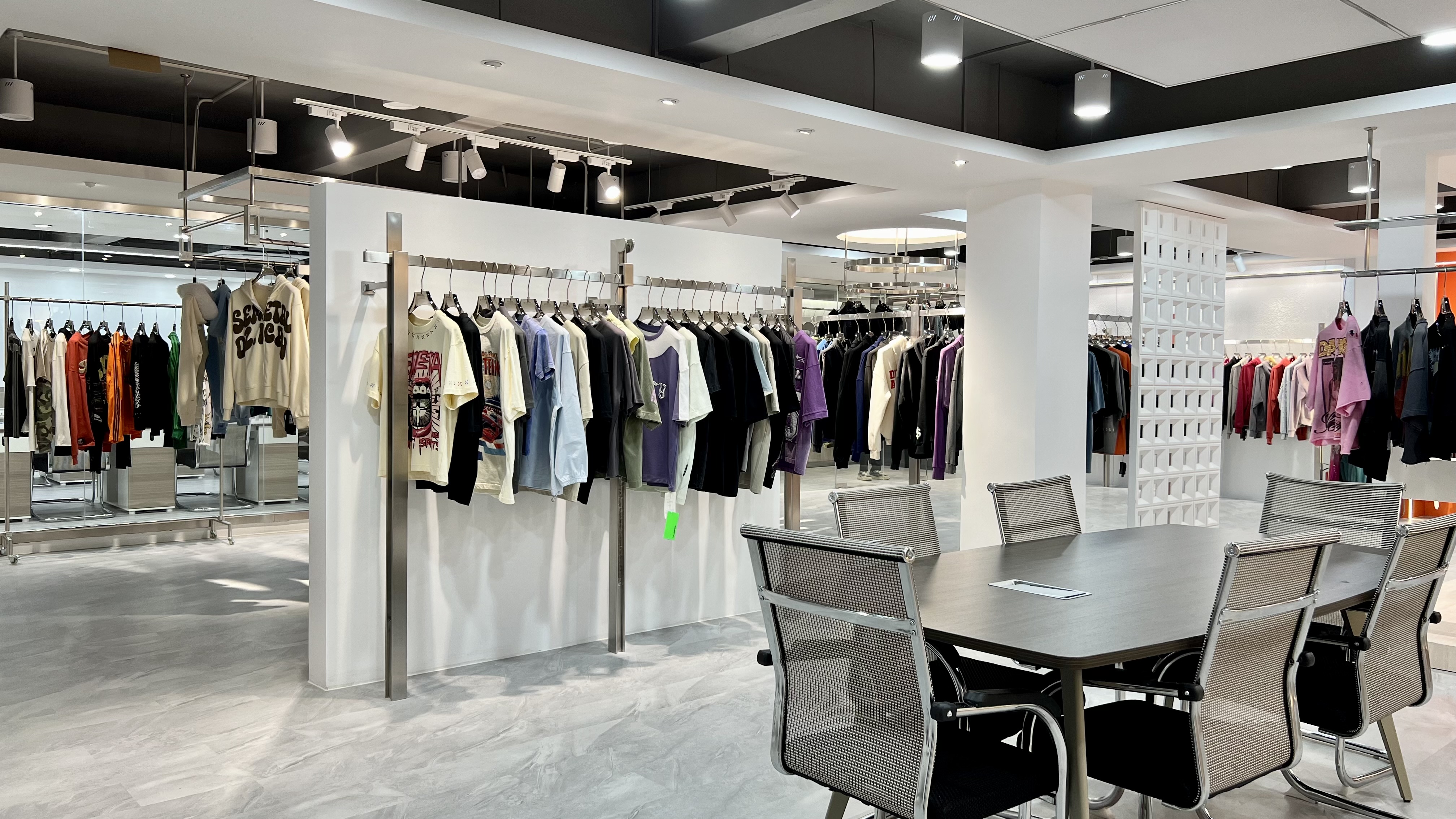
Next step: validate your first drop before you commit to volume
Guangzhou Qianshi Apparel Co., Ltd (Qianshiwear) produces hoodies, sweatshirts, T-shirts, sweatpants, joggers, tracksuits, polos, jerseys, jeans, caps and outerwear for brands worldwide, with flexible production and low MOQs supported by in-house sourcing, cutting, sewing, printing, embroidery and custom packaging.
Review the full capability and specification catalogue: Download the Qianshiwear brochure (PDF). To discuss a pilot quantity, share your specification for a quotation at qianshiwear.com or email sales@qianshiwear.com. WhatsApp: +86 18148939572.
Room 201, 2nd Floor, No.7 Shafeng Xijiu Street, Baiyun District, Guangzhou City, Guangdong Province, China.
Have Questions or Need More Details?
Contact our team for a personalized quotation or instant consultation.
Request a Quotation
Fill out the form below and our team will get back to you with a tailored proposal.
WhatsApp Direct Chat
Prefer to chat in real-time? Message us on WhatsApp for instant assistance & quick answers.
- Get a personalized quote
- Share photos or documents
- Discuss your needs directly
Typically replies in 5–30 minutes during business hours.