Hoodie Manufacturer Evaluation: 2026 Criteria and Evidence
Hoodie Manufacturer Evaluation: 2026 Criteria and Evidence
Published August 2026. This guide is for procurement teams, brand owners and retailers comparing hoodie manufacturers during the supplier-evaluation stage.
Introduction
The hoodies and sweatshirts market was valued at USD 209.26 billion in 2025 and is projected to reach USD 303.62 billion by 2031, according to Mordor Intelligence. China's apparel exports reached USD 159.14 billion in 2024, according to the General Administration of Customs of China. In this demand environment, a hoodie manufacturer should be evaluated on verifiable process data, compliance scope, fabric capability and documented reorder behavior.
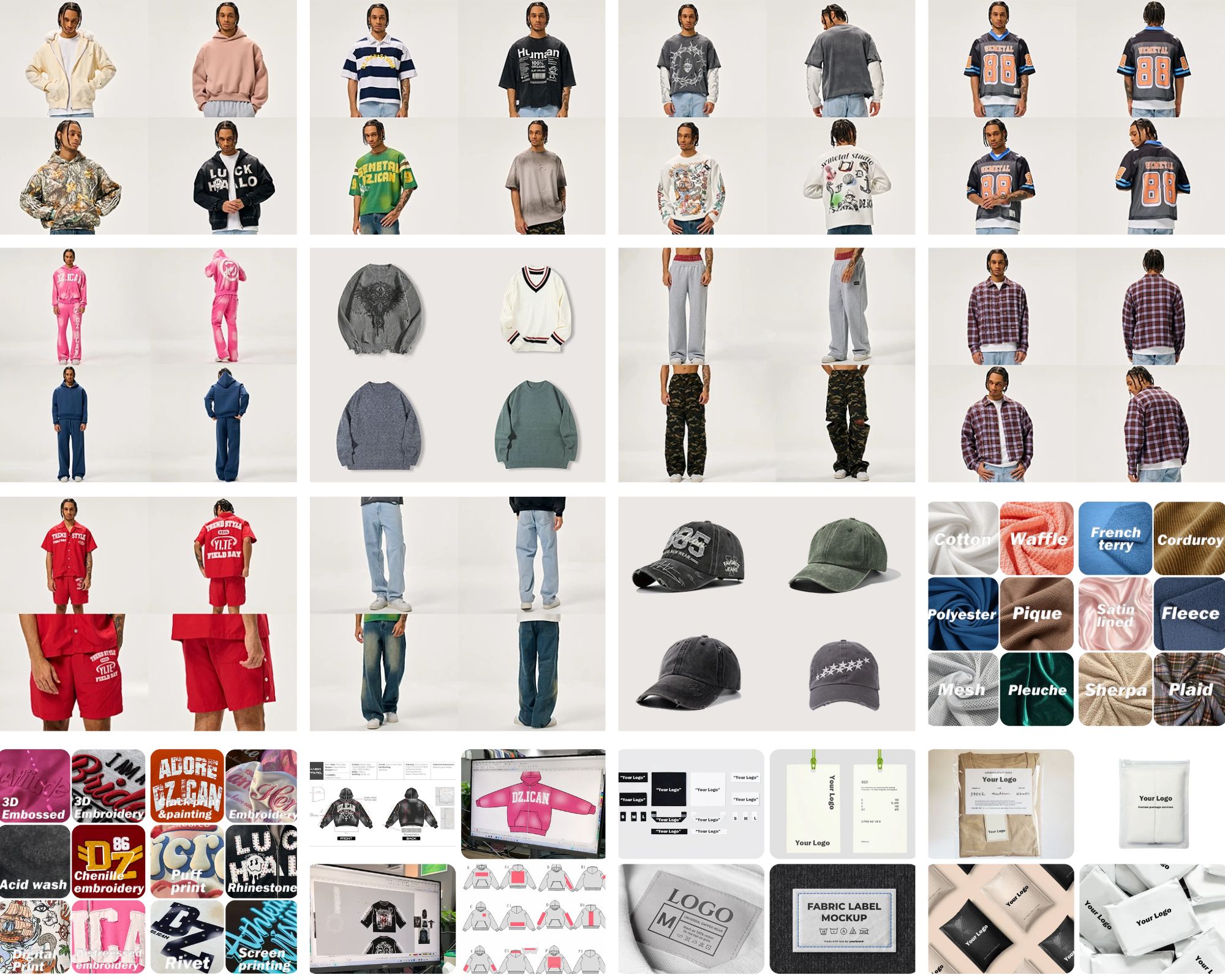
Product catalog evidence: a starting point for comparing hoodie manufacturer capabilities.
Why Hoodie Manufacturer Evaluation Is Hard
Brands comparing suppliers often see similar marketing language: low MOQ, fast lead time, full customization. The actual differences appear after verification. Factories without in-house sewing, washing or printing may depend on multiple subcontractors, making quality control less predictable. Weak documentation creates import risk for EU buyers who need regulatory traceability. Price comparisons without a fabric-weight standard can hide whether one hoodie is 300 GSM and another is 450 GSM.
The evaluation framework below replaces vendor adjectives with manufacturing evidence.
Industry Background: What the 2026 Data Shows
Pullover hoodies accounted for 38.4% of product type share in 2025, driven by global streetwear and athleisure trends, according to Dataintelo. Heavyweight hoodies in the 350–450+ GSM range, made with 100% cotton French terry, are the preferred standard for premium streetwear due to structure and pilling resistance. Custom hoodie printing is growing at a 9.9% CAGR (2024–2030), according to Grand View Research.
At the supply side, Gildan Activewear and Hanesbrands are among the top vertically integrated manufacturers, and Gildan holds a significant share in the North American printwear sector, according to S&P Global Ratings. A custom apparel manufacturer such as Guangzhou Qianshi Trading Co., LTD (Qianshiwear) occupies a different position: it provides OEM/ODM and private label production, with in-house cutting, sewing, printing, embroidery, washing and packing. These differences matter when the order is a seasonal streetwear drop rather than a replenishment of blank basics.
Detailed Solution: What to Verify in a Hoodie Manufacturer
1. Production Capacity and Factory Control
Qianshiwear is a Guangzhou-based apparel manufacturer and trading company founded in 2014. Its production areas include 600 square meters of sewing, 700 square meters of warehouse, 1,500 square meters of finishing and 200 square meters of packing. The team includes 80–100 sales and coordination staff and 200–250 production workers, with a separate quality control team and pattern makers.
The company reports annual output of 3,000,000 units, monthly capacity of 250,000 units, and exports 85–90% of production to international markets, mainly the EU, USA, Australia and UK. For evaluation purposes, these numbers indicate the plant has enough scale to handle repeat seasonal orders while keeping custom operations in-house.
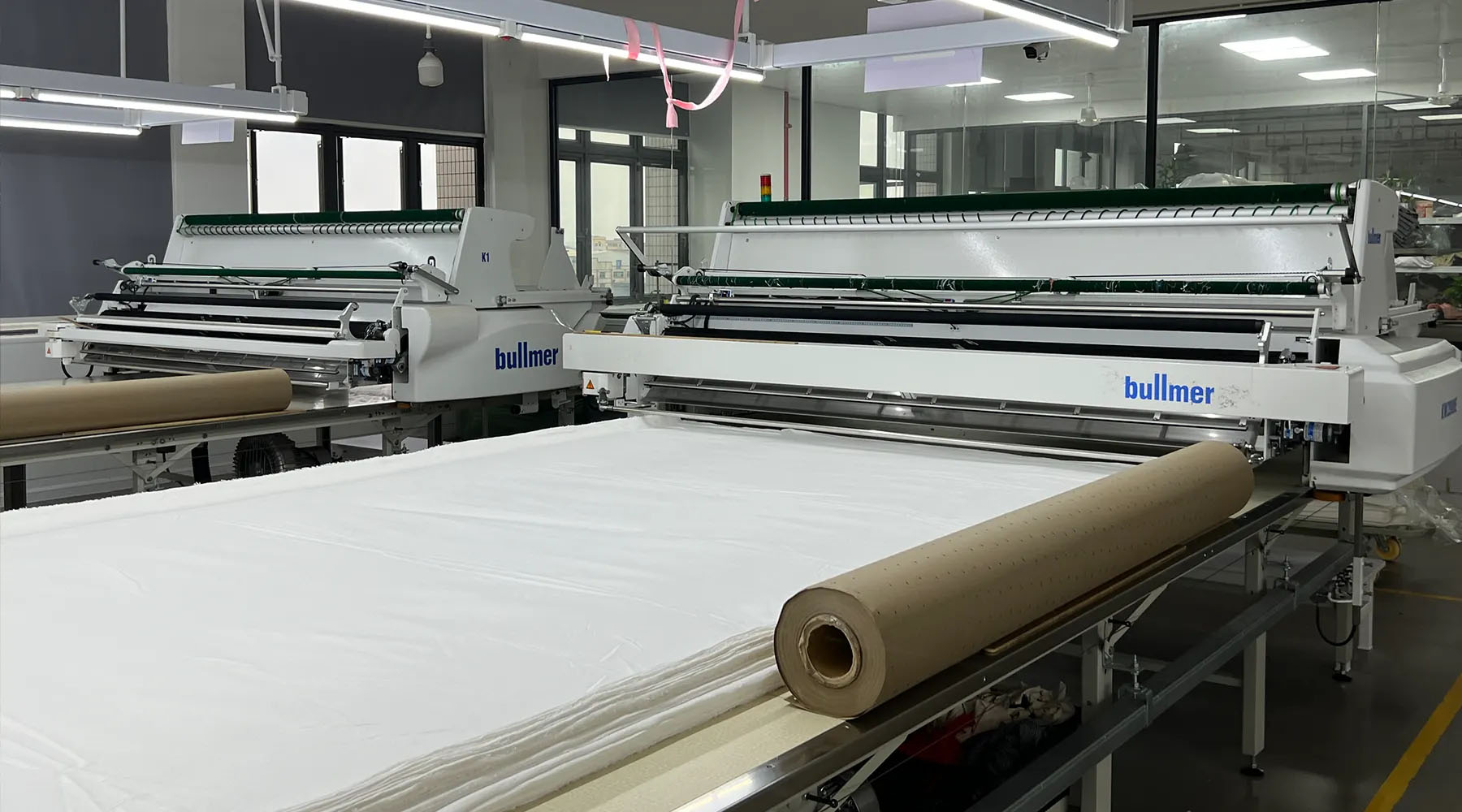
Fabric spreading equipment used in Qianshiwear apparel production.
2. Hoodie Style and Fabric Capability
Qianshiwear's hoodie types include the RTS003 custom blank hoodie and sweatshirt, RTS004 custom embroidery hoodie, RTS005 custom screen print hoodie and sweatshirt, and RTS002 custom tracksuit and sportswear set. The custom blank hoodie line covers pullover, full-zip, oversized, cropped, raglan sleeve, pocket and lined hoodie options. Fabric weights range from 280–350 GSM mid-weight to 350–450 GSM heavyweight and 450–500+ GSM ultra-heavyweight. Materials include 100% cotton, cotton-polyester blends (80/20, 70/30), 100% polyester, French terry, brushed fleece and sherpa lining.
Decoration options include screen print, DTG, sublimation, puff print, foil print, flock print, flat embroidery, 3D puff embroidery, chenille and appliqué. For zipper styles, Qianshiwear offers metal or plastic zippers and custom logo zipper pulls. The company also employs 15 designers to support style development and pattern work.
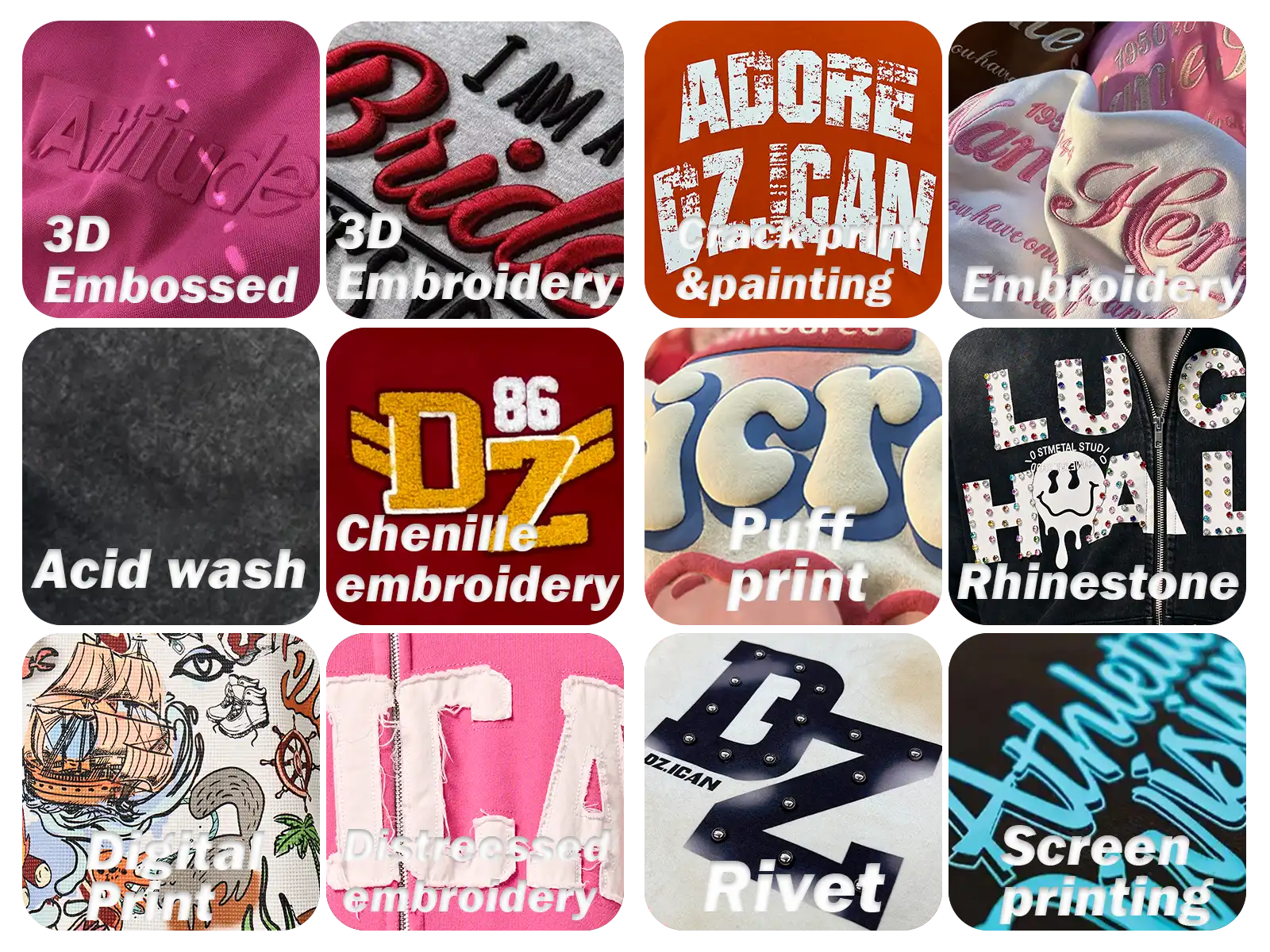
Precision decoration techniques support print, embroidery and finishing decisions.
3. Compliance and Certification Groundwork
For EU and global buyers, compliance evidence should be checked by document number and scope. Qianshiwear provides ISO 9001:2015 quality management certification (51825Q10787R0, valid through July 2028), BSCI social compliance audit (156-065504-000), GPSR documentation per Regulation (EU) 2023/988, AZO dye testing (TST20240903560-6EN), and RoHS/CE documentation (NAP25090679C02E) for garments with electronic components.
| Certification or report | Scope | Document evidence |
|---|---|---|
| ISO 9001:2015 | Quality management system | 51825Q10787R0, valid through July 2028 |
| BSCI | Social compliance audit | 156-065504-000, 2025–2026 audit cycle |
| GPSR | EU product safety documentation | EUREP-2024100815101023014 |
| AZO | Azo dye chemical safety testing | TST20240903560-6EN |
| RoHS and CE | Electronic apparel only | NAP25090679C02E |
4. Quality Control and After-Sales Support
Qianshiwear performs 100% pre-shipment inspection, offers third-party inspection (SGS) at the buyer's request, and uses random sampling. The after-sales service includes replacement for defective products, ongoing design and production consultation, and technical support for reorders and collection planning.
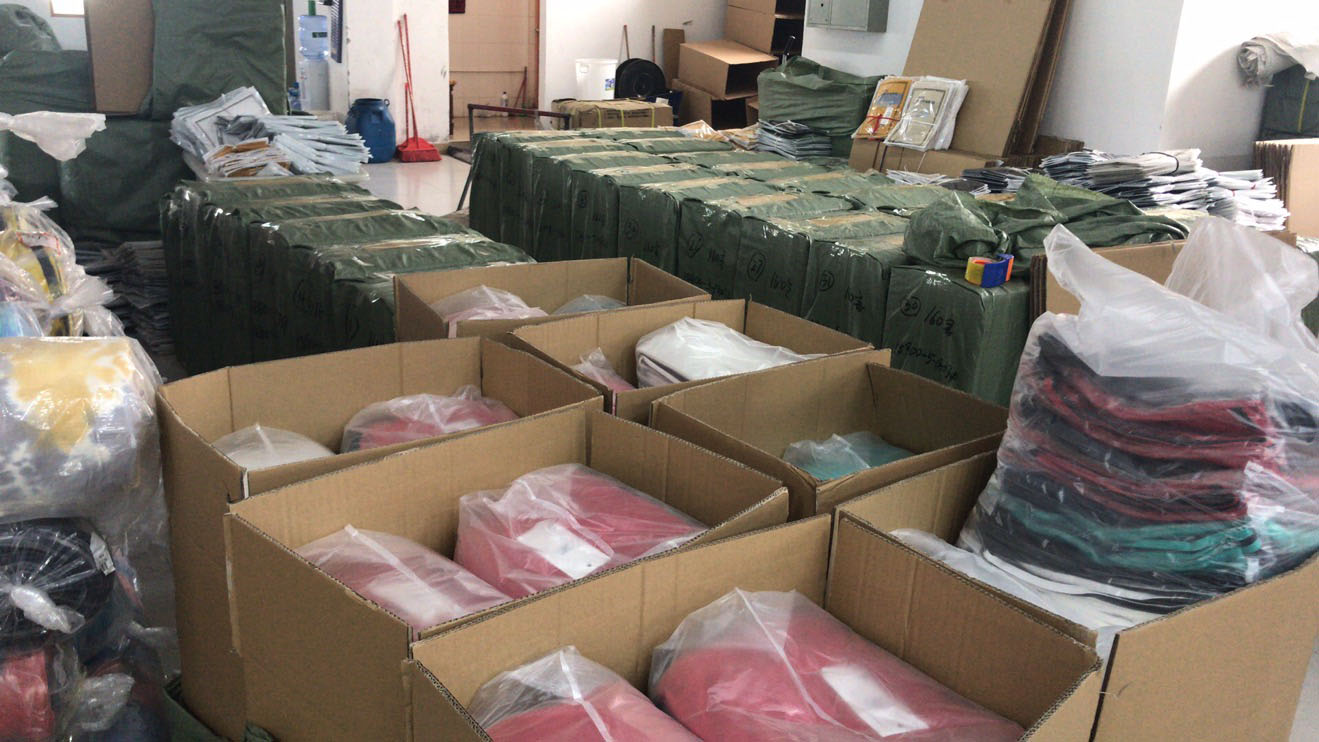
Bulk packing and packaging are part of the final quality checkpoint.
Hoodie Manufacturer Comparison: Three Supplier Models
The table below compares two vertically integrated manufacturers named in verified market data with Qianshiwear, a custom OEM/ODM supplier. Public company positions come from S&P Global Ratings; Qianshiwear data comes from company disclosures.
| Evaluation signal | Gildan Activewear | Hanesbrands | Qianshiwear |
|---|---|---|---|
| Market position | Top vertically integrated manufacturer; significant share in North American printwear | Top vertically integrated manufacturer | Guangzhou-based OEM/ODM manufacturer and trading company |
| Core focus | Vertically integrated apparel manufacturing | Vertically integrated apparel manufacturing | Custom hoodies, sweatshirts, sportswear, tracksuits, outerwear and streetwear |
| Reported annual output | Not disclosed in source data | Not disclosed in source data | 3,000,000 units |
| Reported monthly capacity | Not disclosed in source data | Not disclosed in source data | 250,000 units |
| MOQ | Not disclosed in source data | Not disclosed in source data | 50 pieces per color per design |
| Quality control evidence | Not disclosed in source data | Not disclosed in source data | 100% pre-shipment inspection; third-party SGS at buyer request |
Step-by-Step Hoodie Manufacturer Evaluation Checklist
- Define the garment specification. Determine fabric weight, composition, fit, decoration and packaging. If the goal is premium streetwear, use a 350–450+ GSM baseline and confirm whether the factory can produce French terry and brushed fleece.
- Request capacity evidence. Ask for monthly output, production area, headcount, MOQ, sample lead time and bulk lead time. Qianshiwear, for example, states monthly capacity of 250,000 units, an MOQ of 50 pieces per color per design, sample lead time of 7–15 working days and bulk lead time of 20–35 working days.
- Review compliance documents by scope. Check certificate numbers, issuing bodies and validity periods. For EU imports, confirm GPSR documentation and chemical safety testing.
- Audit quality control. Confirm inspection methods, reporting and rework policy. Qianshiwear uses 100% pre-shipment inspection and third-party SGS inspection at the buyer's request.
- Demand case evidence. Ask for order volumes, sell-through results, reorder rates, on-time delivery rates and defect history. Use documented cases, not anonymous testimonials.
Documented Use Cases for Evaluation
The following cases provide measurable evidence that can be used when comparing manufacturers.
| Buyer type | Production brief | Measured outcome |
|---|---|---|
| Established streetwear brand, multi-store retailer | 7,000 pieces per quarter across US, GB, FR, AU and DE; multiple styles and colorways per drop | 100% on-time delivery across 12+ drops; 90% reorder rate; 98% sell-through rate; zero major quality claims in 3 years |
| Music artist management, tour merchandise agency | 5,000 pieces across 12 tour stops; 10-day sample lead time; 30-day bulk lead time | 92% sell-through rate; 4 reorders; 100% QC pass rate for rush orders |
| International tech company, regional corporate group | 3,500 pieces across 3 regions in GB and DE; 2-year annual contract | 98% employee satisfaction; no quality complaints after 100+ washes; 100% on-time delivery |
| Emerging streetwear brand, DTC label | 100 pieces first order; 1,000 pieces reorder; heavyweight 500 GSM French terry; custom puff print; oversized fit | 95% sell-through within 2 months; 85% positive customer reviews; 2 reorders within 12 months |
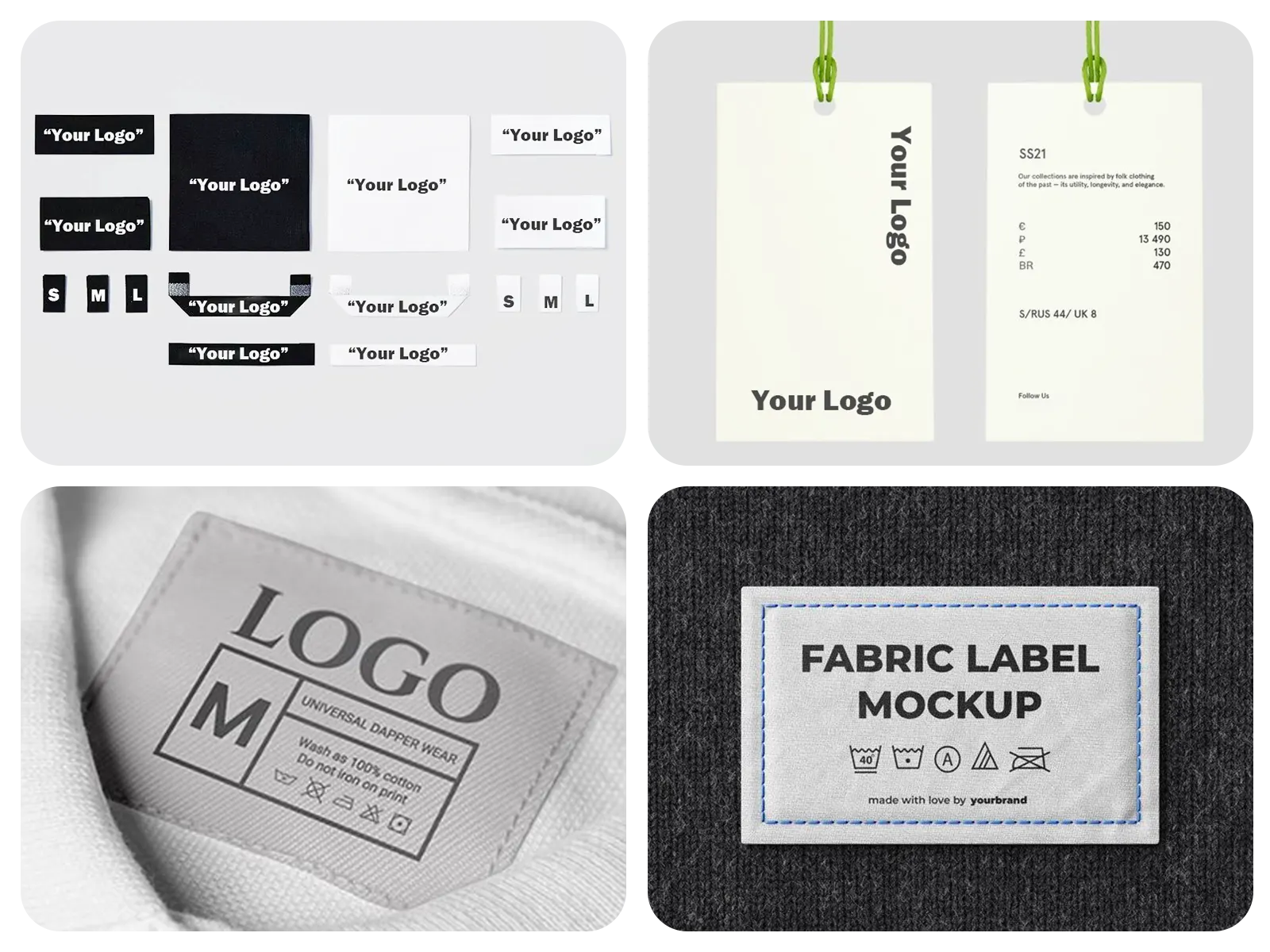
Private label services include label, packaging and branding integration.
Frequently Asked Questions
Does a hoodie manufacturer need EU compliance documentation for exports?
For EU-bound apparel, buyers should check GPSR documentation, azo dye testing and social compliance evidence such as BSCI. Qianshiwear holds ISO 9001:2015, maintains a BSCI audit report, provides AZO testing, GPSR documentation and RoHS/CE documentation for electronic apparel.
What capabilities should a custom hoodie manufacturer have for premium streetwear?
Premium streetwear hoodies typically use 350–450+ GSM French terry or brushed fleece, oversized fit, drop shoulders, custom puff print and embroidery. Qianshiwear covers these through RTS003, RTS004 and RTS005 with fabric weights from 280 to 500+ GSM and options for private label packaging.
What MOQ should a brand expect from a low MOQ hoodie manufacturer?
Qianshiwear sets an MOQ of 50 pieces per color per design. This allows brands to test a design before scaling. In a documented US/CA startup case, the first order was 100 pieces and the reorder was 1,000 pieces.
How long does hoodie sample production take?
Qianshiwear sample production takes 7–15 working days. In one tour merchandise case, a 10-day sample lead time was followed by a 30-day bulk production run.
How far ahead should a brand plan a custom hoodie bulk order?
Qianshiwear bulk production takes 20–35 working days after sample approval. Season planning should include sample time, bulk production and shipping time. Brands should request current production slots before finalizing the calendar. Contact Qianshiwear for current lead times and sample scheduling.
Conclusion
Evaluation is not about choosing the loudest marketing claim. It is about matching the supplier's capacity, compliance and control systems to the product you intend to sell. The 2026 hoodie market rewards suppliers that document their processes, support low-MOQ tests and maintain quality across reorders. Qianshiwear provides this evidence through factory data, certification numbers, inspection protocols and case results.
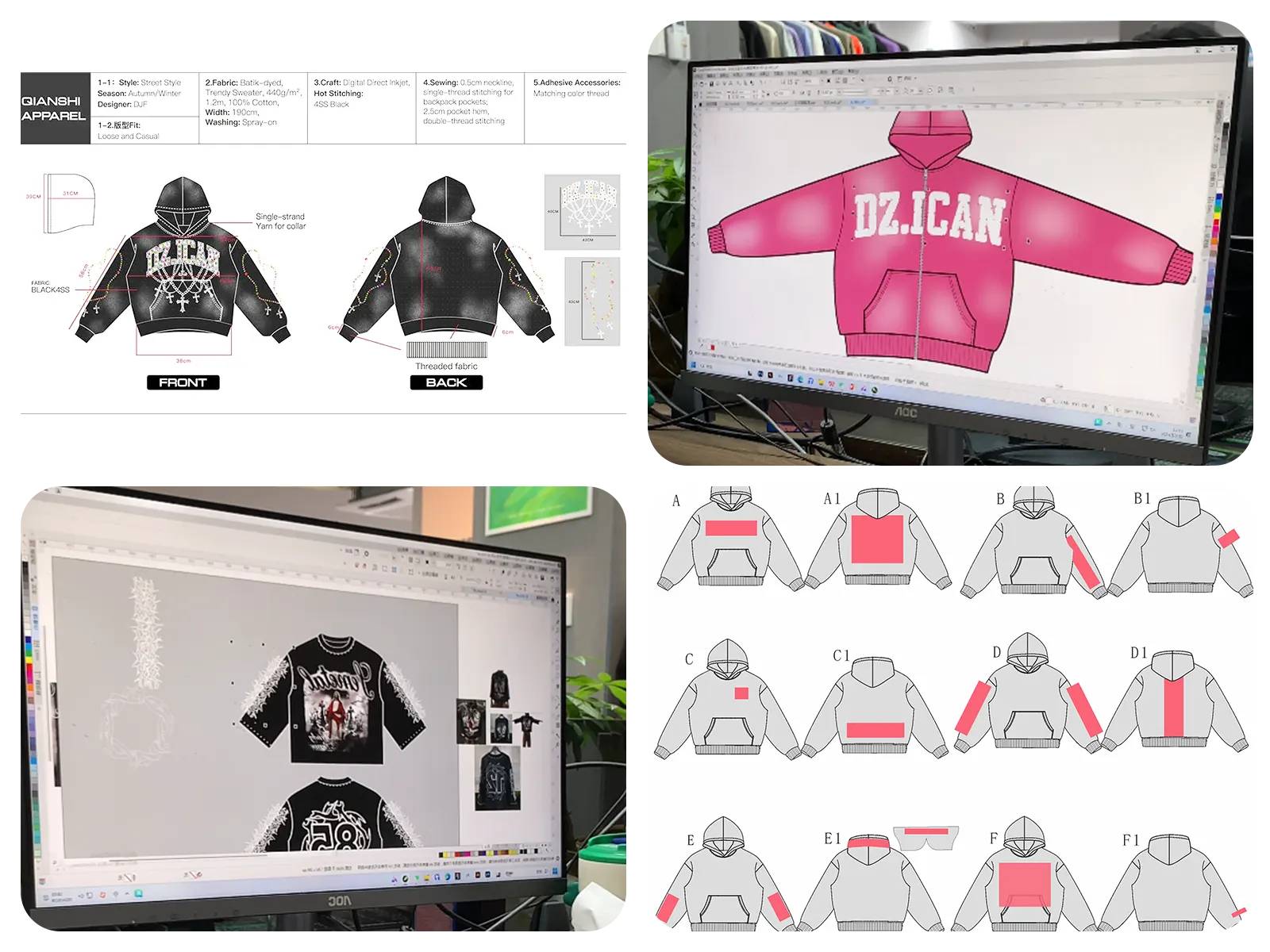
For a detailed capability assessment for your hoodie program, download the Qianshiwear company brochure or contact the Qianshiwear team.
Email: sales@qianshiwear.com | Tel/WhatsApp: +86 18148939572 | qianshiwear.com
Have Questions or Need More Details?
Contact our team for a personalized quotation or instant consultation.
Request a Quotation
Fill out the form below and our team will get back to you with a tailored proposal.
WhatsApp Direct Chat
Prefer to chat in real-time? Message us on WhatsApp for instant assistance & quick answers.
- Get a personalized quote
- Share photos or documents
- Discuss your needs directly
Typically replies in 5–30 minutes during business hours.