
Custom Screen Print Hoodies: A 2026 Buyer Explainer
A custom screen print hoodie is a knit fleece or French terry garment whose graphic is applied by forcing ink through a mesh stencil and then curing it into the fabric with heat. That definition fits in a sentence. The buying decision does not.
Two hoodies can carry the same artwork and behave completely differently after ten washes: one keeps a structured shoulder and a clean-edged graphic, the other collapses at the seam and shows a cracked chest print. The variable is rarely the design file. It is the combination of fabric weight and fabric face, silhouette grading, ink and curing route, and the label package that finishes the garment. Qianshiwear, the trading name of Guangzhou Qianshi Apparel Co., Ltd, is the working reference for this explainer: a garment manufacturer established in 2014 that provides OEM and ODM services from fabric sourcing through to custom packaging.
This article is written for buyers at the discovery and research stage — streetwear and DTC founders, merch leads and sourcing staff who need to understand the category before writing a brief. It covers what the product is, how screen printing behaves on a heavyweight body, why 500 GSM French terry, an oversized drop-shoulder cut and a woven neck label are discussed together rather than separately, and how one documented US/Canada launch moved from 100 pieces to repeat orders.
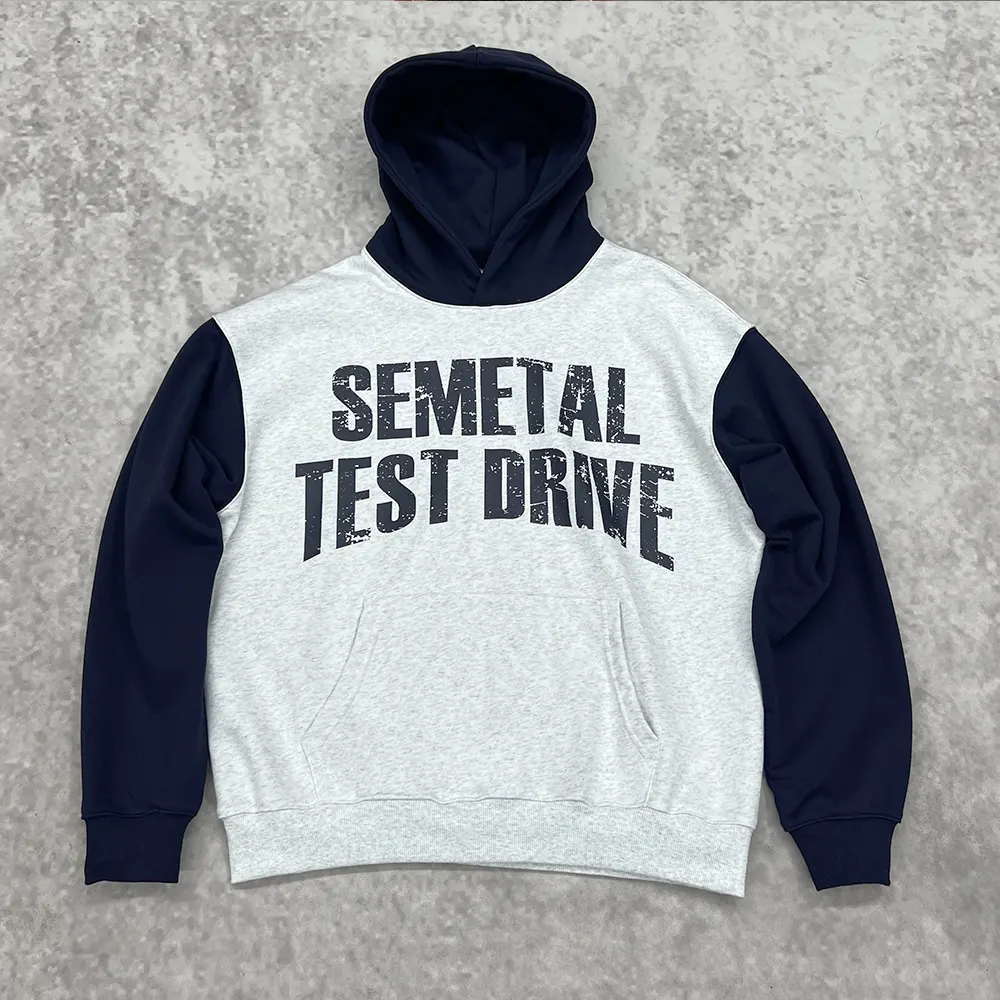
Short answer. A launch-ready screen print hoodie is defined by four specifications working together: a stated fabric weight on a stated face (280–350 GSM mid-weight, 350–450 GSM heavyweight, 450–500+ GSM ultra-heavyweight), a silhouette with its own grading rather than a scaled-up classic block, a documented ink and curing route, and a private-label package that includes the woven neck label. Screen printing creates one stencil per colour, so artwork built from fewer solid colours is easier to hold consistent than photographic gradients.
What a Custom Screen Print Hoodie Is — and What It Is Not
In the product data used for this article, the screen print hoodie is model RTS005, a custom screen print hoodie or screen print sweatshirt. The documented format list is broad: chest print, full front print, full back print, sleeve print, hood print, side seam print, all-over print applied panel by panel, and combination prints where screen print is paired with puff, flock or foil. Oversized and cropped interpretations sit inside the same category.
What separates it from neighbouring products matters more than the label does.
- It is not a blank. A blank hoodie (model RTS003 in the same range) is the undecorated substrate. The screen print hoodie includes the decoration decision, which is where most quality risk enters.
- It is not an embroidery product. Embroidery and appliqué form a separate documented product (model RTS004). The two can be combined, but they fail differently and are specified differently.
- Screen print is not one ink. Plastisol, water-based, discharge, puff, flock, foil, glow-in-the-dark and metallic inks are all documented options, and each one changes both hand feel and production route.
The practical consequence for a buyer: asking a supplier for “a printed hoodie” produces a quotation that cannot be compared with anything. Asking for “a 450 GSM cotton-rich French terry hoodie, oversized drop shoulder, three-colour plastisol chest print, heat-set cure, woven neck label” produces something a factory can price, sample and repeat.
Why Heavyweight Screen Print Hoodies Became a Category
Heavyweight is no longer an exception in the premium segment. Commercial research published in October 2026 by Fortune Business Insights describes 400–600 GSM French terry and fleece as becoming the standard for premium custom streetwear hoodies in 2026, and projects the global hoodies and sweatshirts market to reach USD 442.64 billion by 2034. Both are third-party research figures, not manufacturer performance data, and the market number is a forecast rather than a measurement.
Two structural reasons explain why the weight shift and the print shift arrived together.
The first is supply-chain density. In the Guangzhou and Guangdong cluster, mills, dyehouses and finishing houses sit within roughly one hour's drive of each other. Garment washing — enzyme, stone, snow, vintage and garment dye options are all documented for the screen print hoodie — is a wet process that has to be iterated between the print floor and the laundry. When those steps sit close together, a brand can approve a washed sample and a print sample inside one development cycle instead of running two separate supply chains.
The second is manufacturing depth. China's textile and apparel exports reached US$301.1 billion in 2024, up 2.8% year on year according to the China National Textile and Apparel Council, and Guangzhou Qianshi Apparel Co., Ltd reports that 85–90% of its production is exported, principally to the EU, USA, AU and UK. That export orientation matters to a first-time buyer because sizing conventions, packing standards and documentation habits are already built around Western retail expectations instead of being adapted after the order is confirmed.
None of these macro figures validate a specific factory. They describe the environment in which a screen print programme is priced and scheduled, and they explain why heavyweight construction is available at low volume rather than only at mass scale.
How Screen Printing Behaves on Heavyweight Fleece
Screen printing works by blocking part of a mesh screen with a stencil, flooding the open areas with ink, and drawing a squeegee across so the ink transfers onto the fabric. One screen is created per colour, which is why the documented print colour range runs from monochrome printing through simulated process for photographic images. After transfer, the ink is heat-set so it bonds and resists washing.
On a heavyweight fleece or French terry body, four things change compared with a light jersey.
1. The fabric face determines ink deposit
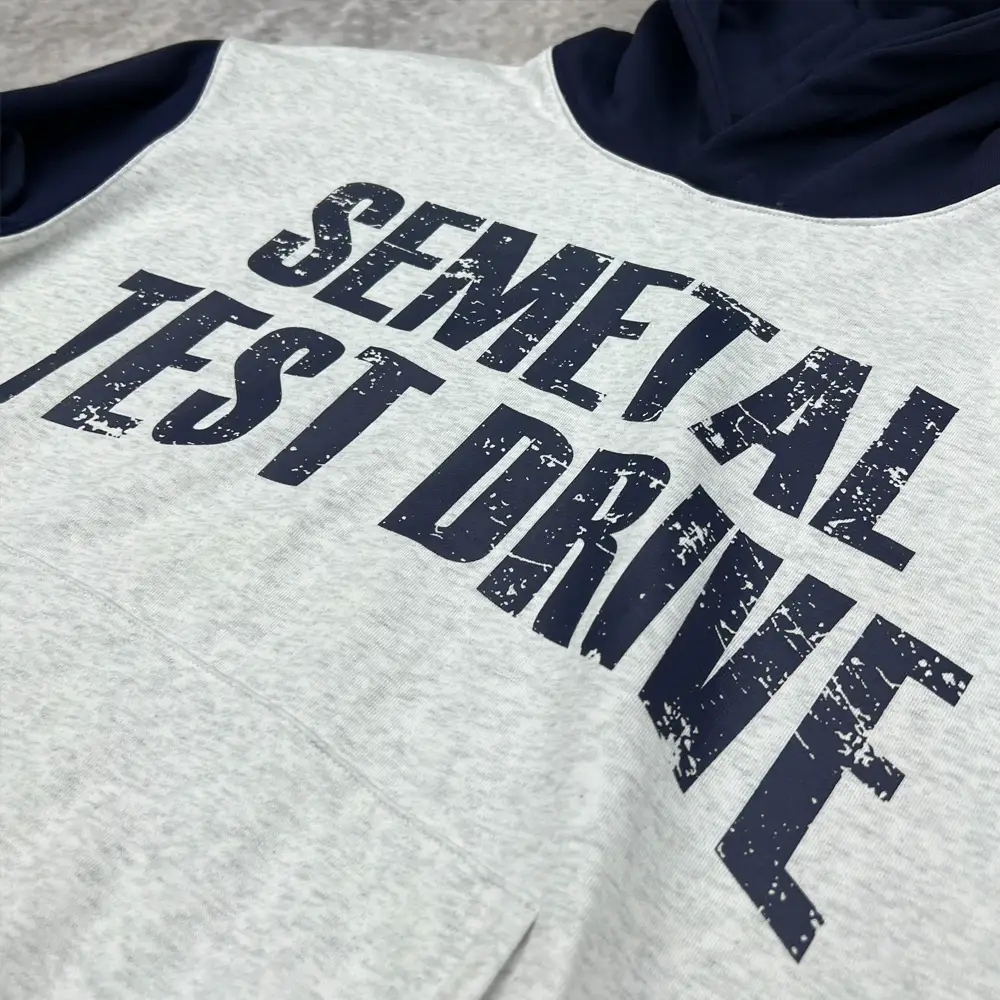
Brushed fleece presents a raised, fibrous surface; French terry presents a flatter loop-back face. A raised surface absorbs squeegee pressure and produces a softer, slightly more textured print edge, while a flat terry face holds sharper definition. The documented fabric options for this product — brushed fleece, French terry and heavyweight cotton fleece — therefore produce three different print results from a single artwork file.
2. Fibre composition changes how the ink behaves
Cotton-polyester blends in 80/20 and 70/30 ratios are documented as improving print adhesion and colour vibrancy, which is one reason blends remain common in graphics-led programmes. 100% cotton is documented as the best substrate for water-based and discharge printing, where the ink needs to interact with the fibre rather than sit on top of it.
3. Heavier bodies require a controlled ink volume
A 500 GSM body carrying a large solid chest print can end up with a stiff, board-like panel if the ink deposit is not controlled. That is not a defect of the fabric or of screen printing; it is the predictable result of placing a thick ink layer on a thick substrate. Buyers who want a soft hand on a heavy body usually move toward water-based or discharge inks, or reduce the printed area.
4. Placement interacts with construction
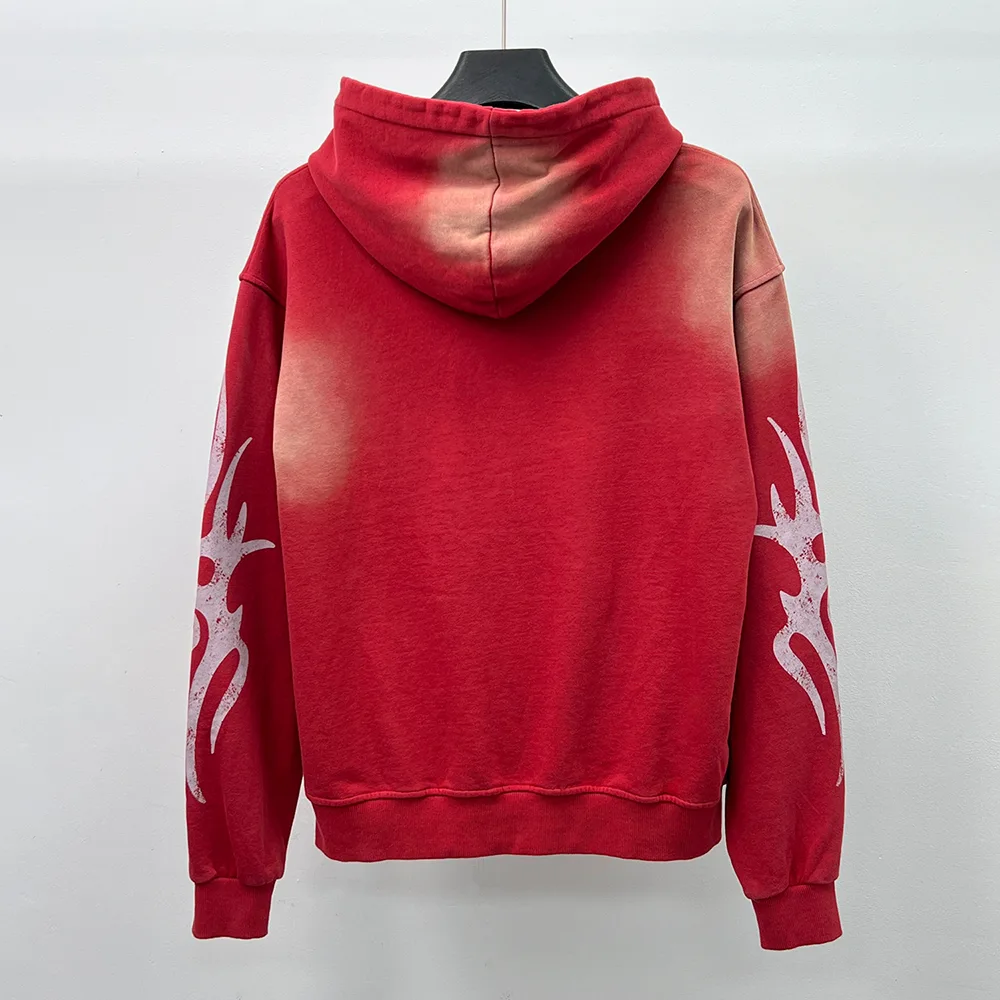
Documented placements include chest, full front, full back, sleeve, hood, side seam and all-over panel printing. On a hooded garment, a hood print crosses a double-layer or lined construction and a centre seam; on a drop-shoulder sleeve, the print area moves with the shoulder seam. Approving artwork on a flat drawing rather than on the constructed garment is one of the most common reasons a first drop looks different from the sample render.
Buyer check. Approve the print on the production fabric weight, the production colour and the production wash. A print approved on a 350 GSM greige swatch does not transfer automatically to a 500 GSM garment-dyed body, because both the surface and the base colour have changed.
The 500 GSM French Terry Question
GSM means grams per square metre. It describes fabric weight and density, not quality on its own: two 500 GSM fabrics can differ in yarn, knit structure, shrinkage behaviour and surface, and a well-finished 400 GSM fleece can outperform a poorly finished 500 GSM one. What GSM does give a buyer is a predictable starting point for how a garment will behave.
| Weight band | Documented range | What it changes in the brief |
|---|---|---|
| Mid-weight | 280–350 GSM | Lighter drape and a softer print hand; positioned for transitional seasons rather than deep winter. |
| Heavyweight | 350–450 GSM | The working middle for year-round premium hoodies: enough body to hold a shape, with less warmth penalty. |
| Ultra-heavyweight | 450–500+ GSM | Maximum structure and opacity; the band most often behind a “500 GSM” product claim. |
The documented weight options for the screen print hoodie run from 280–350 GSM mid-weight to 450–500+ GSM ultra-heavyweight, with composition options of 100% cotton or cotton-polyester blends such as 80/20 and 70/30. French terry is documented at 280–350 GSM inside the screen print hoodie specification and up to 500 GSM in the wider fleece programmes; the manufacturer's 2026 heavyweight programme cites 380–500 GSM heavyweight fleece and French terry.
That gap is worth stating plainly, because it is exactly the kind of detail buyers lose in translation. A “500 GSM French terry screen print hoodie” describes the top of the documented range, not the default build. Before sampling, confirm three things in writing: the exact GSM band with a tolerance, the knit type (loop-back terry or brushed fleece), and whether the wash process runs before or after printing.
Why buyers ask for 500 GSM in the first place
At the top of the range, the fabric itself supplies the structure that a drop-shoulder silhouette depends on. A heavy body holds its shoulder line and hem without collapsing, prints read as more substantial because the panel behind them does not flex, and the garment photographs with visible weight. The trade-offs are equally real: more yarn per unit, heavier sewing, a warmer garment with a narrower seasonal window, higher shipping weight, and a greater risk of print stiffness across large solid graphics.
French terry versus brushed fleece
French terry has a loop-back interior and is documented as breathable and suited to transitional seasons. Brushed fleece has a brushed interior, is documented as softer and warmer, and is the more common choice for winter-weighted hoodies with bold prints. If a launch targets a single season and a single climate, this is the decision that most directly determines whether the garment gets worn twice or forty times.
Oversized Drop-Shoulder Fit: What Changes in Production
Oversized fits are documented as available within a size range of XS–XXL with custom grading, and sleeve construction options across the hoodie range include set-in, raglan and drop shoulder. Those three terms describe three different patterns, not three styling preferences.
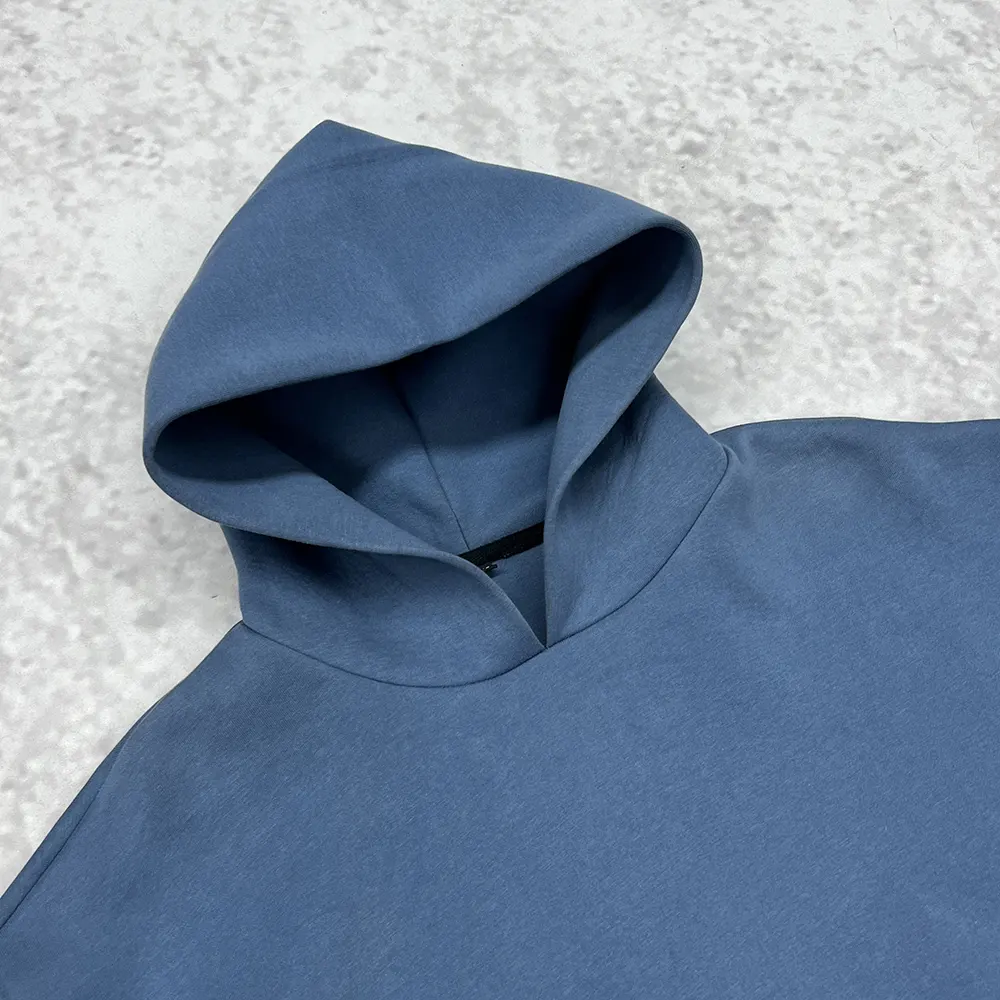
In a drop-shoulder construction, the shoulder seam sits below the shoulder point and the body widens accordingly. The armhole deepens, the sleeve is measured from a lower starting point, and the relationship between chest, body length and sleeve length is re-cut rather than stretched. Grading rules differ from a set-in block, and fabric consumption per garment rises because the panels are wider.
This is where a first-time buyer most often loses control of a sample. Scaling a classic block up by one size does not produce an oversized garment; it produces a large classic garment with a tight armhole and a distorted chest print. A true oversized pattern is drafted oversized from the start, which is why the specification has to be written in measurements rather than in words like “boxy” or “relaxed”.
Measurements to lock before sampling
- Shoulder to shoulder, measured flat across the back from seam to seam
- Chest, measured flat below the armhole
- Body length from the high point shoulder
- Sleeve length, stated from centre back or from the shoulder seam — and stated consistently across sizes
- Cuff opening and rib type, documented as 1x1 or 2x2 ribbing
- Hem finishing, documented as ribbed hem or straight hem with coverstitch
- Hood construction: double-layer, single-layer or hood with drawstring
- Pocket style: kangaroo, side welt, zip or patch
Every item above appears in the documented specification options, which means each one is a decision the buyer makes rather than a factory default. A brief that omits them does not stay silent; it hands the decision to whoever runs the pattern room.
Woven Neck Labels and the Rest of the Identity Package
A woven neck label is a jacquard-woven fabric label sewn into the back neck, carrying the brand mark and often size and care information. It is small, inexpensive relative to the garment, and disproportionately visible: it is the label the wearer reads while pulling the hoodie on, and it is the component that makes a private-label garment feel like a brand's product rather than a decorated blank.
Label packages documented for this product category include private-label tags, hang tags and custom packaging, alongside branded trim options such as cotton or metal-tipped drawstrings with custom branded ends and custom zipper pulls on zip-up styles. The manufacturer's stated scope runs from fabric sourcing to custom packaging, which is the practical definition of a private-label programme: the buyer supplies identity, the factory supplies execution.
What to specify on a woven neck label
- Artwork at final size, not a logo file scaled to fit a 40 mm label
- Construction — woven, printed or silicone — decided before sampling, because each has a different production step
- Fold type and finished dimensions, since a centre-fold label and an end-fold label are cut and sewn differently
- Stitch position and allowance, so the label sits flat against the neck rather than lifting
- Care content, supplied by the brand's own compliance owner
The last point deserves emphasis. Care labelling and fibre-content requirements differ by destination market and by fibre blend, and they are a brand-side compliance decision rather than a manufacturing default. The factory can print or weave what the brand approves; it should not be the source of the requirement. Buyers who arrive with that content already decided save a full revision cycle.
From 100 to 1,000 Pieces: A Documented US/Canada Launch
The clearest illustration of how these specifications work together is a documented launch case from the US and Canada streetwear and DTC market. A brand placed an initial order of 100 pieces. That trial produced 95% sell-through within two months and 85% positive customer reviews. On the strength of that result the brand reordered 1,000 pieces and placed two further reorders within 12 months.
Read correctly, the sequence contains three separate signals.
The 100 pieces were a test instrument, not a compromise. A trial at that scale lets a brand read real demand and real returns behaviour before committing fabric budget to a full run. The manufacturer's 2026 heavyweight programme cites testing MOQs of 100–150 pieces, which places a launch-sized trial inside the documented ordering range rather than outside it.
The sell-through number is what triggered the reorder. 95% sell-through within two months is a demand outcome, and it is the reason a 1,000-piece order followed rather than a second 100-piece order. Brands that set the reorder trigger before launch — a sell-through threshold, a size-curve restock point, a date — move faster than brands that decide after the sell-out.
The review score is a satisfaction signal, not a durability proof. 85% positive reviews indicates customers accepted the product; it does not measure print cracking, shrinkage or pilling across 30 washes, because a review written early in a garment's life cannot report those outcomes. Anyone quoting a review score as fabric performance evidence is over-reading it.
What this case does not establish. It is a single documented launch, not a market statistic, and it does not predict another brand's sell-through. The reorder progression is evidence that a 100-piece trial can be evaluated and scaled within 12 months; it is not a guarantee that any specific fabric, print route or fit will perform the same way.
A Step-by-Step Spec Sheet for a First Screen Print Hoodie Order
The sequence below follows the order in which decisions actually constrain each other. Steps can overlap, but reordering them creates rework.
- Write the tech pack before the artwork. Fabric weight band and composition, knit type, silhouette with measurements, size range and grading, print placements and colour count, ink type, wash process, labels and packaging. The design team supporting the programme — 15 designers in this case — can develop from a reference, but it cannot invent the commercial decisions inside the brief.
- Choose the fabric face before the ink. Brushed fleece, French terry or heavyweight cotton fleece determines how the ink sits. Deciding the ink first and the fabric second is the most common cause of a sample that has to be remade.
- Fix the colour route. Pantone matching, garment dye and pigment dye are documented options, and they behave differently under a print. Dyeing after printing and dyeing before printing produce two different garments.
- Confirm the print specification. Ink type, number of colours, placement, print dimensions, and the cure method — heat-setting is documented for durability and wash resistance.
- State the wash and finishing sequence. Enzyme, stone, snow, vintage and garment dye options all change the final hand and appearance, and the documented note that garment washing affects print feel and appearance is the reason the sequence must be written down rather than assumed.
- Set quality targets in writing. The specification targets documented for this product category are colour fastness of Grade 4 or better, shrinkage of 5% or less, anti-pilling of Grade 3 or better, and AQL 2.5 inspection. They belong on the sample approval sheet as targets to be verified, not in marketing copy as achieved results.
- Approve a physical sample twice. Once as a sealed pre-production sample, once against the first bulk unit. The gap between those two approvals is where most first-order surprises live.
- Plan the trial and the reorder together. Decide the trial quantity, the sell-through threshold that triggers a reorder, and the size curve before launch, not after.
- Lock the label and packaging pack. Woven neck label, hang tag, poly bag or custom packaging, and any branded trim. These have their own production steps and cannot be added at the packing stage without delaying shipment.
Where Screen Print Hoodies Fit — and Where They Do Not
Documented applications for this product span streetwear and urban fashion, athleisure and sportswear, corporate merchandise and promotional apparel, e-commerce fashion brands, music and entertainment merchandise, and university and school spirit wear. The documented market list covers the United States, United Kingdom, Australia, Germany, France, Italy, Netherlands, New Zealand, Spain, Sweden, United Arab Emirates, Switzerland, Qatar, Luxembourg, Ireland, Singapore, Norway, Denmark and Belgium.
Within that range, the artwork style usually decides the fit better than the sector does.
- Bold, limited-colour graphics: the natural home of screen printing on a heavyweight body, because a separate screen per colour rewards simple, solid shapes.
- Photographic or gradient-heavy artwork: documented as printable through simulated process, but it multiplies the number of screens and the registration risk on a thick, textured surface. Expect a longer approval cycle.
- Corporate and event merchandise: usually a single-colour chest logo on a mid-weight body; specifying 500 GSM here adds cost and warmth the wearer may not want.
- Seasonal streetwear drops: the combination of ultra-heavyweight fabric, oversized drop shoulder and a large back print is the configuration closest to the 400–600 GSM premium direction described in the 2026 market research.
Two situations make screen print a weaker first choice: very small runs spread across many different designs, where each colour change is a new screen, and applications where a soft, barely-there decoration is the entire point — in which case water-based or discharge inks should be specified from the start rather than discovered at sample stage.
Ink and Decoration Options Compared
The table lists the ink options documented for the screen print hoodie and what each is documented to produce. The final column is brief-writing interpretation, not a performance claim.
| Option | Documented effect | What it changes in the brief |
|---|---|---|
| Plastisol ink | Opaque, vibrant finish | Handles dark heavyweight bodies; heavier deposits can stiffen large solid areas |
| Water-based ink | Soft feel | Best matched to 100% cotton; the choice when hand feel outranks maximum opacity |
| Discharge ink | Soft, natural feel | Depends on the base dye being dischargeable; results must be approved on the actual colour |
| Puff print | Raised texture | Adds a dimensional layer over screen print; most exposed to wear on high-friction areas |
| Flock print | Velvety texture | Changes surface feel entirely; usually a design statement rather than a logo treatment |
| Foil print | Metallic finish | Reflective, non-soft hand; best on graphics designed around the finish |
| Glow-in-the-dark ink | Documented as a screen print type | Niche effect; specify placement deliberately rather than across a full panel |
| Metallic ink | Documented as a screen print type | Visual accent; treat as its own artwork decision |
Combination prints — screen print paired with puff, flock or foil — are documented as their own format. They are the reason a single hoodie can carry a flat base graphic and a raised logo, and also the reason a print approval should list every process on the garment, not only the largest one.
Frequently Asked Questions
What labelling and testing information should a screen print hoodie brief include?
The brief should state fibre content and care content as decided by the brand's compliance owner, the woven neck label artwork and fold type, and the quality targets documented for this product category: colour fastness Grade 4 or better, shrinkage 5% or less, anti-pilling Grade 3 or better, and AQL 2.5 inspection. Care-labelling rules vary by destination market, so the requirement comes from the brand and the execution comes from the factory. No certification should be assumed unless the supplier has issued that specific document.
Can one hoodie programme combine screen print with other decoration?
Yes. Combination print — screen print with puff, flock or foil — is a documented format, and embroidery or appliqué sits in a separate product line (model RTS004) that can be specified alongside a screen-printed body. Each added process is a separate production step with its own approval, so a three-process garment should be sampled as a three-process garment rather than approved from three separate single-process samples.
What drives the cost of a 500 GSM French terry screen print hoodie?
Six variables dominate: fabric weight and composition, the number of print colours and placements, the ink and cure route, the wash process, the label and packaging package, and the order quantity. Fabric weight is the largest single lever because it changes yarn consumption, sewing time and shipping weight at the same time. This article contains no price figures because none were supplied and verified; the correct next step is a written quotation against a fully specified brief, so that two suppliers are quoting the same garment.
How should a brand validate the product before scaling?
Run a trial order at launch scale, approve a sealed sample against the written specification, and set the reorder trigger before the drop. The documented US/Canada case followed exactly this pattern: 100 pieces first, 95% sell-through within two months, then a 1,000-piece reorder and two further reorders within 12 months. Testing MOQs of 100–150 pieces are cited in the manufacturer's 2026 heavyweight programme, which keeps a validation run inside the normal ordering range.
How long does production take, and how do I confirm a schedule?
No lead-time figures are published in the supplied product or company documentation, and inventing one would be worse than useless. Lead time depends on fabric availability, the number of print colours, whether a garment wash is involved, and where the order sits in the production calendar. Request a written schedule alongside the quotation, with the sample approval date, bulk start date and ex-factory date stated separately, and treat the sample approval date as the milestone that controls everything after it. To start that conversation, send the tech pack to sales@qianshiwear.com or call +86 18148939572, and ask for the current product brochure as a reference set.
Conclusion
Custom screen print hoodies look like a simple category and behave like a system. The print is only the visible layer: what a customer experiences is the result of a fabric weight chosen for a reason, a silhouette drafted rather than scaled, an ink and cure route matched to the fabric face, and a label package that turns a decorated blank into a branded product.
For a buyer at the research stage, three habits prevent most first-order problems. Specify weight, knit and composition together instead of quoting a single GSM figure. Write the silhouette in measurements rather than adjectives, and state where each measurement starts. Treat the label pack as a production item with its own lead step, not as a detail to add before shipping.
The documented US/Canada launch shows what the sequence looks like when it works: a 100-piece trial, 95% sell-through within two months, 85% positive reviews, a 1,000-piece reorder and two further reorders inside 12 months. It is one case, not a promise, but it demonstrates that a small, fully specified trial is a credible way to enter a heavyweight screen print category without committing to volume first.
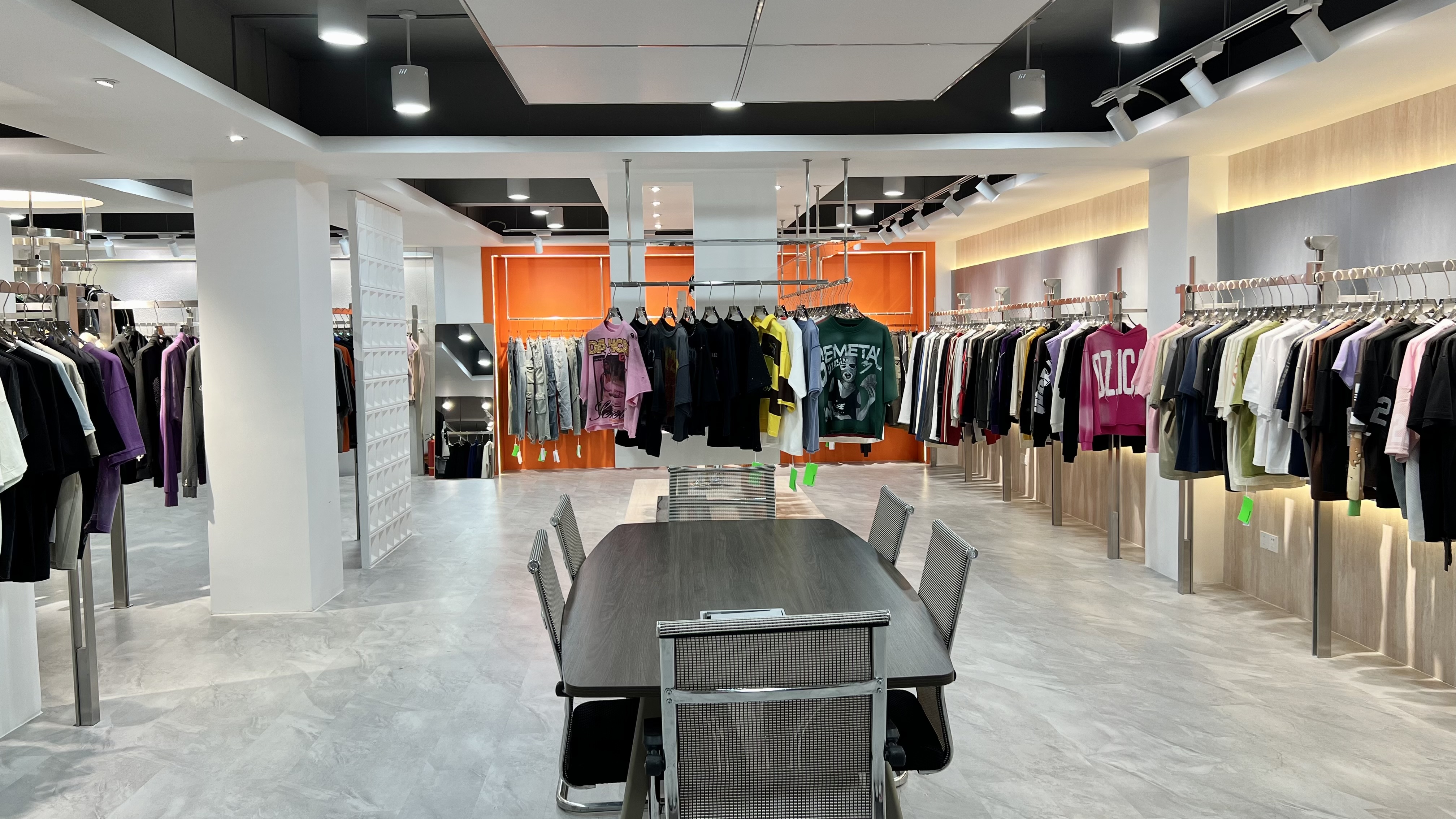
Guangzhou Qianshi Apparel Co., Ltd works from a facility with 600 ㎡ of sewing area, 700 ㎡ of warehousing, 1,500 ㎡ of finishing and 200 ㎡ of packing, staffed by 200–250 production line workers and 80–100 sales and administrative staff, with an R&D team of 15 designers and an annual output of 3,000,000 units across T-shirts, hoodies, sweatshirts, sweatpants, joggers, tracksuits, polos, jerseys, jeans, caps and outerwear. Buyers who want the full reference set before briefing can download the Qianshiwear product brochure.
Have Questions or Need More Details?
Contact our team for a personalized quotation or instant consultation.
Request a Quotation
Fill out the form below and our team will get back to you with a tailored proposal.
WhatsApp Direct Chat
Prefer to chat in real-time? Message us on WhatsApp for instant assistance & quick answers.
- Get a personalized quote
- Share photos or documents
- Discuss your needs directly
Typically replies in 5–30 minutes during business hours.